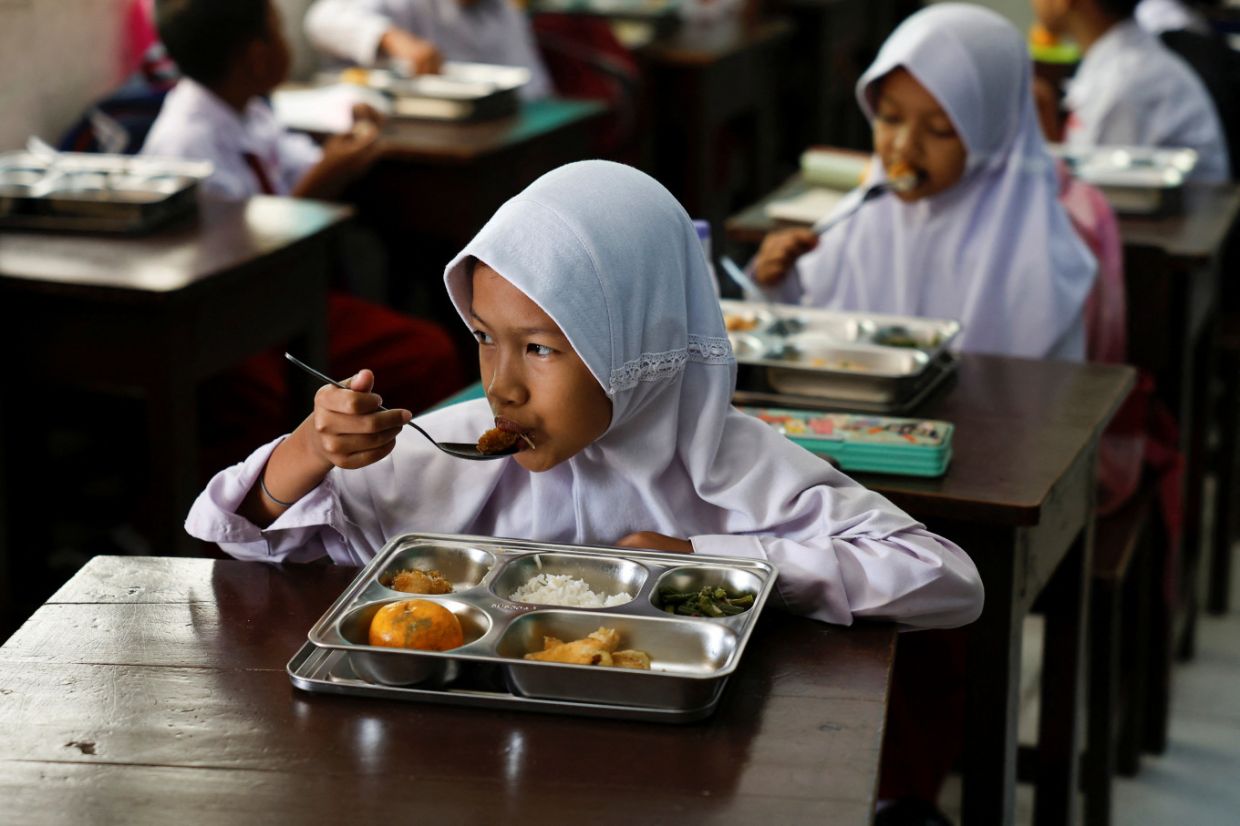
Indonesia's proposed revision to its National Education System Law has triggered fresh warnings from teacher associations who fear it contains loopholes that would allow the government to resurrect funding for the free nutritious meal programme from the education budget—a move that would effectively reverse a significant Constitutional Court ruling handed down in late July. The Indonesian Teachers Association and other stakeholders argue that vaguely worded provisions in the draft legislation, currently under deliberation in the House of Representatives, could be manipulated to classify meals as a health service integral to education, thereby sidestepping the court's July 30 decision.
The Constitutional Court's ruling represented a watershed moment in Indonesia's budget allocation debate. The tribunal determined that President Prabowo Subianto's flagship free meals initiative should not be financed through education spending, finding in favour of petitions filed by teachers, university lecturers, students and civil society organisations. This decision was significant not merely for its immediate budgetary implications but for what it represented about the proper use of constitutionally protected education funds. Indonesia's Constitution mandates that a minimum of 20 percent of annual state budget allocations go toward education, a safeguard designed to ensure robust investment in schools, teacher development and learning infrastructure.
The scale of the financial stakes illustrates why stakeholders remain vigilant. In the current fiscal year, approximately Rp 223 trillion (US$12.5 billion) of the total Rp 769 trillion education budget has been devoted to the free meals programme—a figure representing nearly one-third of mandatory education spending. This allocation raised serious concerns among educators and budget watchdogs, as such substantial diversion of protected education funds meant resources otherwise destined for teacher salaries, classroom infrastructure, learning materials and pedagogical development were instead redirected to a social welfare programme, however beneficial meals might be to student nutrition.
At the heart of current anxieties lies specific language in the draft bill dated July 8. The provision states that government and society, when managing education, should "provide health services, including those concerning mental health, at educational institutions in a manner that is integrated with the national health policies as well as the national education goals." Satriwan Salim, national coordinator of the Indonesian Teachers Association, expressed deep reservations about this formulation, warning that its inherent vagueness creates space for creative reinterpretation. He argued that the clause could be weaponised to classify the free meals initiative as a manifestation of national health policy, thereby justifying its continued funding through education allocations. The open-endedness of the language, he suggested, invites precisely the kind of legal manoeuvring that the Constitutional Court sought to prevent.
Constitutional law expert Feri Amsari offered a technical perspective that reinforces these concerns while also suggesting potential legal limits to legislative workarounds. Amsari explained that the norms and principles enshrined in the Constitutional Court's ruling apply across all legislation, not exclusively to budget laws. This interpretation means that no future law revision—regardless of the statute within which it is embedded—could legitimately restore education budget financing for the free meals programme without fundamentally violating constitutional principles. Under this framework, the problem transcends legislative drafting; it becomes a matter of constitutional hierarchy that no amount of budget relabelling or regulatory adjustment can overcome.
Civil society organisations tracking this matter have coalesced around warnings that appear remarkably prescient given Indonesia's recent legislative history. The MBG Watch coalition, supported by Transparency International Indonesia and other members of the original petitioner alliance, has characterised teacher concerns not as paranoia but as justified vigilance. Agus Sarwono of Transparency International Indonesia stated plainly that any attempt to maintain education funding for free meals through budget nomenclature changes, budget engineering strategies or regulatory adjustments would constitute a direct denial of the Constitutional Court's authority. His framing recast the issue from technical budget management into a matter of institutional integrity and the rule of law.
This vigilance reflects broader patterns in Indonesian governance. The legal community has noted previous instances where Constitutional Court rulings, despite their theoretically binding nature, have experienced implementation delays or been circumvented through legislative creativity. A December 2025 ruling prohibiting active-duty police officers from simultaneously holding additional government posts exemplifies how court decisions, even when final, sometimes encounter resistance or creative non-compliance. This historical context provides justification for the intensity of current scrutiny surrounding the education law revision, as stakeholders seek to prevent similar erosion of judicial authority in this case.
Hetifah Sjaifudian, the Golkar Party lawmaker chairing House Commission X which oversees education, acknowledged that the bill requires further refinement and that concerns raised by teachers' groups have reached the commission's attention. She stated explicitly that every provision in the revised education system law would be drafted with careful attention to preventing multiple interpretations or conflicts with constitutional principles. Her assurance that the commission remains committed to ensuring education budget funds serve the sector's primary functions—particularly enhancing learning quality, improving teacher compensation and strengthening education services—suggests receptivity to the substance of teacher concerns, at least at the level of stated intention.
The education budget allocation debate in Indonesia connects to deeper questions about resource distribution and institutional priorities. Mandatory education funding, protected constitutionally, represents society's commitment to building human capital through schools and teachers. When that protected funding is substantially diverted to other programmes, even socially valuable ones like nutritional support, it triggers legitimate questions about priority-setting and budget discipline. The tension between supporting student welfare comprehensively and maintaining dedicated resources for core educational functions does not admit of easy resolution, yet the Constitutional Court's decision attempted to establish a bright line: health and nutrition programmes, however important, should not consume education budget allocations.
For Malaysia and other Southeast Asian observers, Indonesia's experience offers instructive lessons about budget protection mechanisms and the vulnerability of constitutional safeguards to legislative creativity. Many regional education systems struggle with similar resource constraints and competing claims on limited budgets. The Indonesian case demonstrates both the necessity of clear constitutional protections for education spending and the challenge of defending those protections against well-intentioned programme proposals that blur categorical boundaries. It also highlights the importance of vigilant civil society and professional organisations—in this instance teachers' groups—willing to engage in detailed legislative scrutiny and public advocacy to maintain institutional guardrails.
The ongoing deliberation in the House of Representatives will likely determine whether Indonesia's education system successfully maintains the constitutional boundary that the Court established, or whether legislative revision creates new avenues for circumventing it. Hetifah's openness to public input and willingness to modify provisions throughout deliberation suggests the process remains fluid, and stakeholder engagement during this phase could prove decisive. The coming weeks will reveal whether this represents a genuine commitment to respecting judicial authority or merely a temporary tactical pause before reformulated language attempts to achieve through amended legislation what the Constitutional Court explicitly forbade.

