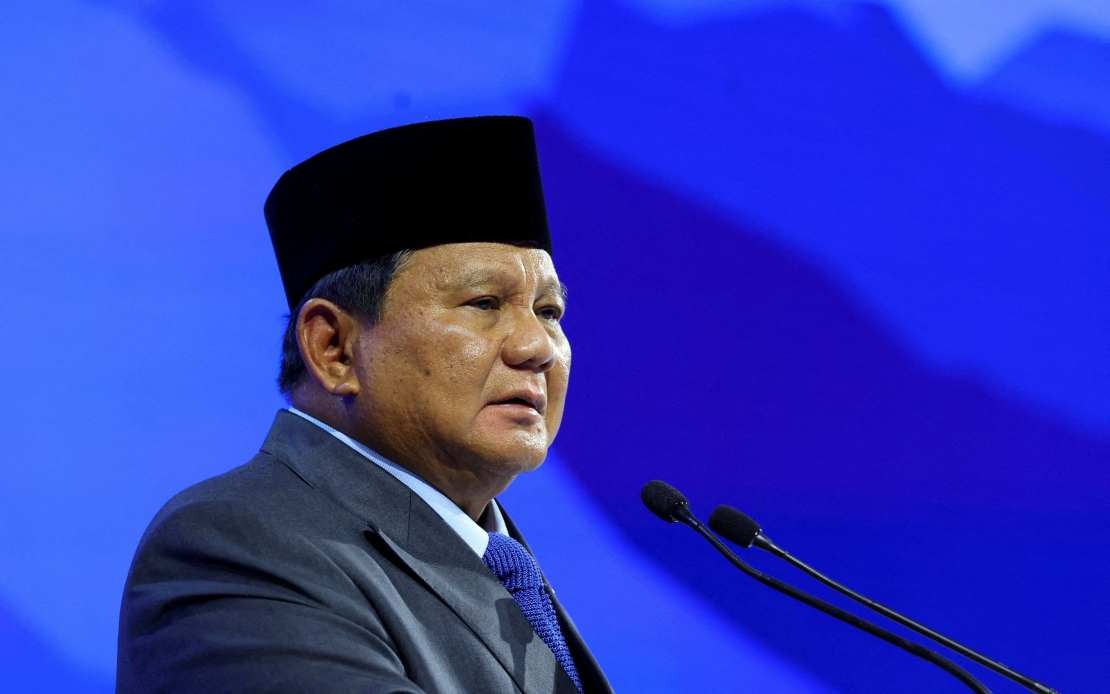
Indonesia's forest and land fires are beginning to show signs of containment, according to President Prabowo Subianto, who expressed cautious optimism that the crisis could be substantially resolved within the next fortnight. Speaking at the launch of Indonesia's 100-gigawatt solar power programme in Jembrana, Bali on Tuesday, the president indicated that aggressive intervention across multiple fronts has started yielding results in several key areas where blazes had previously spread unchecked across the archipelago's vulnerable ecosystems.
The scale of the government's response underscores the severity of the situation and the commitment required to contain fires that threaten both the environment and public health across the region. Prabowo's administration has deployed an impressive array of firefighting assets, including dozens of helicopters and more than a dozen fixed-wing aircraft for aerial water drops, complemented by hundreds of ground-based water wells and pumping systems. Beyond equipment, the effort encompasses thousands of personnel drawn from civilian disaster management agencies, military units, police forces, and regional government bodies working in coordination to suppress active fire zones and prevent new ignitions.
The president's recent field inspections have provided him with firsthand knowledge of operational conditions on the ground. Last Saturday, Prabowo travelled to West and Central Kalimantan, two of Indonesia's most severely affected provinces, to personally observe firefighting operations and provide direct leadership to response teams. His visit on Monday extended to Sumatra, where similar coordinated efforts are underway to combat blazes threatening vast tracts of forest and agricultural land. These high-profile inspections signal the administration's determination to maintain political momentum and demonstrate government presence during a crisis that captures public attention and international scrutiny.
The timing of the fires coincides with unusually strong El Niño conditions forecast this year to rank among the most severe on meteorological records. Such weather patterns create ideal conditions for uncontrolled fire spread, with elevated temperatures, reduced moisture, and prolonged dry seasons combining to transform forests into tinderboxes. Prabowo's acknowledgement of this climatic challenge reflects sophisticated understanding of the regional environmental dynamics that influence disaster frequency and severity. The president noted that Indonesia must remain vigilant against cascading risks emanating from the weather phenomenon, a recognition that El Niño impacts extend well beyond fire management into broader agricultural productivity and water security concerns affecting millions of Indonesians.
The president drew parallels between the current firefighting response and the government's handling of other recent disasters, particularly the powerful earthquake that devastated the Flores region in East Nusa Tenggara on August 15. That catastrophe, which registered magnitude 7.7 and claimed 103 lives while injuring 1,666 people, demanded rapid mobilisation of similar scale. As of Tuesday afternoon, approximately 185,131 people remained displaced, representing an enormous humanitarian challenge that continues to strain disaster management resources. Prabowo highlighted what he characterised as the unprecedented speed and scale of the government's earthquake response, suggesting that lessons learned from that crisis are now being applied to the fire emergency.
The August 15 earthquake has continued generating significant aftershock activity that complicates ongoing relief efforts and reconstruction work. The National Disaster Management Agency (BNPB) recorded 7,029 aftershocks in the month following the main tremor, of which 141 were felt strongly enough by residents to cause alarm and further anxiety among already-traumatised populations. Such sustained seismic activity necessitates careful management of emergency operations, as relief workers and displaced persons must remain vigilant against potential secondary disasters while simultaneously addressing pressing humanitarian needs from the initial earthquake damage.
The government's invocation of comprehensive inter-agency cooperation reflects recognition that forest fire management transcends any single ministry or organisation's capacity. Effective response requires coordination between the military's logistics and personnel resources, police forces that can enforce restrictions on movement in affected areas, regional governments that hold crucial local knowledge and authority, and specialised disaster management agencies equipped with technical expertise. This whole-of-government approach represents a departure from historically fragmented disaster response in Indonesia, where competing institutional interests sometimes hindered effectiveness.
For Malaysian observers, Indonesia's current crisis carries implications beyond neighbourly concern. Cross-border haze pollution from Indonesian fires has historically affected air quality across Malaysia, particularly in northern states during peak fire seasons. The economic costs to Malaysia from lost tourism revenue, disrupted transport, and increased healthcare expenditures have been substantial. Additionally, the regional timber and palm oil industries that Indonesia dominates are affected by fire-related disruptions, creating potential supply chain impacts felt across Southeast Asian markets. Indonesia's success or failure in managing this emergency thus influences broader regional stability and development trajectories.
Prabowo's optimistic timeline for fire resolution, while politically reassuring, must be contextualised within historical patterns of Indonesian fire management. Previous years have seen similar optimistic predictions followed by protracted crises extending through the dry season. The complexity of containing fires across Indonesia's vast and geographically challenging terrain—from lowland swamps to highland forests across multiple island groups—means that unexpected escalations remain possible despite current progress. Weather patterns can shift unexpectedly, resources can be overwhelmed by simultaneous flare-ups, and implementation challenges can emerge despite well-intentioned planning.
The apparent effectiveness of coordinated response efforts demonstrated during recent weeks suggests that institutional learning has occurred within Indonesia's disaster management system. Investments in firefighting infrastructure, personnel training, and inter-agency protocols appear to be delivering measurable results. However, sustainable solutions require longer-term approaches addressing underlying vulnerabilities such as illegal land clearing, inadequate fire prevention mechanisms, and conflicting land-use policies that pit conservation against agricultural expansion. Prabowo's mention of the solar power programme launch alongside fire management updates hints at broader climate and environmental considerations potentially influencing policy direction, though specifics remain unclear.
The coming fortnight will prove decisive in determining whether Prabowo's prediction of substantial fire resolution materialises or whether the crisis extends further into the dry season. Continued international attention, regional cooperation mechanisms, and sustained resource commitment will all factor into the outcome. For Indonesia and the wider Southeast Asian region, the effectiveness of this response sets important precedents for future disaster management and may influence policy approaches to environmental protection and climate adaptation moving forward.

