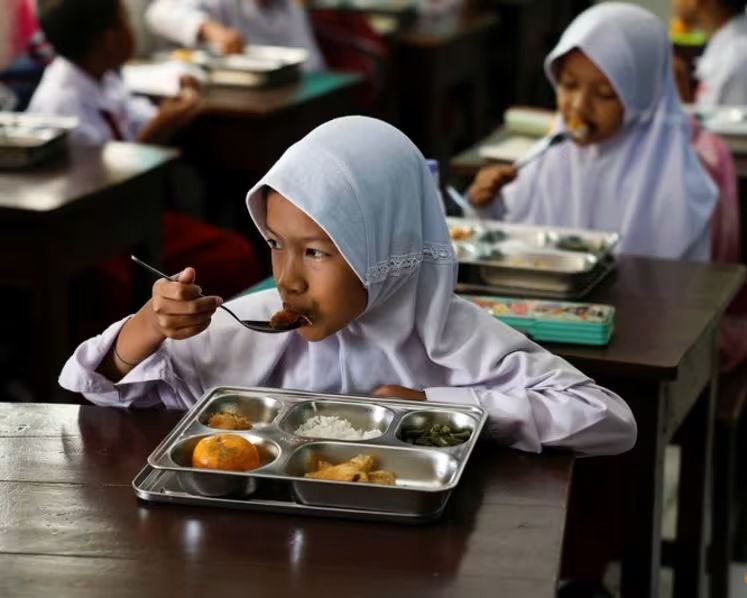
Indonesia's ambitious free meals initiative, positioned as President Prabowo Subianto's marquee domestic policy achievement, entered fresh institutional crisis on Wednesday when the head of its overseeing agency announced her resignation due to health complications. The departure of Nanik Sudaryati Deyang from the National Nutrition Agency marks the second significant leadership vacuum in the initiative within roughly five weeks, underscoring deepening management instability at an organisation managing one of Southeast Asia's most expensive social programmes.
Nanik, who assumed leadership of the National Nutrition Agency in June following her predecessor's removal, cited medical necessity for stepping down. In communications posted to social media, she revealed that a cardiologist had diagnosed severely compromised arterial passages brought on by work-related stress, necessitating treatment abroad. She framed her decision as one made jointly with Prabowo, who apparently approved the departure on compassionate grounds. The announcement came as the agency confronted mounting external pressures, including criminal proceedings related to programme administration and successive reductions in allocated funding.
The programme's leadership instability reflects broader institutional strain. Nanik's immediate predecessor was stripped of his position by Prabowo approximately four weeks prior and subsequently detained facing allegations of corruption intertwined with the programme's multibillion-dollar budget. That removal signalled the administration's intention to enforce accountability within the initiative, yet the rapid succession of departures raises questions about the agency's structural capacity to execute such an expansive undertaking.
The free meals scheme represents Prabowo's central campaign commitment and carries outsized importance to his administration's legitimacy and economic credentials. Initially designed to extend meals to 83 million beneficiaries encompassing schoolchildren and expectant mothers, the programme has encountered persistent obstacles since commencing operations in January 2025. Complaints have ranged from logistical inefficiencies affecting delivery schedules to quality inconsistencies in food provision, with multiple instances of widespread food poisoning documented among recipients—each incident generating negative publicity and public concern.
Budgetary pressures intensifying the leadership crisis underscore competing fiscal demands facing Indonesia's government. The agency announced the previous day that its 2026 allocation had experienced a second reduction, contracting from 268 trillion rupiah to 229 trillion rupiah, equivalent to approximately $12.79 billion. This slash represents merely the latest compression in financing; the current budget sits more than 100 trillion rupiah beneath the programme's original budgetary authorisation of 335 trillion rupiah, indicating substantially diminished scope relative to initial ambitions.
The budgetary trajectory points to potential further reductions ahead. Agency officials indicated that additional reviews remain pending, with the possibility of supplementary cuts contingent on fiscal assessments. These successive compressions necessitate difficult decisions regarding programme reach and resource deployment, potentially forcing prioritisation of certain beneficiary categories over others. The trajectory from 335 trillion rupiah down to 229 trillion rupiah—approaching a 32 percent reduction from initial planning—suggests the administration confronts genuine constraints in sustaining the promised scale of intervention.
Progress in programme execution, while meaningful in absolute terms, falls significantly short of original targets. Before the most recent budget reduction, the agency reported having delivered meals to 62.5 million individuals, representing approximately 75 percent of the 83 million-person target. Whether the agency can maintain even this reduced distribution level under tighter financing remains uncertain, as Nanik's departure compounds administrative challenges during budget adjustment periods.
Nanik's characterisation of the programme as strictly a nutritional intervention rather than a political undertaking merits scrutiny given its prominent role in Prabowo's electoral platform and governance narrative. She explicitly rejected characterisations of the meals initiative as politically motivated, framing it instead as a technical intervention addressing childhood malnutrition and maternal health. However, the programme's visibility within Prabowo's policy portfolio and its substantial fiscal commitment inevitably entangle it with broader political considerations, particularly given the fiscal pressures and execution challenges it has encountered.
Succession planning remains opaque at the agency level. While Nanik indicated that her replacement would be someone holding a junior position within the National Nutrition Agency, no formal announcement identified the incoming chief. This uncertainty compounds the institutional disruption, as a new leader would require an adjustment period to establish operational direction while simultaneously navigating the budget reduction process and responding to ongoing criminal investigations.
Nanik's reference to a potential supervisory board being established over the agency signals administrative rethinking at the presidential level. Such an arrangement could represent either genuine structural reform intended to improve governance oversight or a response to loss of confidence in the agency's autonomous management capacity. The distinction carries implications for how Indonesia manages large-scale social programmes and whether institutional design will incorporate enhanced accountability mechanisms.
For Southeast Asian observers monitoring Indonesian governance, the programme's difficulties illustrate challenges inherent in implementing universal social provisions at scale. Despite genuine policy intent and substantial resource commitment, the combination of logistical complexity, quality control difficulties, and fiscal constraints has strained institutional capacity. Malaysia and other regional governments developing comparable social safety net expansions may draw lessons regarding the implementation timelines, institutional structures, and financial provisioning necessary to sustain such programmes.
The initiative's future trajectory remains unclear amid leadership transition and budgetary compression. Whether the incoming leadership can stabilise operations, rebuild beneficiary confidence following food safety incidents, and operate effectively under constrained resources will significantly influence both the programme's ultimate success and Prabowo's ability to deliver on a signature campaign pledge. The coming weeks will prove consequential in determining whether the National Nutrition Agency can move past its crisis phase and establish sustainable operational rhythms.

