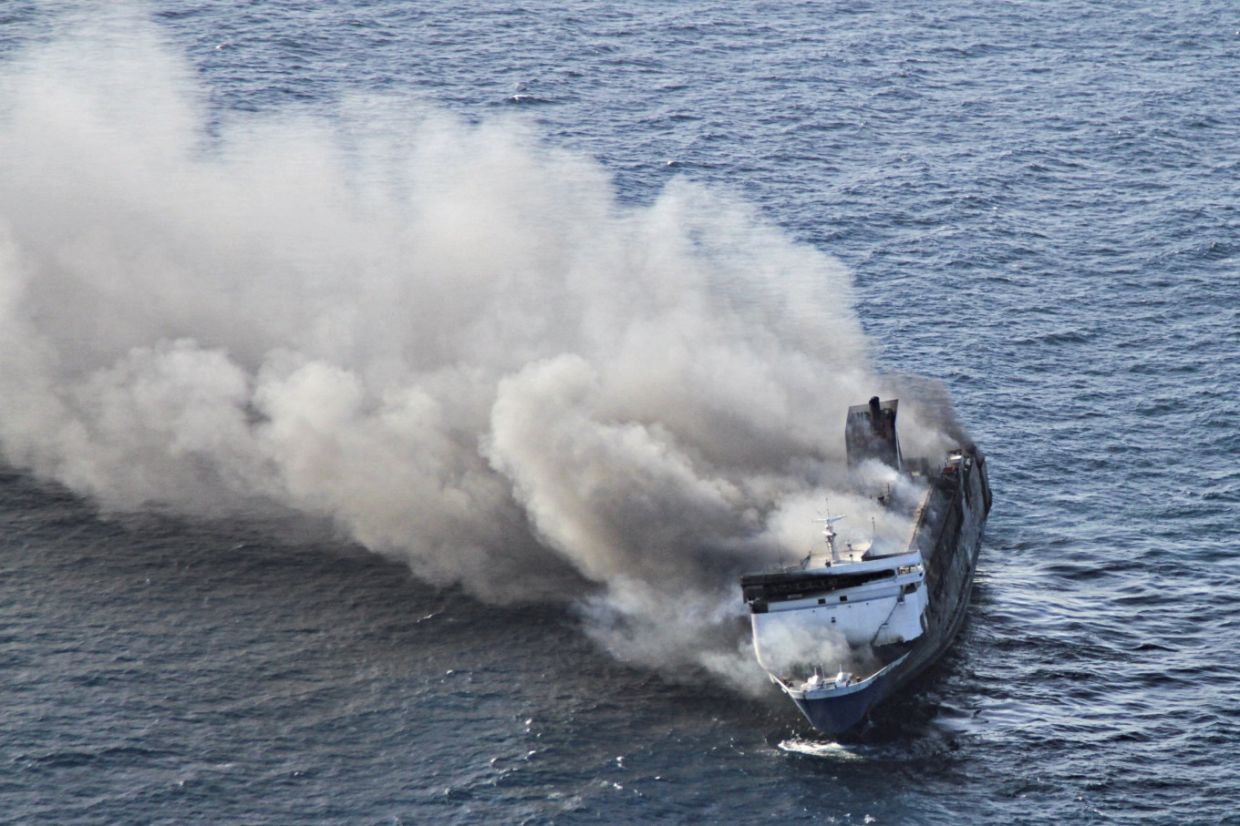
The death of at least five people aboard the KMP Mutiara Sentosa II in early August has exposed critical gaps in Indonesia's maritime safety oversight, with the vessel's chaotic evacuation raising troubling questions about whether the nation's transport regulator adequately enforces compliance among ferry operators. The 160-metre passenger ferry, which plied the busy commercial route between Surabaya in East Java and Makassar in South Sulawesi, caught fire at dawn with 236 passengers and 39 crew members aboard, yet emergency procedures appear to have broken down almost immediately during the crisis.
Accounts from those aboard paint a picture of disorder and inadequate preparation. Udin Karo Karo, who leads the Makassar–Surabaya Truck Drivers Association and represents many of the vessel's regular passengers, alleged that crew members failed to provide any guidance as the fire spread through the vessel. He reported that approximately 40 percent of the drivers aboard managed to save themselves through their own initiative, a statistic that starkly contradicts the structured evacuation protocols required by maritime regulations. The lack of visible lifeboats or inflatable rescue rafts compounds the impression of a vessel operating below minimum safety standards, forcing desperate passengers to leap from the deck and rely solely on life jackets for survival in open water.
What makes this incident particularly alarming for policymakers and maritime experts across Southeast Asia is that the operator, PT Atosim Lampung Pelayaran (ALP), has a documented history of catastrophic failures. The company operated the KMP Mutiara Sentosa I, which caught fire near the same location—Madura—in May 2017, also killing five people. That a company could experience two major fires resulting in identical casualty figures within five years suggests that systemic problems at the organizational level were never adequately addressed after the first tragedy. The recurrence of such incidents demonstrates a troubling failure not just of mechanical maintenance but of corporate safety culture and institutional learning.
Edi Priyanto, deputy chairman of the East Java Occupational Safety and Health Council, articulated concerns that extend well beyond the immediate technical cause of the fire. He emphasised that each maritime accident ought to trigger comprehensive improvements throughout an operator's systems, from crew training protocols to maintenance schedules to emergency response procedures. When similar disasters recur with the same operator, it signals that critical lessons from previous accidents have not been genuinely implemented. Priyanto's assessment suggests that investigations into ferry fires must probe not merely what ignited the blaze but why it spread rapidly, whether emergency systems functioned, and whether the crew possessed adequate training and composure to manage the crisis. This holistic approach to accident investigation remains uncommon in Indonesia and many regional maritime jurisdictions.
The implications for Indonesia's broader maritime sector are sobering, particularly given that ferries remain crucial transportation infrastructure for a sprawling archipelago where millions of people depend on sea routes for commerce and livelihood. Maritime safety culture encompasses not only the technical seaworthiness of vessels but also the quality of crew preparation, the consistency of maintenance regimes, the robustness of safety management systems, and the willingness of regulatory authorities to enforce standards rigorously rather than allowing them to become administrative formalities. Priyanto's comments suggest that Indonesian regulators may have been treating safety compliance as a paperwork exercise rather than a genuine commitment to protecting passenger lives.
Transportation Minister Dudy Purwagandhi indicated that the government would initiate a comprehensive evaluation of PT ALP's operations pending findings from the National Transportation Safety Committee (KNKT). He acknowledged that the company's track record encompasses at least two previous maritime accidents, yet his framing suggests that action remains contingent on investigative conclusions rather than proactive suspension of operations. This cautious approach, while procedurally sound, reflects a reactive posture that may leave other vessels operated by the company continuing service while evaluations proceed. The delay between incident and regulatory intervention remains a persistent weakness in Indonesia's maritime oversight regime.
The KMP Mutiara Sentosa II fire occurred within weeks of another major maritime disaster when a ferry sank near Selayar, a small island off South Sulawesi, claiming at least four lives with fourteen people missing after authorities concluded search operations. The clustering of major maritime incidents within such a compressed timeframe cannot be dismissed as coincidental variation. Rather, it points to underlying structural problems in how Indonesia regulates, inspects, and certifies vessels for passenger service. When successive disasters occur across different operators and routes, the common denominator shifts from individual company negligence to systemic inadequacies in the regulatory framework itself.
Abdul Hadi, a member of the House of Representatives Commission V responsible for transportation oversight, framed the crisis explicitly as evidence that Indonesia's maritime safety system requires urgent attention beyond routine administrative fixes. He warned that seaworthiness certificates, safety inspections, and compliance procedures have devolved into hollow rituals disconnected from genuine passenger safety. For a nation with thousands of islands and millions dependent on maritime transport, allowing such disconnects to persist represents a profound breach of public trust. Hadi's call for thorough rather than formulaic safety inspections acknowledges a hard truth: that Indonesia's maritime regulator may lack either the resources or the institutional will to conduct genuinely rigorous oversight of all operating vessels.
The potential regional implications extend beyond Indonesia's borders. Malaysia, Singapore, and other Southeast Asian nations depend on ferry routes that cross international waters and regional seas where safety standards must be harmonised. If major operators are permitted to continue operating with questionable safety cultures after fatal incidents, it creates risks not only for Indonesian passengers but for regional maritime commerce and the cohesion of safety protocols across the Association of Southeast Asian Nations. Neighbouring countries may feel compelled to impose their own restrictions on ferry services originating from ports where oversight appears inadequate, fragmenting the regional maritime transport network.
The lack of immediate comment from PT ALP itself underscores a broader accountability vacuum that appears to characterise Indonesia's maritime sector. Even as government officials and safety experts dissect the causes of disaster, the company at the centre of the controversy remains silent and apparently unencumbered by urgent pressure to suspend operations or implement emergency safety measures. This silence reflects an asymmetry of power that allows operators to maintain service continuity while regulators deliberate, rather than establishing a presumption of safety that favours passenger protection during periods of investigation and uncertainty.
Regulatory authorities now face a critical choice about how to respond to accumulating evidence that Indonesia's maritime safety regime has failed to prevent predictable tragedies. One path leads toward genuine structural reform—investing in inspection capacity, establishing more stringent certification standards, empowering regulators to suspend operators pending investigation, and fostering safety cultures within companies through incentives and penalties. The alternative path involves incremental adjustments and strengthened rhetoric without genuine operational change, an approach that would almost certainly lead to further maritime disasters. For Malaysian and other regional observers, the incident on the KMP Mutiara Sentosa II serves as a cautionary reminder that ferry safety cannot be assured through regulation alone but requires sustained institutional commitment to enforcement and a fundamental reorientation of maritime industry culture toward uncompromising passenger protection.

