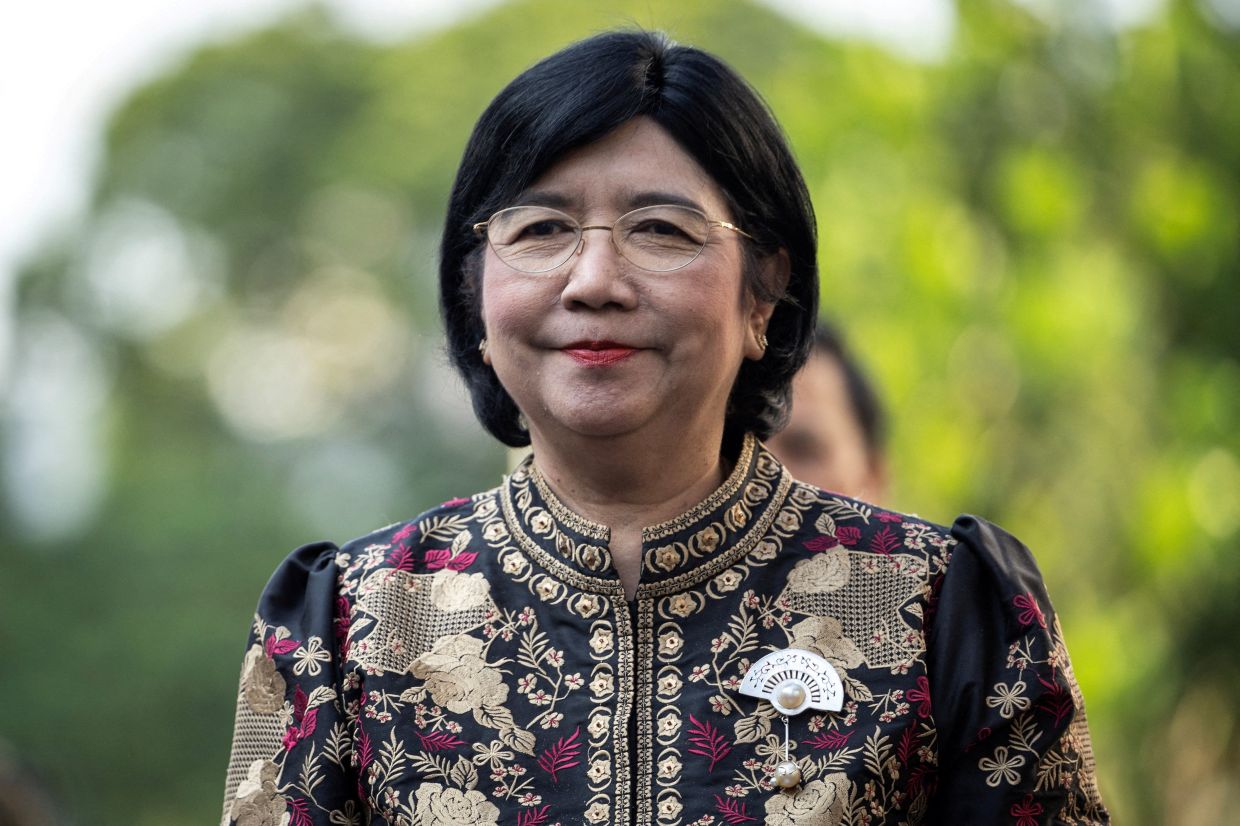
President Prabowo Subianto has put forward Destry Damayanti as Indonesia's next central bank governor, ending weeks of speculation about who would lead the Bank Indonesia following the abrupt departure of Perry Warjiyo last month. The presidential office confirmed the nomination on Monday, with Destry currently serving as interim governor after stepping into the role when Warjiyo resigned citing personal reasons. The decision has been welcomed by financial markets, with the rupiah climbing to its strongest position against the US dollar since mid-June immediately following the announcement.
Destry's elevation represents a continuation of institutional knowledge within Bank Indonesia, where she has held the position of senior deputy governor since 2019. Her appointment as interim leader in the weeks after Warjiyo's exit made her the logical choice for the permanent role, and international financial observers had already flagged her as the frontrunner months before the formal nomination. Her career trajectory within the central bank reflects deep expertise in monetary policy and financial stability matters critical to steering the institution through turbulent economic conditions.
The timing of Warjiyo's departure has proven significant for both the central bank and broader investor confidence in Indonesia. His resignation triggered immediate concerns among international and domestic investors about the continuity of monetary policy and the autonomy of the institution. These worries compounded existing unease regarding Indonesia's economic trajectory, with the G20 economy struggling against multiple headwinds including persistent fiscal concerns and market transparency issues. The uncertainty had weighed on sentiment towards Indonesia as an investment destination, making the swift nomination of a respected internal figure crucial for restoring confidence.
Parliament, dominated by Prabowo's broad coalition of political parties, will determine the outcome of Destry's nomination within the coming month. Historical precedent strongly favours approval, with no sitting president's gubernatorial nominee rejected by parliament since 2008. This suggests Destry's confirmation is highly probable, though the formal process remains necessary. The parliamentary timeline means Bank Indonesia should have permanent leadership in place relatively quickly, providing stability during a period of significant economic challenges.
The central bank faces mounting pressure to balance competing demands as it supports the government's ambitious economic agenda. Prabowo's administration has set an aggressive growth target of 8 percent annually, a significant leap from Indonesia's recent performance hovering around 5 percent. Bank Indonesia under Warjiyo was already attempting to reconcile accelerating growth with its traditional mandates of controlling inflation and stabilising the rupiah currency. This balancing act has become more delicate as policymakers grapple with external pressures, including geopolitical tensions in the Middle East affecting global economic dynamics.
Warjiyo's tenure demonstrated the strain these competing priorities place on the institution. During his leadership, the central bank implemented a cumulative 100 basis point increase in interest rates across 2024, attempting to anchor inflation expectations while supporting currency stability. Beyond conventional rate adjustments, Bank Indonesia introduced rupiah hedging incentives and deployed high-yielding short-term securities to attract foreign capital flows. These measures reflected efforts to defend the rupiah without constraining growth excessively, a difficult equilibrium to maintain given external economic headwinds.
Destry will inherit this complex policy framework alongside expectations from the executive branch for more aggressive growth-supporting measures. The tension between fiscal expansion desires and monetary restraint has become a defining feature of Indonesia's recent policy debates. International observers question whether Bank Indonesia can maintain institutional independence while responding to government pressure for looser conditions. Questions about the central bank's autonomy carry weight given previous concerns about governance standards and transparency in Indonesian financial markets, issues that have periodically rattled foreign investor confidence.
The rupiah's immediate positive reaction to Destry's nomination reflects market relief that leadership continuity appears likely. Currency stability matters considerably for Indonesia given its reliance on commodity exports and foreign investment. A weaker rupiah increases import costs and inflation pressures, while excessive strength can hurt export competitiveness. Bank Indonesia's policies directly influence currency movements, making the choice of governor consequential for economic management. Investors appear satisfied that Destry, as an internal candidate with substantial central banking experience, will maintain pragmatic policies rather than dramatically shift direction.
Destry's appointment also carries symbolic importance for gender representation in senior economic policymaking roles across the region. Her elevation to Indonesia's highest monetary authority position demonstrates institutional recognition of female talent in technical financial roles, an area traditionally dominated by men in Southeast Asia. Her background and expertise suggest she was selected primarily on merit and experience, though her gender may also signal broader modernisation within Indonesian institutional leadership.
Looking forward, Destry's leadership will substantially shape Indonesia's economic trajectory through 2025 and beyond. Her decisions regarding interest rates, forex interventions, and liquidity management will influence whether the country can achieve its growth ambitions while maintaining macroeconomic stability. The geopolitical environment remains uncertain, with potential implications for commodity prices, capital flows, and external financing conditions. Bank Indonesia's role in navigating these challenges will be crucial for sustaining investor confidence and supporting Indonesia's development objectives within a complex regional economic landscape.

