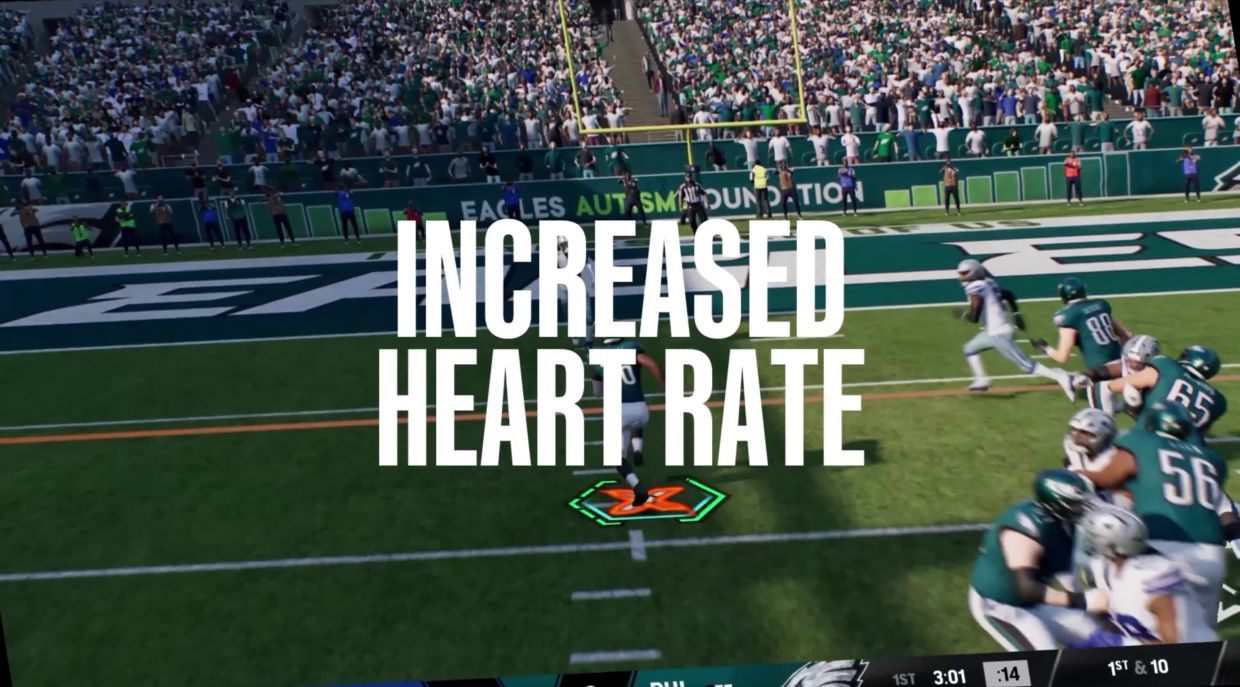
When a linebacker collides with a running back during what appears to be an ordinary play in Madden NFL, many players witness routine animation. But for those who have downloaded a freely available modification of the game, the experience transforms dramatically. Vision becomes distorted and blurred, light sensitivity overwhelms the screen, nausea sensations intensify, the player's heart rate visibly quickens, headaches mount, and breathing becomes laboured as dizziness and tinnitus disrupt the gameplay. The screen itself shakes in rhythm with an unsettling ringing sound that mimics the auditory hallmark of a concussion. This technological intervention carries a modest reach within the gaming community, yet its underlying message resonates with profound clarity about the long-neglected reality of brain injuries in American football.
The Madden franchise, one of sports entertainment's most commercially successful properties, has meticulously engineered its latest iteration to deliver unprecedented realism in every dimension—except one conspicuous omission. Electronic Arts, the developer, has declined to comment on the modification's existence or the broader questions it raises about the game's design philosophy. The creative team behind this concussion mod represents a grassroots effort to counterbalance what they perceive as an uncomfortable sanitisation of football's most serious injury. Their work spans 9,000 lines of code, representing considerable technical and philosophical commitment to shifting how players engage with the sport's most devastating health consequence.
Chris Borland, the former San Francisco linebacker who became a prominent voice for player safety by walking away from the NFL during his rookie season, recognises the modification's value as a consciousness-raising exercise. However, he draws an important distinction between visual representation and lived experience. "It's really realism up to a point," Borland explained, questioning whether any video game simulation can truly capture the profound disruption that concussions inflict on daily life. He posed a pointed rhetorical question: could the mod incorporate the domestic turbulence—the irritability, relationship strain, and personal turmoil—that often accompanies genuine brain injuries? Such authentic representation would arguably demand elements that transcend typical gaming narratives, pushing into territory that most commercial entertainment deliberately avoids.
The history of concussions within the Madden franchise reveals an intriguing arc of cultural sensitivity and corporate calculation. During the 1990s, when the game first emerged, injured players were removed by ambulance, a visual acknowledgment of medical severity. Throughout the 2010s, affected athletes would visibly writhe in pain and undergo what appeared to be concussion protocol assessments. This acknowledgment coincided, however, with the NFL itself facing unprecedented scrutiny over brain injuries. The death of Hall of Famer Junior Seau, subsequently diagnosed with chronic traumatic encephalopathy (CTE), the degenerative neurological condition ravaging former players, catalysed significant legal and cultural reckoning. The league eventually settled a lawsuit brought by thousands of former players and their families alleging systematic concealment of brain injury risks, ultimately paying more than US$1.5 billion in claims. Hollywood amplified these concerns when a major motion picture starring Will Smith dramatised the NFL's collision with scientific evidence.
By the conclusion of that transformative decade, concussions had vanished entirely from Madden's design. This elimination occurred despite the NFL's own acknowledgment of escalating head injury prevalence. Last season alone, the league recorded 168 reported concussions, a significant spike from the 129 cases documented the previous year, attributable partly to rule modifications that reinstated more kickoff returns. The league maintains a stringent concussion protocol requiring sideline blue tents where players undergo standardised testing upon exhibiting potential symptoms. Yet this same institutional commitment to player safety during live competition disappeared within the simulated version officially licensed under the NFL's brand.
Ben Utecht, the former tight end who retired in 2010 specifically because of mounting concerns about concussions' long-term neurological consequences, articulated the institutional logic undergirding this omission. The league, he explained, had no incentive to highlight head injuries within marketing materials directed at youth populations, fearing that parental awareness might discourage the next generation from participating. "But," Utecht countered with evident frustration, "you shouldn't just remove one injury if you're going to include the rest." His observation captures an uncomfortable hypocrisy: Madden continues depicting ankle sprains, bruises, and muscle strains that force strategic decisions about player substitution, yet the single most consequential injury disappears entirely. Players can even disable injury mechanics altogether if desired, yet the selective exclusion of concussions suggests corporate messaging rather than consistency.
The NFL's licensing department conducts annual reviews of Madden games ostensibly for "quality control," and has engaged in substantive discussions about incorporating concussion mechanics. A former league executive recalled negotiations specifically addressing whether concussion depictions should appear and, if so, how realistic that representation should be. The complexity of brain injuries—identical impacts producing different neurological outcomes across individual players—presented technical implementation challenges that the league apparently deemed insurmountable or undesirable. Another source involved in these negotiations revealed that the league wanted any concussion feature depicted with clinical accuracy, perhaps recognising that cartoonish or obviously artificial representation would undermine messaging.
The modification available exclusively for personal computers emerged from the broader modding community, which has long served as a laboratory for alternative gaming experiences. College football enthusiasts have used such modifications to update decade-old rosters with contemporary players, while role-playing game communities reshape character creation and inventory systems. This concussion mod, however, transcends technical novelty; it represents a deliberate commentary on the gap between competitive sports' actual dangers and their digital representation. The creators explicitly intended to expose players to the symptomatological reality of brain injuries, betting that visceral experience—even filtered through a screen—might catalyse greater awareness among audiences who would never otherwise encounter educational materials or medical literature.
Kristen Thomson Sheely, executive director of the Derek Sheely Foundation, recognises Madden's extraordinary cultural penetration, particularly among younger demographics who would constitute the athlete pipeline. Her son Derek was a fullback at Frostburg State University in Maryland when he sustained a brain injury during a 2011 football practice. Despite complaining of headaches following an initial impact, coaching staff reportedly derided his complaint and returned him to a 7-on-7 drill. A subsequent collision with a defensive back proved catastrophic; Derek walked to the sideline but collapsed within minutes and never regained consciousness. The family ultimately reached a US$1.2 million settlement with the NCAA and Frostburg State, which retired his jersey number and memorialised it on campus.
Sheely emphasises that the Madden modification could reach audiences utterly disconnected from traditional concussion awareness initiatives. The foundation typically distributes educational kits targeting formal contexts—schools, athletic programmes, medical facilities. Yet Madden's reach extends into millions of households, capturing attention during leisure time when receptivity to messaging might actually intensify precisely because the information arrives wrapped in entertainment rather than institutional authority. The mod's closing sequence honours Derek Sheely specifically, unfurling his retired jersey number, 40, as games conclude. This memorial transforms gameplay's final moment into genuine reflection, connecting abstract symptom simulation to an actual person's irreversible loss.
The tension between realism and responsibility illuminates contemporary questions about how commercial entertainment addresses public health. The Madden franchise has invested extraordinary resources into photorealistic graphics, authentic play-calling systems, and granular physiological modelling—yet deliberately excised the single most serious injury affecting its subject matter. This selective representation amounts to a editorial choice, one that prioritises commercial interests and institutional relationships over clinical accuracy. The grassroots concussion modification exposes that gap, suggesting that genuine realism demands including the complications that professional football relentlessly downplays. Whether mainstream video game developers will ultimately align their simulations with documented risk remains an open question about entertainment's responsibility to younger audiences learning about sport through digital channels.
For Malaysian and broader Southeast Asian readers, this American debate carries indirect but significant implications. While American football remains niche in the region compared to football, basketball, and motorsport, the underlying tensions between sporting entertainment, public health messaging, and commercial interests transcend geography. Regional franchises and local gaming communities face analogous choices about how their digital representations address injury risks. As esports and gaming increasingly intertwine with traditional athletics, the precedent established by modifications like Madden's concussion feature suggests that grassroots players and creators may ultimately drive more honest portrayals than official corporate channels. The Derek Sheely case illustrates how institutional failures to prioritise safety during practices result in preventable tragedies that no settlement can remedy. That a fan modification has become necessary to inject reality into an ostensibly realistic simulation represents both an indictment of existing approaches and proof that audiences increasingly demand authenticity over comfortable sanitisation.

