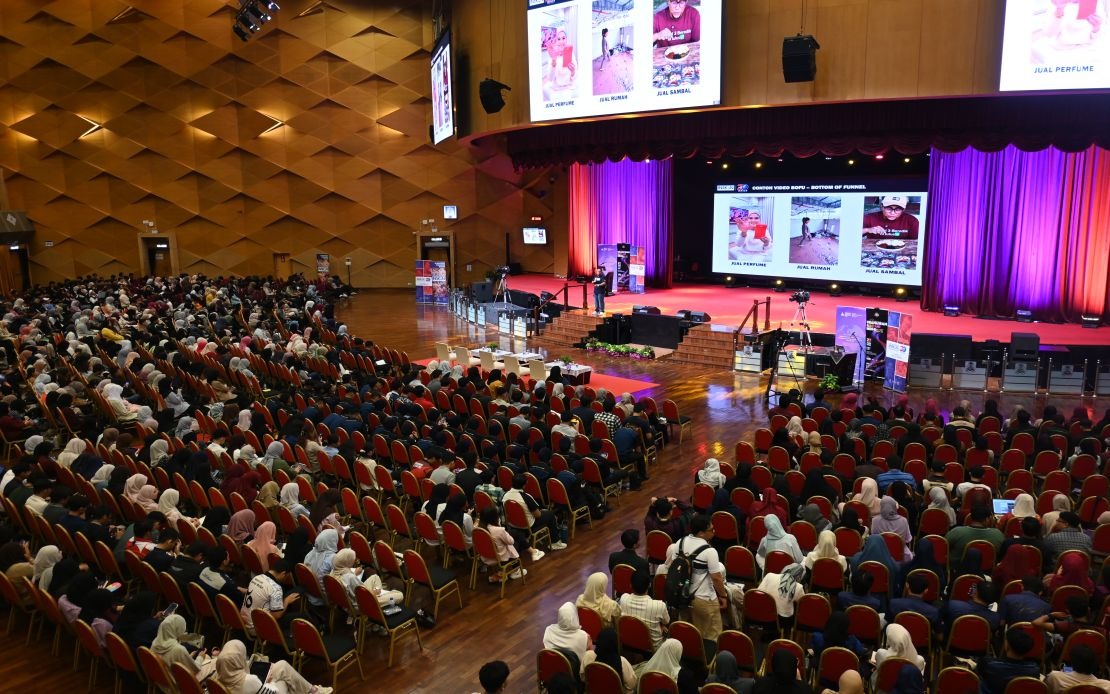
Malaysia's entrepreneurial ecosystem took a significant step forward when the Usahawan MADANI Mega (SUM MEGA) 2026 seminar convened in Shah Alam, drawing an unprecedented 6,877 participants across both physical and virtual platforms. The achievement has earned the event a place in the Malaysia Book of Records for hosting the largest student participation in a single entrepreneurship seminar, underscoring the remarkable appetite among university students and young graduates to explore business ownership as a viable career trajectory.
The seminar represents a collaborative effort between the National Entrepreneurship Institute (INSKEN), the Malaysian Academy of SME and Entrepreneurship Development (MASMED), and Universiti Teknologi MARA (UiTM), bringing together students from across the country for intensive knowledge-sharing and networking opportunities. Through a carefully curated programme that combined practical workshops, capacity-building sessions, and strategic connections between aspiring entrepreneurs and industry stakeholders, the event provided participants with tangible insights into launching and scaling their own ventures. The participation numbers suggest a fundamental shift in how Malaysian youth perceive business creation, moving away from traditional employment pathways toward a more entrepreneurially-minded generation.
During his address at the seminar held at Dewan Agung Tuanku Canselor on the UiTM Shah Alam campus, Datuk Mohamad Alamin, deputy minister for Entrepreneur and Cooperatives Development, emphasised that entrepreneurship has transcended its status as merely an alternative career option. He positioned business creation as a cornerstone of national economic resilience, particularly within an increasingly competitive regional and global marketplace. His comments reflect growing government recognition that job creation through small and medium enterprises cannot solely rely on foreign direct investment or multinational corporations, but must be driven by a dynamic domestic entrepreneurial class capable of innovation and adaptation.
The MADANI government, operating through the Ministry of Entrepreneur and Cooperatives Development (KUSKOP), has articulated a comprehensive strategy for nurturing entrepreneurial activity across multiple dimensions. According to Mohamad Alamin, this approach encompasses capacity-building programmes to enhance business acumen, improved access to financing mechanisms that remain a persistent challenge for young entrepreneurs, expanded market opportunities through government procurement and trade partnerships, digital transformation initiatives to level the playing field with larger competitors, and dedicated business development support to guide ventures through critical growth phases. This multifaceted framework acknowledges that entrepreneurial success requires more than motivation—it demands systemic support across the entire value chain.
Datuk Mustaffa Kamil Ayub, chairman of the INSKEN Board of Trustees and a UiTM board member, articulated a particularly important perspective on the cultural dimensions of entrepreneurship in Malaysia. He characterised entrepreneurship not simply as an occupational choice but as a foundational mindset that can permeate Malaysian society and reshape how young people approach problem-solving and economic participation. This philosophy suggests that the goal extends beyond creating individual business owners; rather, it seeks to cultivate an entrepreneurial culture that influences how professionals across all sectors approach innovation, risk-taking, and value creation. The overwhelming response to SUM MEGA 2026, with nearly 7,000 participants, demonstrates that this cultural reorientation is gaining genuine traction among the demographic that will shape Malaysia's economic future.
A distinctive feature of SUM MEGA 2026 was its emphasis on the MOFA approach—a practical framework focusing on marketing, operations, finance, and business administration. Rather than abstract entrepreneurship theory, participants engaged with concrete business functions that determine whether ventures succeed or fail in competitive markets. This grounded methodology addresses a common gap in Malaysian entrepreneurship education, where aspirational messaging about business ownership sometimes outpaces practical instruction in fundamental operational competencies. By centring the seminar on these functional pillars, organisers provided participants with immediately applicable knowledge they could deploy when launching their own enterprises or joining entrepreneurial ventures.
The strategic positioning of SUM MEGA 2026 within Malaysia's broader entrepreneurial development ecosystem reflects a sophisticated understanding of how systemic change occurs. The event served not only as a forum for student engagement but as a demonstration of collaborative potential between government agencies, academic institutions, financial services providers, and the business community. This multi-stakeholder approach recognises that sustainable entrepreneurial ecosystems cannot be constructed through isolated government programmes; rather, they require coordinated action across sectors, with higher education institutions like UiTM playing crucial roles in talent development and early-stage mentoring.
INSKEN's portfolio of complementary programmes—including the INSKEN Masterclass, BANGKIT initiatives, and the PROTÉGÉ mentorship scheme—suggests a deliberate strategy to support entrepreneurs across different developmental stages. Rather than offering one-off seminars, the institute has constructed a pathway through which individuals can progress from initial exposure and awareness through to advanced skill development and personalised mentorship. This scaffolded approach increases the likelihood that the enthusiasm generated at SUM MEGA 2026 translates into actual venture creation, rather than remaining merely as inspiring but ultimately unfulfilled aspirations.
The alignment of SUM MEGA 2026 with the National Entrepreneurship Policy 2030 indicates that student and graduate entrepreneurship development represents a priority within Malaysia's medium-term economic planning. By investing in young entrepreneurs today, policymakers are essentially preparing the economic leadership cadre of the 2030s and 2040s. The scale of participation at the seminar suggests receptiveness to this vision among students themselves, though translating this enthusiasm into sustained business creation will require continued government support and market conditions that enable small ventures to access capital, talent, and customers.
For Malaysian and Southeast Asian readers, the significance of SUM MEGA 2026 extends beyond its record-breaking attendance figures. The event signals a deliberate repositioning of entrepreneurship within Malaysia's national development strategy, one that recognises job creation through business formation as crucial to addressing youth unemployment and underemployment challenges. As regional economies increasingly compete for talent and investment, the capacity to develop homegrown entrepreneurs becomes a competitive advantage. The Malaysian government's systematic approach through KUSKOP and its partner agencies, combined with academic institutions' willingness to mobilise student populations, suggests that creating an enabling ecosystem for young entrepreneurs is being treated as essential infrastructure rather than optional initiative.

