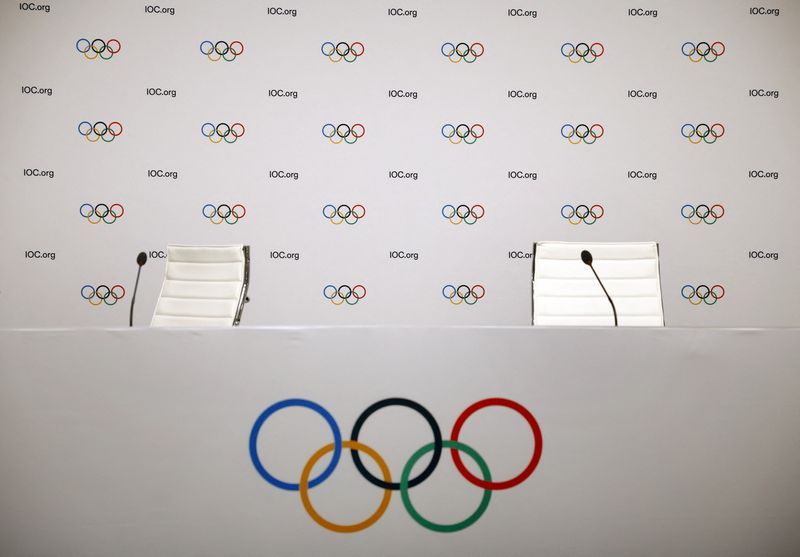
The International Olympic Committee is preparing to examine sweeping revisions to the Olympic Charter that would emphasise the independence of sport from political interference, in a development that carries substantial implications for the future involvement of Russian athletes in global athletic competition. The proposed amendments, scheduled for deliberation on Wednesday, would reinforce language stating that the IOC must maintain neutrality "at all times, free from governmental, cultural, societal or economic pressure" in its operations and decision-making processes.
The IOC has framed these modifications as protective measures designed to shield athletes and competitions from external manipulation and prevent the Olympic Games from becoming a tool for advancing geopolitical objectives. According to the international governing body, the changes aim to create a more resilient framework that safeguards the integrity of Olympic competition regardless of global circumstances or tensions between nations. Officials argue that strengthening neutrality provisions will establish clearer standards for how the organisation navigates complex situations where sport intersects with international relations and politics.
Yet critics contend that the proposed revisions paradoxically could undermine the very safeguards that have constrained Russia's participation following years of athletic and organisational misconduct. Rob Koehler, director general of advocacy group Global Athlete, has warned that such amendments risk fundamentally compromising the Olympic movement's credibility. "The message will be unmistakable: war, systematic doping and repeated violations of the Olympic Charter are no longer barriers to full participation," Koehler stated, highlighting concerns that prioritising neutrality could create an escape route from accountability.
Russia's current restrictions stem from multiple serious breaches. The country has faced prolonged sanctions connected to a state-orchestrated doping programme exposed following the 2014 Sochi Winter Games, an unprecedented scandal that revealed systematic manipulation of anti-doping systems. Following Russia's invasion of Ukraine in 2022, the IOC recommended that Russian and Belarusian athletes be excluded from competitions. The situation intensified when the Russian Olympic Committee was suspended in October 2023 after it recognised regional Olympic councils in Russian-occupied Ukrainian territories—a move the IOC determined violated both the Olympic Charter and Ukraine's territorial sovereignty.
However, the IOC has begun a measured reversal of these restrictions. In December, the organisation announced that Russian and Belarusian youth athletes should be permitted to participate in international competitions without limitations. In a subsequent move last month, the IOC completely lifted restrictions on Belarusian athletes, effectively enabling them to compete in international events and to pursue qualification pathways for the 2028 Los Angeles Olympics. Notably, the IOC stated that comparable relief would not immediately apply to Russian athletes, though speculation has intensified that such a decision could emerge within coming months.
The Russian government has actively campaigned for restoration of full participation. Sports minister and Russian Olympic Committee chairman Mikhail Degtyarev stated in April that his ministry and the ROC were "doing everything possible" to facilitate the return of the Russian national team competing under its own flag. President Vladimir Putin was quoted in April as expressing optimism that the IOC's newly constituted leadership might adopt a fresh perspective on Russia's status. These statements reflect Moscow's determination to secure not merely participation by individual Russian athletes, but formal reinstatement of the Russian Olympic Committee itself.
The IOC's legal affairs commission is currently reviewing documentation concerning the ROC while simultaneously evaluating its anti-doping mechanisms. The World Anti-Doping Agency continues investigations into Russian sporting structures, introducing additional complexity to any potential reinstatement process. This ongoing scrutiny suggests that while the IOC may be ideologically tilting toward reintegration, practical obstacles tied to demonstrable compliance with anti-doping obligations remain in place. The timeline for resolving these investigations could significantly influence when—or whether—full Russian reinstatement becomes feasible.
Beyond Russia specifically, the proposed Charter amendments include a separate but substantial reform: removing the fixed enumeration of international federations from the Olympic Charter itself. This modification would grant the IOC substantially greater discretionary authority to determine the Olympic programme based on criteria including financial considerations, logistical requirements, and worldwide appeal. This structural change would fundamentally alter how Olympic sports are selected and retained, shifting decision-making power further toward the central IOC apparatus and away from the established international federations that have traditionally governed individual sports.
For Malaysian and Southeast Asian readers, these developments warrant close attention. Several nations in the region have athletes who compete internationally and could be affected by shifting IOC policies on Russian participation and by the altered dynamics of Olympic sport selection. Additionally, if the IOC's apparent trajectory toward reintegrating Russia continues, it will test the organisation's stated commitment to consequences for geopolitical transgression—a principle potentially relevant to other contentious international situations. The Charter amendments represent a pivotal moment in determining whether the Olympics will function as a venue where political behaviour shapes athletic participation, or whether the international community's demands for accountability will prevail.