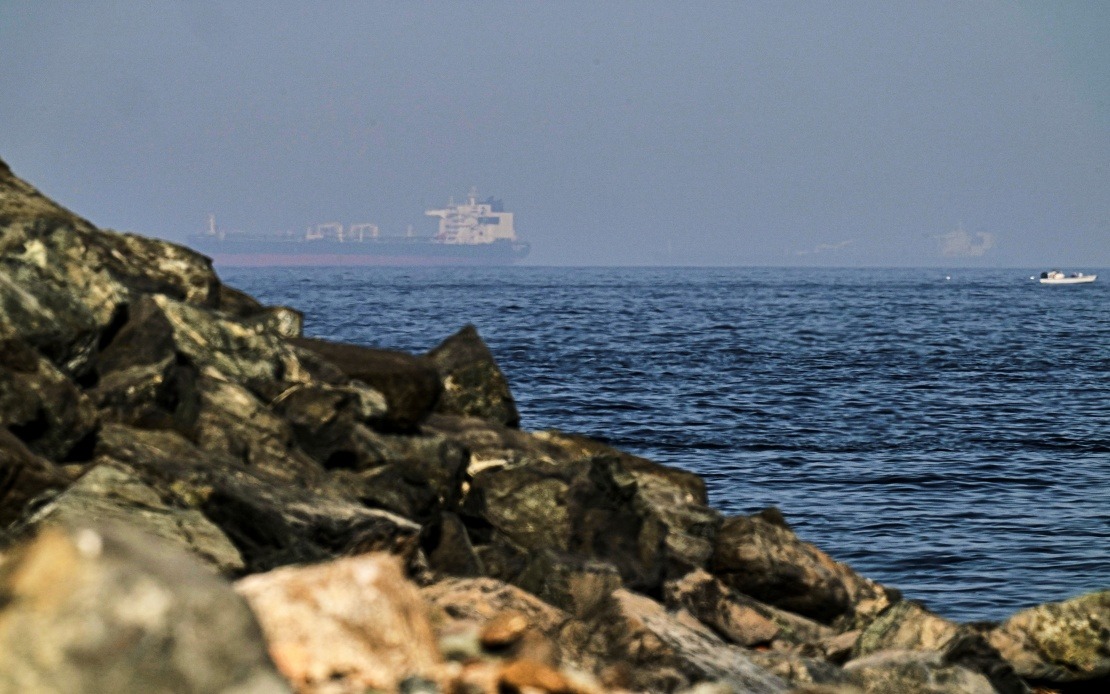
Iran's Secretary of the Supreme National Security Council Major General Mohsen Rezaei has announced that Tehran and Muscat have reached an agreement to establish a temporary maritime passage through the Strait of Hormuz, permitting vessels to transit the strategically vital waterway. The arrangement represents a significant development in efforts to maintain commercial shipping through one of the world's most critical chokepoints, through which roughly one-third of global seaborne oil trade typically flows.
The corridor operates across the territorial waters of both nations, with the Iranian official explaining that the passage is positioned along the centre of the strait and jointly administered by both countries. Rezaei detailed the arrangement during an exclusive television interview with Al-Manar, emphasising that the exact location and boundaries of the corridor have been precisely established through bilateral coordination between Tehran and Muscat. This collaborative approach reflects the maritime complexities of the waterway, which is bordered by Iran to the north and Oman to the south.
Crucially, Rezaei linked any full and permanent restoration of normal maritime traffic through the Strait of Hormuz to broader political settlements that remain elusive. He indicated that Iran has prepared a comprehensive set of conditions for presentation to Washington, and the temporary corridor represents only a limited concession pending American compliance. The Iranian security official stressed that substantive progress on regional conflicts—particularly the situations in Lebanon and Gaza—would be prerequisite to establishing broader shipping arrangements. This linkage underscores how Tehran views the strait's status as inseparable from its wider geopolitical interests across the Middle East.
The Iranian official's statements reveal deep mistrust between Tehran and Washington, characterised as a profound chasm that would require tangible American commitments before new confidence-building measures could be implemented. Rezaei asserted that the United States must demonstrate genuine commitment to addressing Iran's core concerns, including withdrawal of Israeli forces from Lebanese territory and cessation of hostilities in Gaza. The framing suggests Iran intends to use control over this critical shipping route as leverage to influence American policy decisions across multiple regional theatres.
Beyond maritime concerns, Rezaei addressed Iran's military readiness and strategic posture. He indicated that Tehran has calibrated its responses to confrontations incrementally, initially avoiding strikes on American military installations in Persian Gulf states before subsequently expanding operations to encompass US bases in other countries. This graduated approach, according to Rezaei, was designed to incorporate humanitarian considerations while building regional and international support for Iranian actions. Such framing reflects Tehran's effort to position itself as a measured actor despite escalatory tensions.
Regarding potential future conflicts, the Iranian security chief stated that any renewed military confrontation would differ fundamentally from previous engagements, though he provided limited specifics about such differences. He suggested that Iran's shift of American focus toward economic pressure indicated Washington's recognition that military superiority alone proves insufficient as a policy tool. Correspondingly, Rezaei warned that Iran would respond to economic escalation through measures targeting American economic interests throughout the region, indicating readiness for extended competition beyond military dimensions.
Rezaei's comprehensive list of conditions for understanding with the United States encompasses ceasefire arrangements across multiple conflict zones: termination of war in Lebanon, Israeli withdrawal from occupied Lebanese territories, cessation of hostilities in Gaza, and an end to Israeli military operations against Syria. These demands reflect Iran's conception of regional security as interconnected, with developments in any single country affecting stability and investment climates throughout the broader Middle East. This systemic view explains Iran's insistence on addressing multiple theatres simultaneously rather than compartmentalising negotiations.
The Iranian official emphasised the historical depth of Iran-Lebanon relations, tracing connections between Jabal Amel scholars and Iranian religious and intellectual centres across centuries. He reiterated Tehran's commitment to supporting Lebanese interests with all available capabilities, suggesting continued military and financial backing for allied groups within Lebanon. This emphasis on historical ties serves to legitimise Iran's regional involvement and positioning as a protector of Lebanese interests, particularly amid ongoing Israeli military operations in Lebanese territory.
On the military situation, Rezaei asserted that Israeli forces lack capability to advance toward Beirut or southern suburbs given losses inflicted by Hezbollah over recent months, combined with the broader Iranian military threat. This assessment, if accurate, would indicate significant limitations on Israeli operational capacity in southern Lebanon despite substantial military advantages in conventional capabilities. The claim reflects how Iranian officials publicly frame regional military balances, emphasizing constraints on Israeli freedom of action.
Addressing potential Turkish-Iranian tensions, Rezaei ruled out the possibility of Ankara imposing economic pressure on Tehran, citing the depth of bilateral trade relationships. He invoked Turkey's historical role as a critical trade corridor during the Iran-Iraq War in the 1980s, suggesting enduring strategic partnership transcending temporary disagreements. This emphasis on Turkish-Iranian economic interdependence appears designed to preempt any possibility of coalition-building against Iran through economic coercion, should regional tensions escalate further.
For Malaysian and Southeast Asian observers, these developments carry significant implications for global energy security and maritime commerce. Any sustained disruption to the Strait of Hormuz would immediately impact oil prices and shipping costs affecting regional economies heavily dependent on Middle Eastern energy supplies and global trade. Malaysia, as a major regional maritime nation and trading hub, maintains strong interests in preserving freedom of navigation through critical international waterways. The temporary corridor arrangement suggests some commitment to maintaining basic commercial traffic, yet its fragility—depending entirely on resolution of distant regional conflicts—introduces uncertainty into energy and trade planning.
The agreement between Iran and Oman demonstrates that diplomatic channels remain open even amid heightened regional tensions, offering potential models for other maritime disputes in Southeast Asian waters. However, the explicit conditionality attached to the corridor—its dependence on American policy shifts across multiple regional theatres—illustrates how interconnected Middle Eastern conflicts have become, with spillover effects potentially touching global markets and regional stability far beyond the immediate geographical area.

