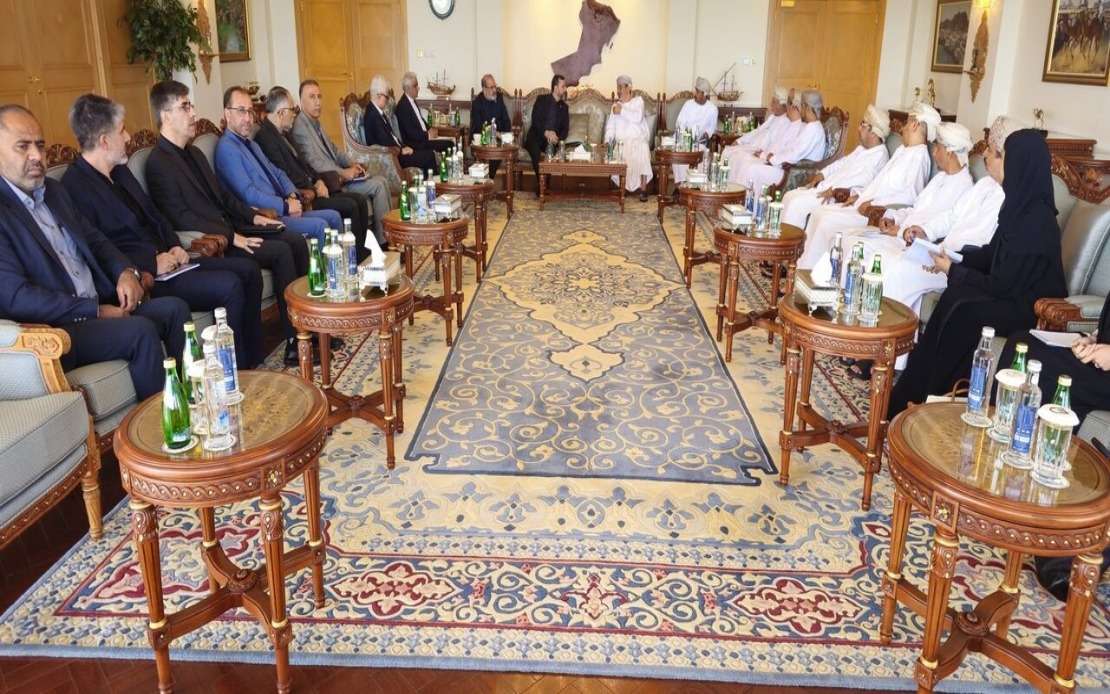
Iran and Oman have taken a significant step towards formalising dialogue over one of the world's most strategically important maritime corridors by convening the inaugural session of their Joint Hormuz Committee. The meeting, which took place during Iranian Deputy Foreign Minister Kazem Gharibabadi's visit to Muscat on Monday, represents a tangible outcome of renewed diplomatic engagement between the two neighbours and signals their determination to shape the future management of the Strait of Hormuz through bilateral cooperation rather than unilateral action.
The establishment of this committee follows an earlier high-level visit to Oman by Iranian Foreign Minister Abbas Araghchi and Mohammad Bagher Ghalibaf, Iran's chief nuclear negotiator, on June 23. That diplomatic mission produced a joint statement emphasising that any arrangements governing the Strait must fully preserve the sovereign rights and interests of both littoral states—a carefully worded position that reflects deeper sensitivities about maritime control and regional influence in the Persian Gulf. The committee's creation represents a formalisation of commitments made during that earlier engagement, institutionalising what might otherwise remain ad hoc consultations.
Gharibabadi's announcement of the meeting came through his official social media account, confirming that he had met with Oman's Ambassador-at-Large Abdulaziz Al Hinai to inaugurate the committee's work. The diplomatic formality of this public announcement underscores the significance both nations attach to the initiative and their desire to position it as a model of regional cooperation. For observers tracking Persian Gulf dynamics, the visibility of this engagement offers rare insight into how these two neighbours are attempting to navigate shared interests in maritime security and freedom of navigation.
During their discussions, committee representatives examined pressing issues affecting the Strait of Hormuz and exchanged perspectives on how it should be managed going forward. Rather than producing detailed policy prescriptions at this inaugural session, the delegations appeared focused on establishing common ground and identifying areas of potential consensus. This measured approach suggests both governments understand that building trust around such a sensitive issue requires incremental progress rather than ambitious breakthroughs that might provoke regional tensions or perceptions of compromise.
The committee's mandate extends to determining how shipping services should be provided through the Strait, what costs should be associated with such arrangements, and how these elements align with established international standards and norms. This technical focus—centring on practical logistics rather than geopolitical posturing—may reflect an attempt by both nations to depoliticise the Strait's governance and ground discussions in operational realities. For Malaysia and other regional trading nations that depend on Strait of Hormuz transit, such pragmatism offers hope that the world's most critical oil and shipping corridor remains secure and stable.
The committee's framework draws explicitly from Paragraph 5 of the Islamabad Memorandum of Understanding, a key international instrument, and from principles respecting the sovereign rights of littoral states. This legal grounding suggests that Iran and Oman are anchoring their dialogue in established international law rather than pursuing novel arrangements that might be viewed as precedent-setting or destabilising. The emphasis on sovereignty likely reflects each nation's determination to ensure that the committee operates as a genuine partnership between equals rather than as a mechanism through which one party exercises disproportionate influence.
The Strait of Hormuz's significance for global commerce cannot be overstated. Approximately one-third of all seaborne traded oil transits through this narrow waterway, making it indispensable to energy security for Asia, Europe, and beyond. Any disruption—whether through miscalculation, conflict, or deteriorated governance—carries enormous implications for international stability and economic wellbeing. Malaysia, as a major trading nation and energy consumer, maintains acute interest in the Strait's continued openness and stability. Iranian-Omani cooperation in establishing clearer governance frameworks could reduce the risk of incidents born from ambiguity or miscommunication.
Oman's role as a bridge-builder in this context reflects its historical positioning as a pragmatic actor within the Gulf. Unlike some of its neighbours, Oman has maintained relatively balanced relations across regional divides and has earned a reputation for discretion and careful diplomacy. Its willingness to establish a formal committee with Iran suggests Muscat views this as a constructive means of securing Oman's own maritime interests while contributing to broader regional stability. For Iran, engaging through this mechanism offers an avenue to discuss Strait governance without the confrontational posture that has sometimes characterised its approach to maritime security issues.
The committee structure, with oversight from both nations' foreign ministries, indicates that discussions will occur within official diplomatic channels with institutional continuity beyond individual personalities or administrations. This permanence is significant because it suggests both governments view these arrangements as more than symbolic gestures or temporary confidence-building measures. Rather, they appear committed to sustained engagement on an issue that touches fundamental questions of maritime security, resource access, and regional sovereignty.
Looking ahead, the committee faces substantial challenges in achieving consensus on contentious issues such as shipping lane management, fee structures, and enforcement mechanisms. However, the simple fact that both nations have agreed to pursue these discussions through a formalised joint body suggests a genuine desire to reduce uncertainty and establish clearer rules of engagement. For Southeast Asian nations including Malaysia that route significant commerce through the Strait, Iranian-Omani cooperation on governance frameworks represents a stabilising development that may help insulate the region from disruption.
The committee's success will ultimately depend on whether both delegations can translate good intentions into practical agreements that accommodate legitimate interests without requiring either party to surrender core positions. The months ahead will reveal whether this initial meeting signals the beginning of substantive cooperation or remains a one-off diplomatic gesture. What appears certain is that both Iran and Oman recognise the mutual benefit of discussing Strait governance openly rather than allowing misunderstandings to accumulate.

