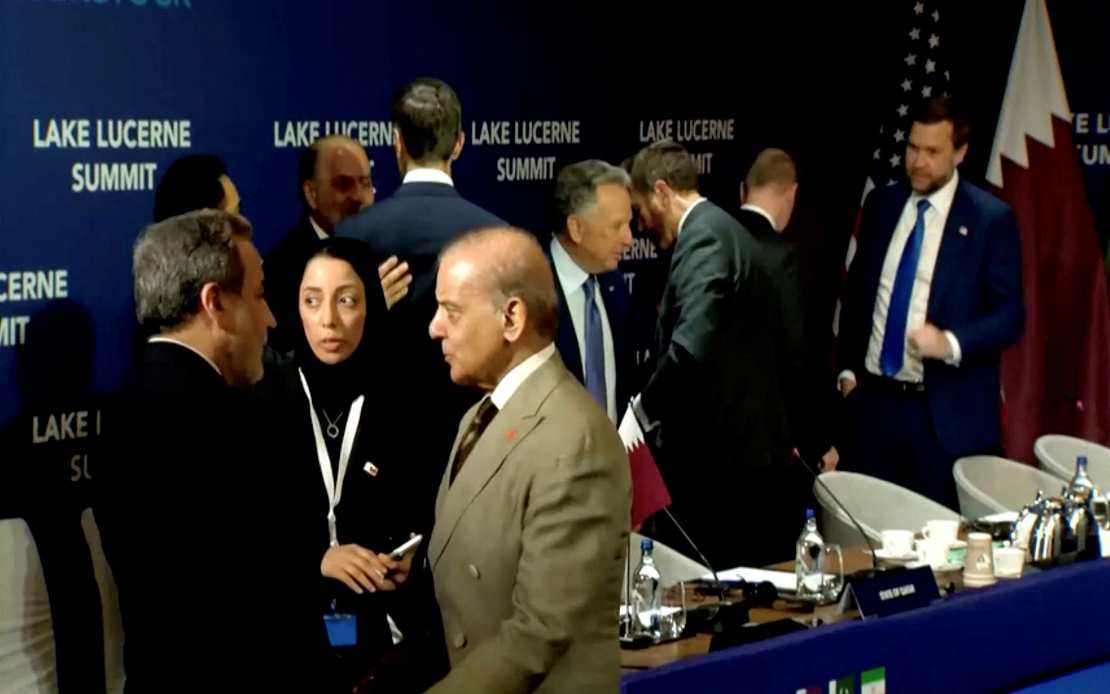
Negotiations between Iran and the United States have reached a significant milestone with the completion of a draft agreement addressing the temporary removal of sanctions on Iranian crude oil exports. Hossein Ghorbanzadeh, a senior member of Iran's delegation, announced the development following technical discussions held in Switzerland, signalling progress in efforts to defuse decades of bilateral tension through dialogue rather than confrontation.
The scope of these negotiations extends considerably beyond oil sanctions alone. The discussions, which resumed at the Burgenstock resort in Switzerland, operate under the framework of the Islamabad Memorandum of Understanding—an ambitious agreement designed to chart a path toward permanent resolution of the longstanding US-Iranian dispute and address wider regional security concerns. This framework represents one of the most comprehensive diplomatic initiatives undertaken in recent years to address the underlying causes of Middle Eastern instability.
Crucially, the implementation of any sanctions relief remains conditional on progress toward broader peace objectives. According to Ghorbanzadeh, the provisions outlined in the memorandum will not take legal effect unless negotiators achieve a final settlement addressing the war in Lebanon, demonstrating that the international community views oil sanctions relief as part of a package deal rather than an isolated concession. This linkage underscores the interconnected nature of Middle Eastern conflicts and the difficulty of addressing them in isolation.
The technical groundwork has been intensive and detailed. Beyond the primary negotiating sessions, delegations conducted parallel technical meetings to resolve specific implementation questions, a common feature of complex international agreements where specialists must iron out the mechanics of compliance and verification. The completion of a draft document on oil sanctions easing represents the culmination of these focused discussions and indicates that negotiators have overcome initial hurdles regarding how temporary relief would operate in practice.
The broader memorandum that governs these talks was formally signed on June 18, following Iran's announcement on June 14 of a 14-point understanding reached through Pakistani mediation. This agreement was inked by Iranian President Masoud Pezeshkian and US President Donald Trump, giving it the highest level of political endorsement. The framework addresses multiple dimensions of regional conflict beyond the bilateral US-Iran relationship, including cessation of hostilities across multiple fronts and restoration of critical shipping lanes.
Among the memorandum's key provisions is the reopening of the Strait of Hormuz, one of the world's most strategically important waterways through which a substantial portion of global oil trade flows. The agreement also envisages lifting the US naval presence that has effectively blockaded Iranian ports, measures that would significantly alter maritime dynamics in the Persian Gulf and have ramifications for global energy markets and international commerce. For Southeast Asian nations, particularly those dependent on stable oil supplies and predictable shipping routes, these developments carry considerable economic weight.
The Iranian delegation has also pursued parallel discussions regarding the release of frozen Iranian assets, raising these issues during separate meetings with the Qatari delegation. These assets, accumulated through decades of sanctions enforcement, represent a substantial financial resource that could be redirected toward Iran's domestic economy and reconstruction efforts. Unfreezing these funds would provide Iran with capital that has been inaccessible due to international restrictions, though the conditions under which such releases might occur remain under negotiation.
The involvement of Qatar as a mediating presence underscores the regional dimension of these negotiations and reflects Doha's diplomatic influence in Gulf affairs. Pakistan's role in facilitating the initial 14-point understanding similarly demonstrates how middle-power diplomacy can contribute meaningfully to major-power negotiations when trust and credibility are at stake. These third-party facilitators provide crucial channels for communication and can help overcome the historical animosity and mistrust that typically characterise US-Iran relations.
For Malaysia and the broader Southeast Asian region, the significance of this development extends beyond immediate bilateral concerns. Stability in the Middle East directly influences regional security architecture, energy prices, and the operational environment for Malaysian shipping and commerce. The Strait of Hormuz remains vital to Southeast Asian trade, and any escalation of Iranian-American tensions historically produces ripple effects throughout global energy markets, affecting fuel prices and transportation costs that ultimately impact Malaysian consumers and businesses.
The path forward remains uncertain despite this progress on the oil sanctions issue. The conditional nature of implementation—tied to resolution of the Lebanon conflict and other regional disputes—means that negotiations must achieve comprehensive agreement rather than piecemeal settlements. This comprehensive approach, while potentially more durable if successful, also creates multiple points where talks could falter should any component reach an impasse.
The technical complexity of unwinding decades of sanctions architecture should not be underestimated. Even if political agreement is reached on temporary sanctions relief, implementing such measures requires coordination among multiple countries, financial institutions, and enforcement agencies. Questions of monitoring, verification, and rapid reversal mechanisms must be resolved to provide assurance to all parties that compliance can be verified and violations addressed swiftly.
The completion of this draft on oil sanctions relief represents a moment of cautious optimism in negotiations that will ultimately reshape Middle Eastern geopolitics. Whether this progress translates into lasting agreements that address the region's fundamental security concerns remains the central question occupying policymakers across multiple continents. For now, negotiators have demonstrated sufficient willingness to engage seriously on technical matters, suggesting that the diplomatic process has genuine momentum despite the formidable obstacles that historically have prevented breakthrough agreements on Iran.
%22%2F%3E%3C%2Fpattern%3E%3C%2Fdefs%3E%3Crect%20width%3D%22100%25%22%20height%3D%22100%25%22%20fill%3D%22url(%23ph2z4zlg)%22%2F%3E%3Crect%20width%3D%22100%25%22%20height%3D%22100%25%22%20fill%3D%22url(%23ph2z4zlp)%22%2F%3E%3Ctext%20x%3D%2250%25%22%20y%3D%2250%25%22%20text-anchor%3D%22middle%22%20dominant-baseline%3D%22central%22%20fill%3D%22rgba(255%2C255%2C255%2C0.95)%22%20font-family%3D%22Georgia%2C%20'Times%20New%20Roman'%2C%20serif%22%20font-weight%3D%22700%22%20font-size%3D%22226%22%20letter-spacing%3D%22-0.02em%22%3EPolice%3C%2Ftext%3E%3C%2Fsvg%3E)
%22%2F%3E%3C%2Fpattern%3E%3C%2Fdefs%3E%3Crect%20width%3D%22100%25%22%20height%3D%22100%25%22%20fill%3D%22url(%23ph51habg)%22%2F%3E%3Crect%20width%3D%22100%25%22%20height%3D%22100%25%22%20fill%3D%22url(%23ph51habp)%22%2F%3E%3Ctext%20x%3D%2250%25%22%20y%3D%2250%25%22%20text-anchor%3D%22middle%22%20dominant-baseline%3D%22central%22%20fill%3D%22rgba(255%2C255%2C255%2C0.95)%22%20font-family%3D%22Georgia%2C%20'Times%20New%20Roman'%2C%20serif%22%20font-weight%3D%22700%22%20font-size%3D%22272%22%20letter-spacing%3D%22-0.02em%22%3EQatar%3C%2Ftext%3E%3C%2Fsvg%3E)