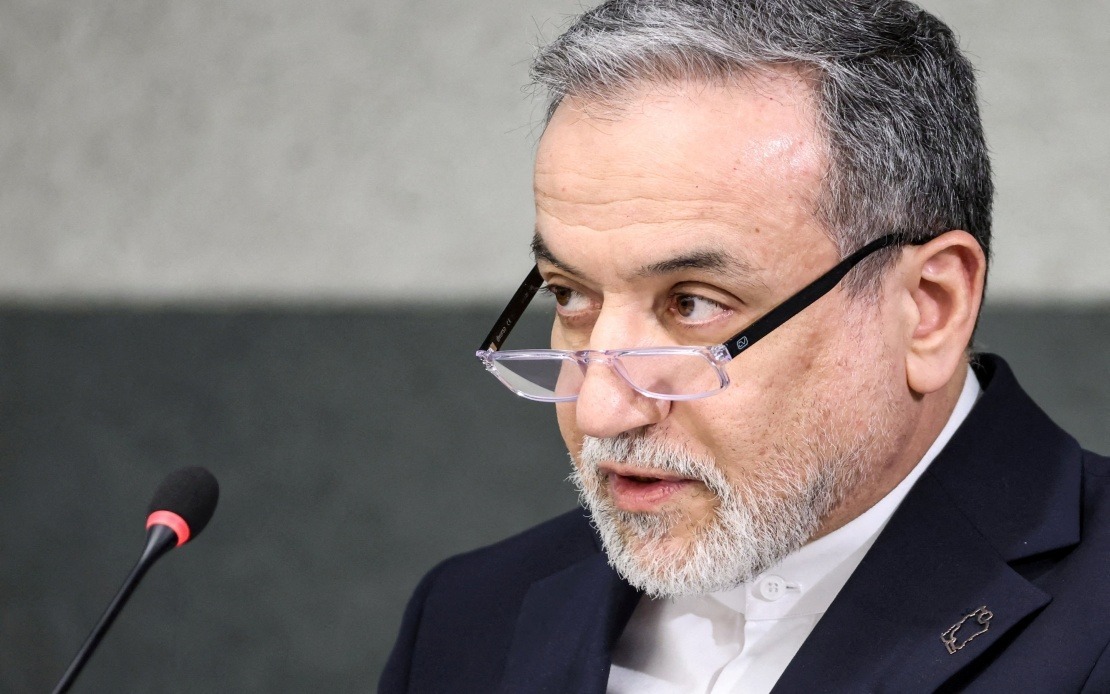
Iran's Foreign Minister Abbas Araghchi has pushed back against US President Donald Trump's proposal to impose a 20 percent toll on merchant vessels navigating the Strait of Hormuz, reaffirming Tehran's claim to oversee the world's most critical oil chokepoint. Speaking on social media Monday, Araghchi acknowledged the principle that whoever secures safe passage through the waterway deserves compensation, but rejected Trump's fee structure as excessive while asserting Iran's permanent custodial role in the region.
Trump announced early Monday that the United States would enforce a blockade of Iran and charge shipping companies 20 percent for safe passage through the strategically vital waterway. The proposal represents an escalation in the administration's approach to constraining Iranian influence and generating revenue from global commerce that depends on uninterrupted access to the Persian Gulf. The Strait of Hormuz handles approximately one-third of all globally traded crude oil, making it indispensable to international energy security and the economic interests of virtually every industrialised nation.
Araghchi's response cleverly reframed the debate by accepting the legitimacy of Trump's underlying logic—that a provider of security services deserves compensation—while delegitimising the American approach as exploitative. By characterising Iran as the natural guardian and protector of the waterway, the Foreign Minister invoked geographic proximity, historical precedent, and regional legitimacy as justifications for Tehran's authority. His assertion that Iran will remain the guardian "forever" underscores a hardened position and suggests Tehran views this as a matter of sovereignty rather than negotiable policy.
The dispute over the Strait of Hormuz reflects decades of tension between Washington and Tehran over regional hegemony and control of critical infrastructure. For Iran, the waterway represents not merely a commercial passage but a demonstration of its geopolitical weight and ability to influence global energy markets. For the United States, maintaining free navigation and preventing any single actor from wielding monopolistic control has been a cornerstone of Middle Eastern strategy since the Cold War. Trump's proposal to effectively monetise American military presence in the region represents a novel, if controversial, approach to recouping defence expenditures.
For Malaysian policymakers and businesses, this escalating rhetoric carries direct implications. Malaysia's economy depends significantly on stable global energy prices and uninterrupted maritime trade. Nearly all Malaysian crude oil imports transit the Strait of Hormuz, alongside substantial volumes of liquefied natural gas. Any disruption—whether through military confrontation, blockade, or unilateral toll systems—would ripple through Malaysian refineries, power generation facilities, and manufacturing sectors dependent on affordable energy. The prospect of American-imposed tariffs on shipping adds another layer of economic risk beyond traditional geopolitical concerns.
The situation also reflects deteriorating diplomatic channels between Washington and Tehran despite reported Pakistani mediation efforts aimed at defusing tensions. Both sides have engaged in recent military exchanges and provocative rhetoric, suggesting that diplomatic mechanisms remain fragile. The memorandum of understanding brokered through Pakistani intermediaries appears insufficient to prevent escalatory cycles when either party makes provocative announcements. This instability creates uncertainty for regional maritime commerce and complicates the calculus for other regional players seeking to maintain balanced relationships with both powers.
Araghchi's willingness to negotiate on fee levels—suggesting that Iran could offer something "fairer" than 20 percent—hints at potential space for compromise, though both sides appear locked in maximalist rhetoric. Trump's demand for American compensation reflects frustration with spending billions on military assets in the Persian Gulf without direct financial return. Iran's insistence on its guardian role reflects deeper convictions about rightful regional authority. The gap between these positions suggests neither side has immediate incentive to de-escalate.
For Southeast Asian nations including Malaysia, the optimal outcome involves maintaining freedom of navigation and preventing either Washington or Tehran from establishing de facto toll systems. Malaysia maintains diplomatic ties with both powers and has sought to navigate regional disputes without taking sides. This dispute threatens to force uncomfortable choices as American pressure mounts for allied nations to view Iranian activities as illegitimate while Iranian retaliation could target shipping of specific nationalities or companies.
The Strait of Hormuz dispute also intersects with broader US-China competition in the region. Chinese energy security similarly depends on Hormuz passage, and any American system for collecting tolls could theoretically disadvantage Chinese shipping while benefiting American companies. This dimension may motivate Beijing to work with regional partners to counter American unilateral action, further complicating the strategic landscape.
The coming weeks will reveal whether Araghchi's suggestion of fairer fees represents genuine negotiating flexibility or merely rhetorical posturing. Trump's proposal may ultimately prove unenforceable without significantly expanded American military presence and cooperation from regional allies—a commitment that faces mounting domestic budget constraints. Meanwhile, Iran's countervailing pressure on shipping and infrastructure in the region could impose costs that exceed any revenue system. Both sides may ultimately discover that monetising the Strait proves economically and diplomatically costlier than maintaining the status quo.

