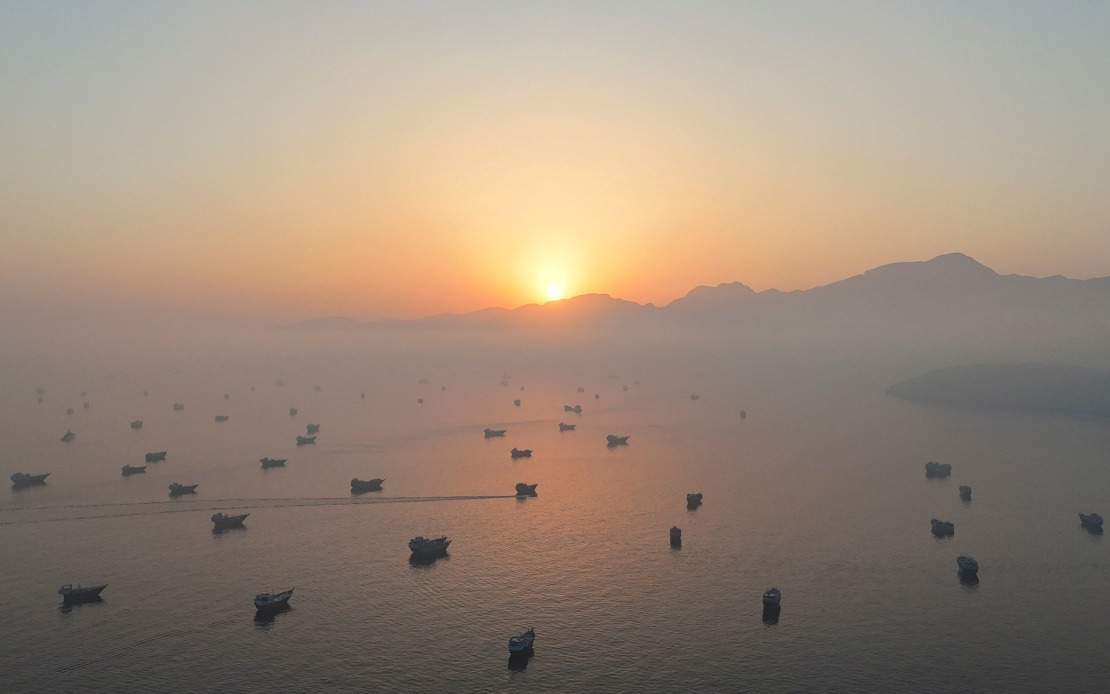
Iran's military has escalated its control measures over one of the world's most critical shipping chokepoints, announcing that henceforth all tankers carrying oil, liquefied natural gas, and related cargo must obtain explicit permission before traversing the Strait of Hormuz. The declaration from the Islamic Revolutionary Guard Corps on Sunday follows what Tehran describes as dangerous incidents involving foreign vessels that ignored Iranian warnings and disabled their navigation systems while attempting unauthorised passage through the waterway.
The confrontation involved four vessels identified by the IRGC as US-backed, which reportedly switched off their automatic identification systems as they attempted to transit via what Iranian forces characterised as an unsafe route. Two of these vessels were stopped after incidents occurred, while the remaining two reversed course and departed the area. The IRGC emphasised that Iran maintains complete operational control over the strategic passage and possesses the authority to regulate all maritime traffic flowing through it.
This hardened stance reflects deepening tensions in the Persian Gulf region, where the Strait of Hormuz serves as the world's most vital oil transportation corridor, with roughly one-third of all seaborne traded petroleum passing through its narrow waters annually. For Malaysia and other Southeast Asian nations heavily reliant on Middle Eastern energy imports, disruptions or restrictions at Hormuz carry immediate economic consequences, potentially affecting fuel prices and supply security across the region. The strait's vulnerability to regional conflict has long troubled energy-dependent economies, and Iran's explicit permit requirement introduces an additional layer of uncertainty into global energy markets.
The IRGC has been unambiguous about enforcing the new protocol, stating that not a single drop of oil, gas, or fertiliser will be permitted passage without coordination and approval from Iranian authorities. This declaration suggests a formal institutionalisation of what has previously been more ad hoc interference, transforming Hormuz transit into a contested process requiring Iranian validation. The move coincides with broader regional instability, as the statement references military strikes launched by the United States beginning July 8, which American Central Command attributed to Iranian aggression against commercial shipping in the strait.
U.S. military operations in the region reportedly targeted Iranian positions in response to what Washington characterised as Iranian actions threatening international maritime commerce. Tehran, in turn, has responded with retaliatory strikes against American military installations across West Asian countries, creating a cycle of escalation that threatens to further destabilise shipping operations. The involvement of major powers in direct military exchanges adds complexity to an already fraught situation, raising questions about the sustainability of normal commercial operations through the waterway.
For Southeast Asian nations, particularly Malaysia, Singapore, and other traders heavily dependent on Middle Eastern crude oil and liquefied natural gas, Iran's new restrictions present significant complications. The region's economies have already navigated supply chain disruptions in recent years, and any prolonged interruption to Hormuz transit could amplify inflationary pressures and energy costs. Shipping companies operating tanker routes through the strait now face the prospect of securing Iranian permits before departure, adding bureaucratic complexity and potential delays to voyages.
The strategic implications extend beyond immediate energy security concerns. Iran's assertion of unilateral control over Hormuz navigation suggests a rejection of international norms governing freedom of navigation through international waterways. This posture could embolden other regional actors to impose similar restrictions on critical shipping lanes, potentially fragmenting global maritime commerce and increasing operational costs for all nations dependent on free passage through contested waters.
The Strait of Hormuz's geopolitical significance cannot be overstated, particularly for Asian economies that source much of their energy from the Gulf. Any sustained restrictions or military incidents in the waterway would likely prompt regional countries to diversify energy sources and seek alternative supply routes, accelerating infrastructure investments in pipeline networks and liquefied natural gas terminals. Such adaptations, while prudent from a risk management perspective, require substantial capital expenditure and time to implement.
Iran's insistence on a formal permit system may also reflect its perception that existing international maritime frameworks inadequately protect its interests. The country views its control of Hormuz as leverage in broader negotiations with Western powers, particularly regarding nuclear agreements and sanctions. By establishing explicit transit requirements, Iran creates a mechanism to potentially negotiate concessions on other fronts while simultaneously demonstrating its capacity to disrupt global energy flows.
The practical implementation of Iran's new policy remains unclear, particularly regarding the criteria for permit approval, processing timelines, and consequences for vessels that proceed without authorisation. Ambiguity surrounding these operational details creates additional uncertainty for shipping companies and energy traders, potentially incentivising higher insurance premiums and risk assessments for Hormuz transits.
For Malaysia's maritime sector and energy-dependent industries, monitoring developments at Hormuz has become integral to economic planning. The nation's significant reliance on imported energy, combined with its position as a major Southeast Asian economic hub, means that prolonged instability in the Gulf directly affects regional prosperity. Policymakers in Kuala Lumpur and throughout the region are likely assessing contingency plans for energy supply disruptions while diplomatically engaging with international partners to de-escalate tensions and preserve freedom of navigation principles.
The unfolding situation at Hormuz underscores the vulnerability of Asian economies to Middle Eastern geopolitical conflict. While formal diplomatic channels continue operating, the military dimensions of current tensions suggest that peaceful resolution cannot be assumed. Regional nations must balance energy security imperatives with respect for international law while preparing for scenarios in which Hormuz transit becomes increasingly constrained or contentious.

