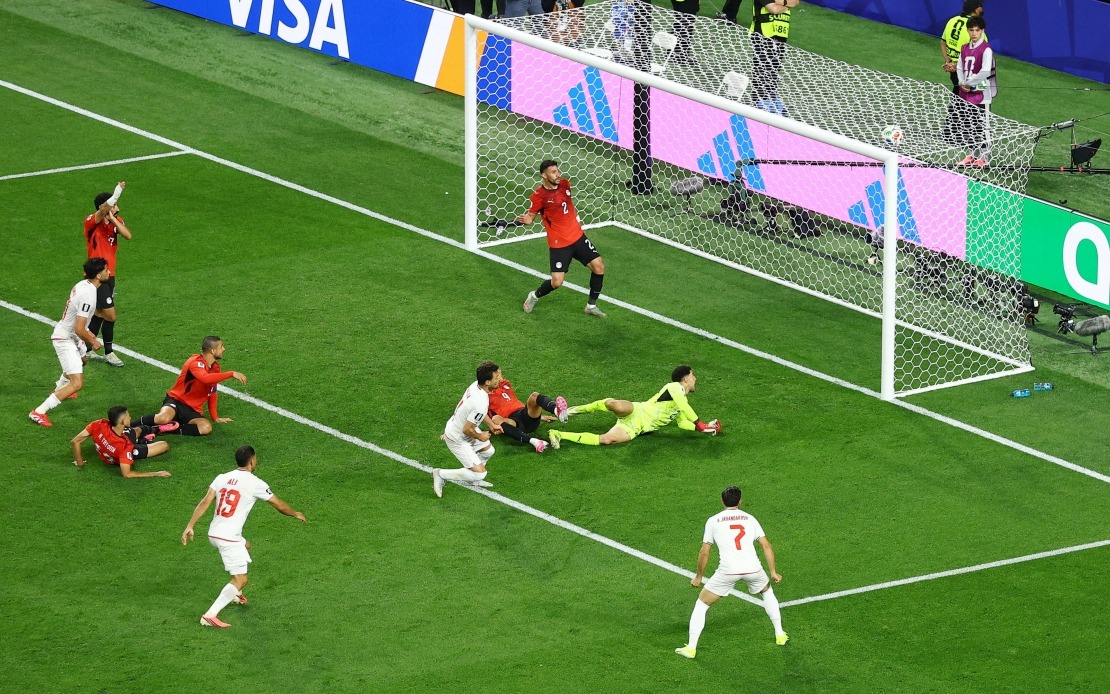
Iran's departure from the 2022 World Cup was marked by a formal statement criticising what the country's football federation characterised as discriminatory treatment throughout their campaign in the United States. The Iranian Football Federation for the Islamic Republic (FFIRI) issued a comprehensive rebuke as the team left North America, highlighting a series of logistical and procedural grievances that had clouded their tournament experience from the outset.
The immediate trigger for Iran's exit came on Saturday when they drew 1-1 with Egypt in what proved to be an elimination match. The result would have been sufficient to advance had not a goal by Iran been ruled out following an extended video assistant referee review. This particular decision intensified existing frustrations, as the team and federation had already accumulated complaints across multiple fronts during their World Cup stay. The disallowed goal thus became emblematic of a broader pattern of what Iranian officials perceived as systematic disadvantage.
The most prominent logistical disruption involved a dramatic relocation that fundamentally altered Iran's preparation and accommodation arrangements. Originally scheduled to base their operations in Arizona, the Iranian delegation was compelled to shift to Tijuana, Mexico, a decision that reflected the heightened geopolitical tensions between Tehran and Washington. This change necessitated additional travel for every match played on American soil, creating substantial operational challenges and disrupting the team's training schedule and player recovery protocols.
Beyond the relocation, Iran encountered what they characterised as disproportionate travel restrictions that applied specifically to their delegation. These constraints went beyond standard World Cup protocols and created practical difficulties for team officials, coaching staff, and support personnel attempting to carry out their duties. The federation's statement suggested these restrictions extended beyond simple security procedures, implying discriminatory application of rules not uniformly enforced against other competing nations.
The underlying tension stemmed from the longstanding diplomatic conflict between Iran and the United States, which had manifested throughout Iran's World Cup participation in ways that transcended ordinary sporting competition. The federation's decision to voice these grievances publicly at the tournament's conclusion reflects how deeply the geopolitical dimension had penetrated what should have been purely athletic endeavour. Rather than allow such concerns to recede quietly, Iranian leadership chose to create an official record of their grievances.
In their statement, the FFIRI explicitly commended international media organisations for their coverage of these issues, suggesting that external scrutiny had been crucial in documenting what Iran viewed as unfair practices. The federation expressed gratitude for journalists and news outlets that had reported on both the sporting aspects of Iran's campaign and the contextual challenges surrounding their participation. This emphasis on media documentation underscores how the Iranian federation sought to ensure that complaints about their treatment would not disappear from the historical record.
A striking element of Iran's final statement involved their praise for Mexico and particularly the city of Tijuana, where they had unexpectedly become based. Rather than direct their exit message solely toward expressions of frustration, the FFIRI pivoted to acknowledging the warmth and hospitality extended by Mexican communities. This measured response suggested that while Iran had legitimate complaints about their treatment in the United States, they could separately recognise and appreciate the genuine welcome they received in Mexico. The emphasis on Tijuana's residents' generosity provided a counterbalance to their criticism of American-based restrictions.
For Southeast Asian observers, Iran's experience at the World Cup offers insights into how major international sporting events can become entangled with broader geopolitical rivalries. The case demonstrates that even at global competitions ostensibly governed by universal sporting rules, political relationships between nations can substantially affect participating teams' practical experience. Malaysia and other regional nations competing in international tournaments may find relevant lessons in how geopolitical factors can influence venue selection, accommodation arrangements, and the application of regulatory procedures.
The incident also highlights the role that transparent media reporting plays in creating accountability mechanisms when athletes and delegations face what they perceive as discriminatory treatment. By making their complaints public and crediting journalists for coverage, the Iranian federation contributed to a historical record that extends beyond the scoreline of their matches. This approach potentially influences how future tournament organisers and host nations handle sensitive political dimensions of international sporting events.
Iran's tournament concluded with three matches yielding minimal point return, a disappointing sporting outcome compounded by the various procedural frustrations documented by the federation. Whether their complaints would prompt substantive changes in how World Cup host nations handle politically sensitive delegations remained uncertain, but their decision to formalise grievances marked a notable moment in how international football intersects with geopolitical realities that no sporting rulebook can fully address.

