Tensions in the Middle East have reached a critical juncture as Iran's military establishment issued an escalatory warning on Wednesday, threatening to expand its assault on American military positions throughout the region should the United States persist in breaching an existing ceasefire framework. The declaration, disseminated through Iran's state broadcaster IRIB, represents a significant hardening of rhetoric and signals Tehran's willingness to dramatically widen the scope of any future military response against Washington's presence in the Persian Gulf and surrounding areas.
The Iranian army grounded its warning in what it characterized as a pattern of deliberate American aggression, specifically citing hostile actions targeting both military and civilian zones in Iran's southern territories. According to Iranian officials, these incursions directly violate the 14-point ceasefire agreement that had previously established parameters for military restraint between the two adversaries. The military's statement underscored that renewed American violations would strip the ceasefire of its protections, leaving all US military infrastructure in the region susceptible to Iranian retaliation using unmanned systems.
Iranian military action commenced on Wednesday when the country's army announced it had struck what it identified as assembly points for American forces at Sheikh Isa Air Base located in Bahrain. This strike was framed as a direct response to the alleged American aggression and represented an immediate escalation of the tit-for-tat cycle that has characterized recent months. The operation suggested that Iran possessed detailed intelligence regarding US military positioning and the capability to conduct precision strikes against hardened targets.
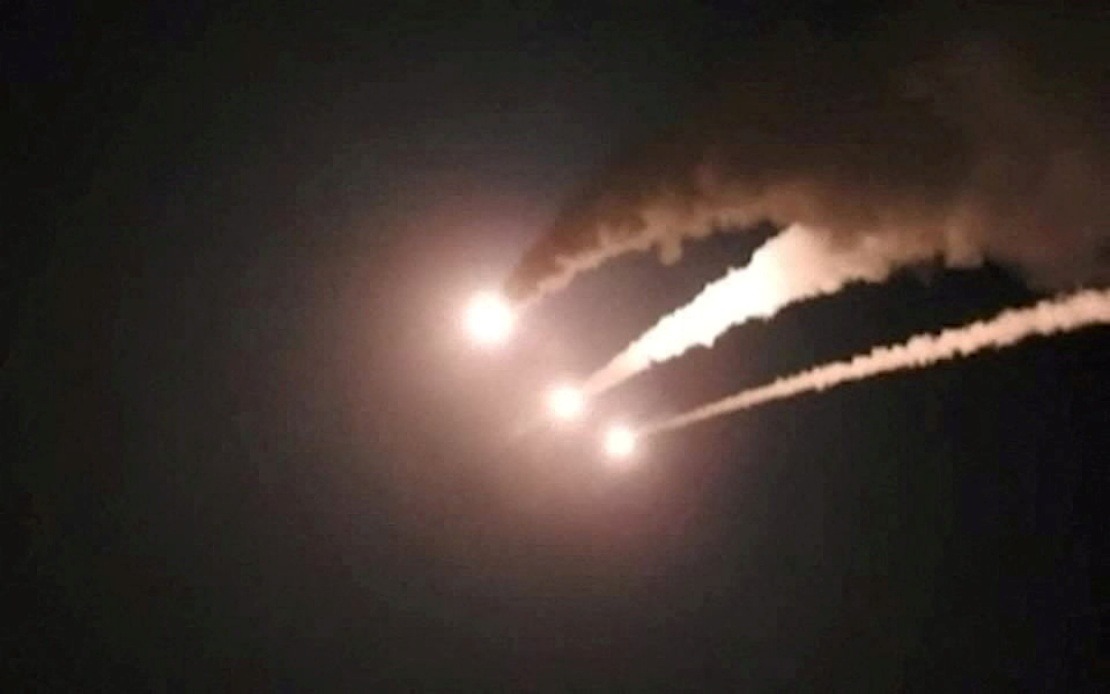
The Islamic Revolutionary Guard Corps subsequently expanded the scale of Iranian operations, claiming responsibility for a comprehensive assault involving both missiles and unmanned aerial vehicles directed at 85 separate American military installations throughout the region. The targeted sites included strategically significant locations such as Salman Port, the headquarters of the US Navy's Fifth Fleet stationed in Bahrain, and Ali Al-Salem Air Base in Kuwait, representing some of the most critical American military nodes in the Gulf. These targets, if successfully struck, would represent a significant blow to Washington's military posture in one of the world's most economically vital waterways.
Defensive systems across the Gulf responded to the Iranian barrage. Kuwait's Ministry of Defence confirmed that air defence batteries intercepted incoming Iranian missiles and drones, while residents in Bahrain experienced air raid sirens as a precautionary measure. The coordinated nature of these defensive operations demonstrated the degree to which regional allies have integrated their air defence networks to counter Iranian threats, a development with significant implications for regional stability and force projection capabilities.
The United States, through its Central Command, announced its own retaliatory strikes occurring nearly simultaneously with the Iranian operation. The American military action targeted more than 80 distinct locations and was explicitly justified as an immediate response to Iranian assaults on commercial shipping transiting the Strait of Hormuz, one of the world's most critical energy chokepoints. This framing shifted the immediate cause of the American strikes from military considerations to the protection of global commerce, though the underlying dispute remains rooted in broader geopolitical antagonism.
For regional observers and Malaysia in particular, this escalation presents acute concerns regarding freedom of navigation through the Strait of Hormuz, through which substantial volumes of oil and liquefied natural gas destined for Asian markets regularly transit. Malaysian commercial interests, energy security considerations, and maritime insurance costs all stand to be affected by further deterioration in Gulf security. The region's role as a critical artery for global energy supply means that any sustained disruption carries consequences extending far beyond the immediate combatants.
The cycle of military action and retaliation reflects a fundamental breakdown in the ceasefire mechanism that, despite its apparent formality through 14 established articles, appears insufficient to constrain either party's military actions when each perceives provocation. Both Iran and the United States appear to interpret ambiguous situations as violations justifying immediate armed response, creating a dangerous feedback loop where defensive measures become pretexts for offensive operations.
The situation underscores how Middle Eastern conflicts possess the capacity to generate cascading effects throughout global markets and security architectures. Malaysian policymakers and regional partners must reassess exposure to further escalation, particularly regarding maritime commerce and energy acquisition. The threat articulation by Iran, coupled with demonstrated American willingness to execute large-scale strikes, suggests that the current ceasefire framework may be nearing complete collapse, with profound implications for stability across the Indian Ocean trading routes and beyond.

