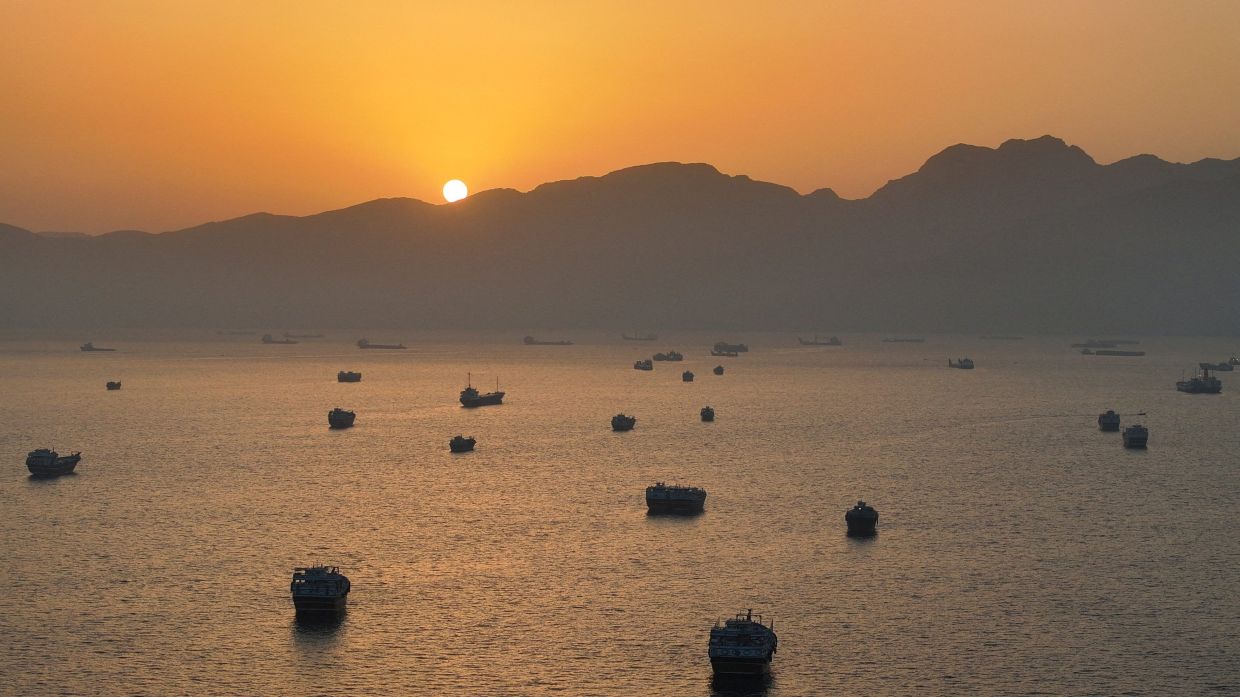
The thaw in Middle Eastern tensions has begun in earnest, with three heavily laden crude oil tankers passing through the Strait of Hormuz this week bound for Asian markets. The vessels, collectively carrying 5 million barrels of crude, represent the first meaningful breakthrough in months of supply-chain paralysis that had seen roughly 90 million barrels accumulate in the Gulf. The transit signals that an interim diplomatic agreement between Iran and the United States is finally unlocking crude reserves trapped by geopolitical risk, potentially offering relief to Asian refiners and moderating upward pressure on global energy prices.
The South Korean Very Large Crude Carrier VL Breeze departed the strait en route to the refining complex at Daesan, transporting 2 million barrels of condensate blended from Qatar and Abu Dhabi fields. The vessel is chartered by Hyundai Oilbank, one of South Korea's major independent refiners, which has faced supply constraints throughout the recent regional instability. Simultaneously, the Indian Oil Corporation's chartered tanker Plata Carrier cleared the strait with 2 million barrels of Saudi Arabian crude destined for Indian refineries, while the smaller Suezmax-class Prudent Warrior departed with 1 million barrels of Iraqi Basrah crude headed for Sohar in Oman. These simultaneous movements represent a coordinated release of supply that had been bottlenecked by insurance complications, shipping uncertainty, and broader sanctions-related hesitations affecting tanker operators.
The geopolitical dimension underlying these departures cannot be overstated. The interim accord between Tehran and Washington has fundamentally altered risk perceptions among shipping companies and charterers who had become extremely cautious about Hormuz transits. For months, the confluence of regional military tensions and insurance market repricing created a de facto stranglehold on Gulf exports, with shipowners demanding elevated premiums or simply refusing Gulf engagements altogether. The agreement removes this friction, allowing rational economic incentives to reassert themselves. South Korea's maritime ministry confirmed that four vessels operated by South Korean shipping interests had successfully navigated the strait, with one bound for domestic ports and others proceeding to regional destinations, underscoring the breadth of Asia's interest in restoring normal crude flows.
The scale of the backlog that remains highlights both the magnitude of the crisis and the extent of the breakthrough required to unwind it. Analysts at Kpler and Vortexa, two major shipping intelligence firms, had calculated that approximately 90 million barrels languished within Gulf confines at the peak of supply disruption. With these three departures now confirmed and others reportedly underway, the rate of backlog clearance may accelerate significantly, particularly if regional tensions continue to moderate. The fact that 18 of the 26 originally stranded vessels still remain in the Gulf indicates that the unblocking process, while meaningful, is only in its initial phases. For Asian refiners dependent on Gulf crude for feedstock, each additional departure represents a step towards normalised supply access and potentially lower landed costs.
Oman's establishment of temporary maritime corridors, designated in coordination with the International Maritime Organisation, provides the practical infrastructure enabling this flow. By designating safe passage routes north and south of the conventional shipping lane, Omani authorities have created psychological reassurance that vessels transiting the strait are operating within a sanctioned, monitored framework. Oman's public commitment to maintaining Hormuz access without imposing transit tolls further reduces the cost structure deterring shipping. These measures transform the strait from a zone of ambiguous risk into a functioning maritime corridor, albeit one requiring heightened vigilance and coordination.
Liquefied natural gas exports from Qatar provide an additional indicator of recovery momentum. Shipping data shows nine empty LNG tankers have now transited the strait bound for Qatari loading terminals, the highest number since regional hostilities began. Two vessels—the Shandong Redwood and Milaha Qatar—were recently observed west of the strait positioning for cargo loadings, suggesting a coordinated ramp-up of export operations. Qatar's Prime Minister Sheikh Mohammed bin Abdulrahman al-Thani indicated that the nation expects to return to normal LNG production levels within weeks, a significant signal that energy infrastructure operators are confident enough in current security conditions to reverse earlier capacity reductions.
For Malaysian and broader Southeast Asian readers, these developments carry direct implications for energy costs and industrial competitiveness. Malaysia's petrochemical sector, oil refining capacity, and power generation infrastructure all depend substantially on uninterrupted Gulf crude access. Elevated crude prices resulting from supply uncertainty raise operating costs for manufacturers and increase domestic electricity tariffs, ultimately affecting consumer purchasing power and business investment decisions. The resumption of normal flows therefore translates into tangible economic benefits extending well beyond the shipping and energy sectors.
The intermediate period ahead will test whether this recovery proves durable or represents merely a temporary reprieve before renewed tensions reassert supply constraints. Insurance markets will be watching carefully for evidence that political stability holds, while shipping companies monitor whether additional vessels can clear the strait without incident. The market pricing for crude oil futures already reflects optimism about sustained supply recovery, with Brent crude and West Texas Intermediate both showing downward pressure as traders price in greater supply availability. However, commodity markets remain sensitive to headline risk from the region, meaning that any escalation could rapidly reverse these gains and reignite price volatility.
The interim agreement's durability matters profoundly for energy markets extending into 2025. Should the diplomatic framework hold and expand toward a more comprehensive accord, Gulf crude supplies could eventually exceed pre-conflict levels, potentially exerting downward pressure on global prices that would benefit energy-importing nations throughout Asia and beyond. Conversely, if negotiations stall or geopolitical tensions reignite, the backlog clearance could stall once more, leaving refiners and consumers vulnerable to renewed supply shocks. For now, the successful transit of these three tankers demonstrates that the pathway to normalcy remains open, though vigilance regarding regional developments will remain essential for energy markets and dependent economies.