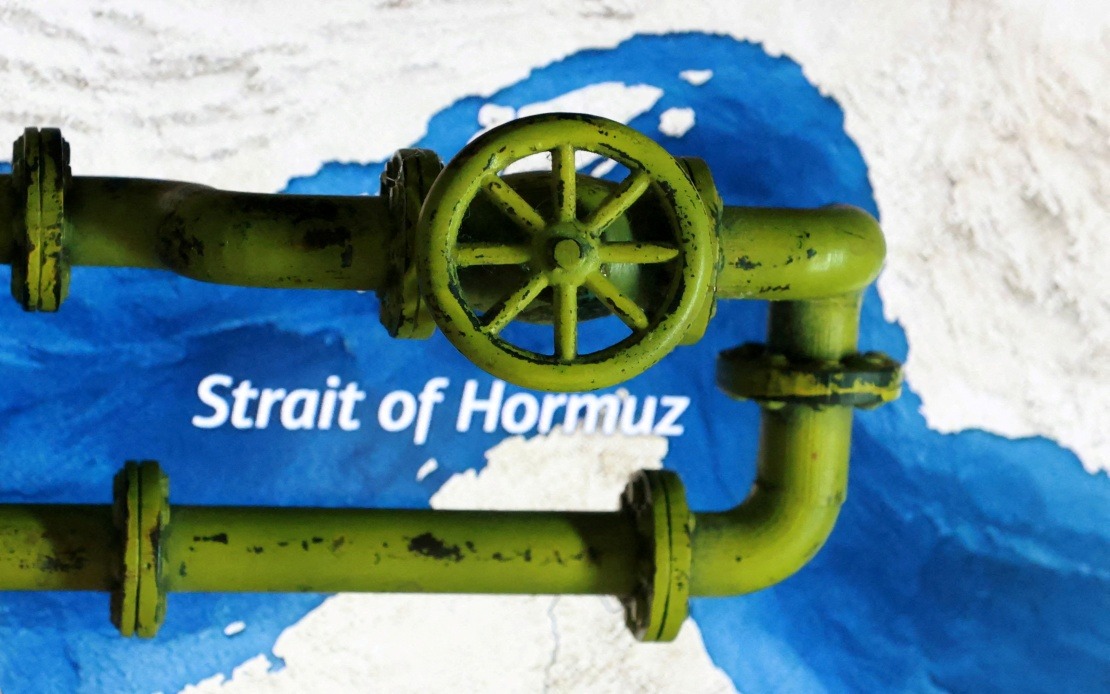
The governor of Iran's Central Bank made stark admissions this week about the severity of the country's economic collapse, revealing that oil exports have effectively ceased entirely amid mounting military tensions and comprehensive international sanctions. Abdolnaser Hemmati disclosed in a televised interview that Tehran now faces a situation comparable to neighbouring Iraq and Qatar, where petroleum revenues have similarly evaporated. However, he underscored a crucial distinction: while Iraq and Qatar retain access to their central bank reserves to weather the crisis, Iran's foreign currency holdings remain frozen by American restrictions, leaving the Islamic Republic with far fewer options to cushion the blow to state finances.
The admission signals the acute severity of Iran's predicament in a region already destabilised by conflict and geopolitical rivalry. The cessation of oil exports represents an extraordinary development for a nation historically dependent on hydrocarbon revenues as its primary source of foreign exchange. Hemmati's comparison to Iraq and Qatar illustrates how broadly the regional energy sector has been disrupted, yet Iran's particular vulnerability stems from its inability to access reserves that other affected nations can deploy. This distinction proves crucial for understanding Iran's economic trajectory and the constraints facing policymakers in Tehran as they confront unprecedented fiscal pressures.
The Central Bank governor acknowledged that Iranian authorities have made advance preparations to manage the revenue shortfall, suggesting officials anticipated such a scenario even if public admissions were previously avoided. Nevertheless, the mechanics of implementing contingency plans remain unclear, particularly given the structural limitations imposed by frozen assets and international financial isolation. The absence of accessible reserves creates a situation fundamentally different from typical economic downturns, where governments might draw on accumulated capital. Instead, Tehran must devise strategies to sustain state operations and critical imports using whatever liquidity remains accessible within the formal system.
Hemmati raised a separate but interconnected grievance regarding funds that were supposed to become available under an agreement reached between Tehran and Washington in June, informally known as the Islamabad Memorandum. This framework was ostensibly designed to establish foundations for a comprehensive nuclear accord, yet the anticipated release of resources has not materialised. The delay represents a compounding frustration for Iranian officials who negotiated the June understanding partly in expectation of financial relief. The failure to translate diplomatic agreements into tangible economic benefits demonstrates how thoroughly the breakdown in US-Iran relations has penetrated even ostensibly settled arrangements.
Iran's regional economic relationships face considerable strain under current circumstances, particularly with Iraq, a neighbouring state with which Tehran maintains historically significant trade partnerships. Before the recent escalation of hostilities, Iranian exports to Iraq reached approximately $12 billion annually, encompassing both government-to-government transactions and private commercial activity. Government-related trade, primarily involving energy supplies of natural gas and electricity, constituted roughly $4 billion of this total, while private sector commerce accounted for the remaining $8 billion. The disruption of this substantial bilateral trade flow compounds Iran's difficulties by eliminating revenue from its most accessible regional market.
Baghdad has pledged to address outstanding payment obligations owed to Iran, yet Iraqi authorities themselves contend with severe fiscal pressures resulting from the closure of the Strait of Hormuz and consequent disruptions to their own petroleum revenues. This situation creates a peculiar dynamic wherein both nations face parallel economic crises rooted in the same regional instability, limiting Iraq's capacity to discharge its debts despite stated political commitment to doing so. The mutual vulnerability suggests that regional economic recovery remains contingent on broader stabilisation efforts, rather than bilateral arrangements alone.
To circumvent some constraints on direct transfers, Iranian and Iraqi officials have explored alternative mechanisms for managing funds held in Iraqi banking institutions. Discussions have focused on facilitating the movement and utilisation of Iranian assets deposited at Iraqi banks, with Tehran hopeful that such arrangements might provide practical workarounds to formal sanctions restrictions. Additionally, during meetings between Iranian and Iraqi leadership, both sides agreed to investigate whether resources available through the Trade Bank of Iraq might be mobilised to provide guarantees supporting Iranian contractors operating within Iraq. The Iraqi prime minister reportedly endorsed this proposal and issued directives to expedite implementation, though the tangible impact of such measures remains uncertain given broader systemic constraints.
The trajectory toward zero oil exports reflects the cumulative impact of longstanding American sanctions targeting Iran's petroleum sector and financial infrastructure, combined with fresh military escalations between Washington and Tehran. For decades, US policy has deliberately sought to curtail Iran's oil export capacity and restrict access to international payment systems, recognising these channels as Iran's principal mechanisms for acquiring foreign currency. The recent renewal of hostilities following the breakdown of the June framework agreement has intensified these pressures rather than providing space for negotiated resolution.
For Southeast Asian observers, Iran's predicament carries significant implications for regional energy markets and broader geopolitical stability. The closure of major petroleum export channels concentrates global oil supply among fewer producers, potentially affecting prices that Malaysian and other regional economies must navigate. Furthermore, the deterioration of the Iran-US diplomatic situation reflects broader patterns of great power competition that increasingly shape regional dynamics across Asia. The failure of negotiated frameworks to hold suggests that durable solutions to longstanding conflicts require more fundamental shifts in strategic calculations than currently appear evident.
Iran's economic crisis, precipitated by the combination of military conflict and financial isolation, demonstrates how thoroughly modern sanctions regimes can incapacitate state economies when paired with restricted access to international financial systems. The Iranian experience suggests that even relatively diversified economies dependent on hydrocarbon exports face severe challenges when denied both revenue generation and reserve access simultaneously. For other developing nations, the case offers cautionary lessons about the vulnerability inherent in energy-dependent fiscal models when confronted by coordinated international economic pressure. The persistence of Iran's predicament despite technical preparations indicates that contingency planning alone cannot substitute for access to functioning international financial channels.
As the situation evolves, Iranian officials face mounting pressure to either negotiate a restoration of oil export capacity or identify alternative revenue sources capable of sustaining state functions and meeting population needs. The effectiveness of any such efforts will depend partly on regional actors' willingness to circumvent international sanctions through alternative banking and trade mechanisms, as evidenced by ongoing Iraqi discussions. Yet broader resolution remains dependent on diplomatic progress that currently shows few signs of materialising, leaving Iran's economy in a state of profound instability with uncertain trajectory.

