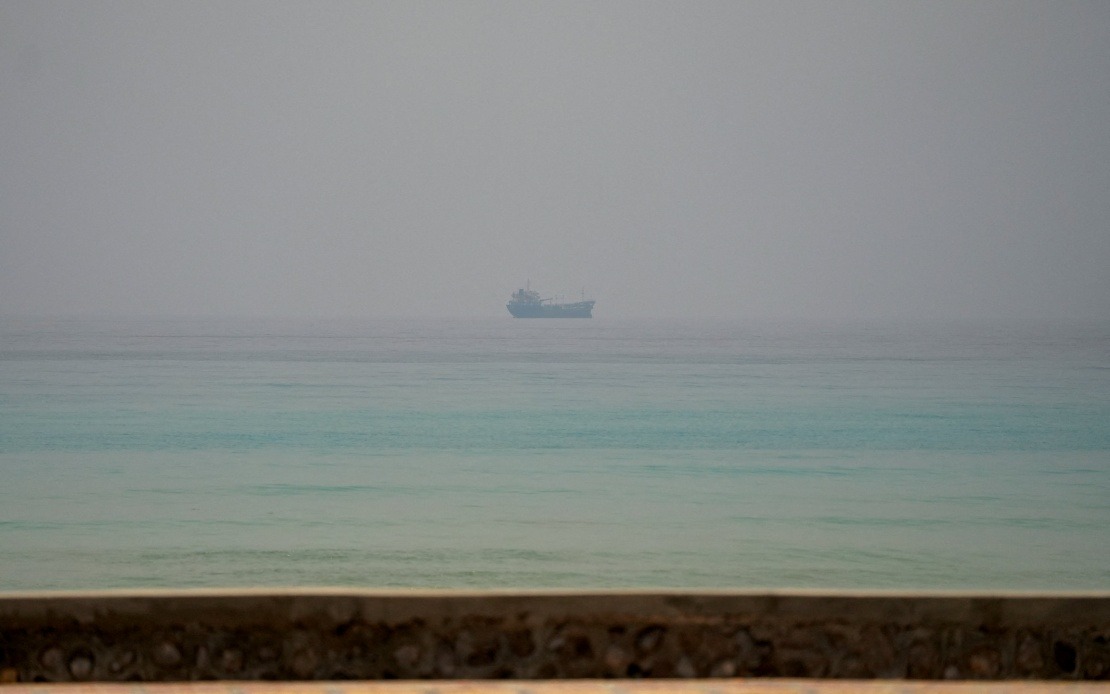
The escalating confrontation between Washington and Tehran over regional security has entered a more volatile phase, with Iran's Parliament Speaker Mohammad Bagher Qalibaf declaring on Thursday that the strategically vital Strait of Hormuz will remain accessible only under conditions determined by Tehran. His statement represents a hardening of Iran's rhetorical posture following what Iranian sources describe as a fresh round of American airstrikes targeting multiple positions across southern and southeastern Iranian territory late Wednesday.
Qalibaf's remarks, published through the X platform, directly challenge the strategic calculus underpinning US military operations in the region. The Parliament Speaker warned that the era of American diplomatic bullying and broken commitments has passed, signalling that Iran will respond proportionally to any military action. His message—"If you strike, you will be struck"—encapsulates Tehran's determination to resist what it perceives as unwarranted external interference in its territorial space and regional influence. The tone reflects a broader narrative within Iran's political establishment that views American pressure as illegitimate overreach requiring firm pushback.
The United States Central Command subsequently confirmed that American forces had conducted additional military operations specifically designed to further degrade Iran's capacity to threaten maritime navigation through the Strait of Hormuz. This justification reveals the core strategic concern driving Washington's approach: maintaining freedom of movement through one of the world's most critical energy chokepoints. The Strait of Hormuz channels approximately one-third of global seaborne petroleum trade, making any disruption to its operations an immediate concern for oil-importing nations worldwide, including Malaysia and other Southeast Asian economies heavily dependent on Middle Eastern energy supplies.
The sequence of events underscores a dangerous pattern of tit-for-tat military escalation that shows limited signs of de-escalation. Rather than constraining Iranian regional activities, the American strikes appear to have reinforced Iranian leadership's commitment to maintaining its strategic posture in the Gulf. Qalibaf's assertion that the Strait will open only under Iranian arrangements suggests Tehran may be contemplating leverage mechanisms—whether through naval deployments, drone operations, or missile capabilities—that could impose costs on vessels transiting the waterway or on American military assets in the region.
For Southeast Asian nations, particularly shipping-dependent economies like Singapore and Malaysia, this confrontation represents more than a distant Middle Eastern dispute. The global shipping industry routes hundreds of millions of tonnes of cargo through the Strait annually, and any sustained disruption could immediately affect supply chains, energy prices, and regional economic stability. Malaysian ports and trading enterprises have considerable exposure to the consequences of sustained tensions in the Hormuz strait, given the region's dependence on reliable maritime trade corridors and affordable energy imports.
The Iranian Parliament Speaker's intervention in this dispute carries symbolic weight within Tehran's decision-making structures. Unlike purely military or diplomatic channels, parliamentary statements often reflect broader consensus within Iran's factional political system and signal how civilian leadership interprets American actions. Qalibaf's aggressive posturing suggests that even supposedly moderate elements within Iran's government view current American policy as fundamentally threatening, leaving limited room for diplomatic accommodation without loss of face.
The underlying dispute traces to longstanding disagreements over Iran's nuclear program, regional proxy networks, and American sanctions policies. The Biden administration has maintained maximum pressure while simultaneously engaging in indirect negotiations, creating ambiguity about US intentions. Iran interprets this mixed messaging as fundamentally dishonest, particularly given historical breaches of agreements such as the 2015 nuclear deal. This historical context shapes Tehran's willingness to make provocative statements, viewing them as necessary assertions of sovereignty against what it characterizes as American hegemonic overreach.
Qalibaf's declaration that the Strait's status depends on Iranian arrangements effectively reframes the conflict from a question of international law and freedom of navigation into a matter of Iranian territorial assertion. This rhetorical shift potentially justifies Iranian actions that might otherwise violate international maritime conventions, by positioning them as legitimate exercises of national prerogative. Whether this represents serious intent to restrict transit or primarily serves domestic political purposes remains unclear, but the ambiguity itself creates risk for global shipping and energy markets.
The escalation occurs amid broader regional instability, including tensions involving proxy forces, drone capabilities, and missile development programs that Iran has steadily advanced. The combination of rhetorical defiance from senior political figures and demonstrated military capabilities creates a context where miscalculation becomes increasingly dangerous. A single incident involving commercial shipping, military vessels, or misidentified aircraft could trigger further escalation beyond either side's control.
For regional observers, particularly those in Southeast Asia with significant economic stakes in Gulf stability, the primary concern involves whether this cycle of escalating statements and military action can be arrested before it produces unintended consequences affecting global commerce and energy supplies. Qalibaf's intervention suggests that Iran's leadership remains committed to asserting its will through confrontational rhetoric and military demonstration, making de-escalation an increasingly distant prospect unless external pressure or internal recalculation changes Tehran's strategic calculations.

