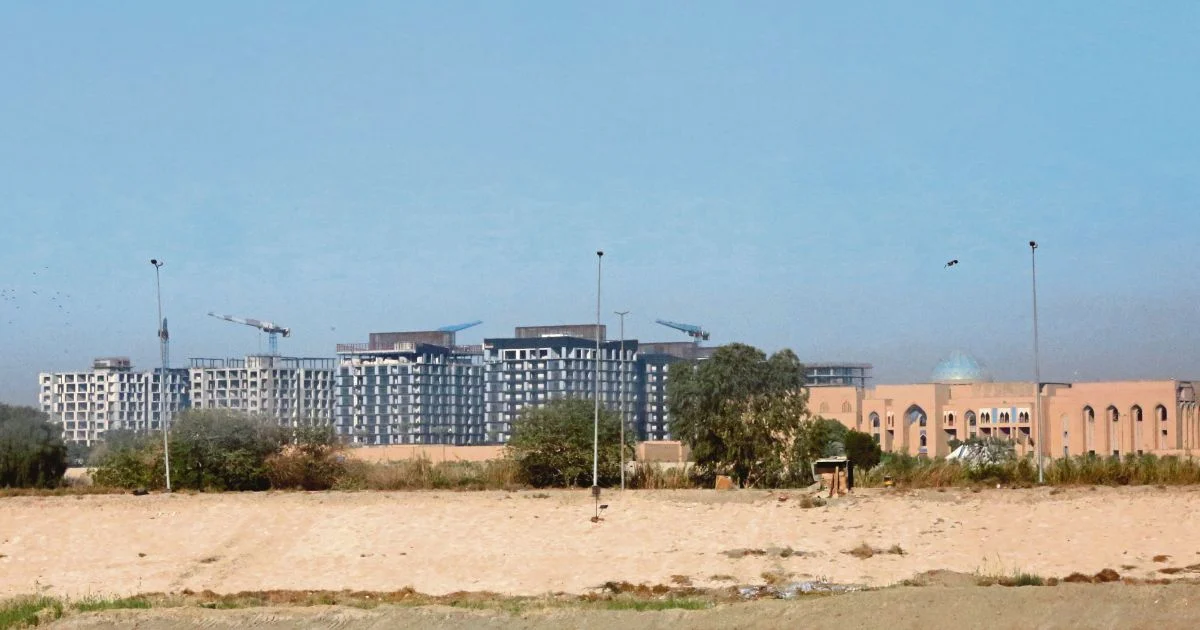
Sweeping security operations unfolded across Baghdad's heavily fortified Green Zone in the early hours of Sunday, as Iraqi law enforcement personnel fanned out through the administrative district to apprehend officials and parliamentarians implicated in graft. The coordinated raids represented a significant escalation in anti-corruption efforts, with security personnel maintaining an intensive presence throughout the sprawling enclave that houses Iraq's most sensitive government installations and diplomatic missions.
The detentions targeted multiple layers of Iraq's political hierarchy, encompassing both sitting members of parliament and senior civilian administrators whose roles placed them in positions to influence resource allocation and procurement decisions. The scope of the operation suggested a deliberately comprehensive approach, with security teams executing simultaneous actions across multiple locations within the Green Zone's perimeter to prevent coordination among suspects or destruction of evidence.
Corruption investigations in Iraq have historically struggled with weak institutional follow-through and political protection networks that shield prominent figures from accountability. These raids indicate a shift toward more direct enforcement mechanisms, bypassing traditional administrative channels that frequently stalled or collapsed under political pressure. The heavy security deployment visible throughout the operation served both practical and symbolic purposes—ensuring physical safety of personnel conducting arrests while demonstrating state resolve to confront entrenched corrupt practices.
For Malaysian observers and Southeast Asian analysts, Iraq's corruption challenges offer instructive contrasts and parallels. Like many developing democracies in the region, Iraq grapples with systemic problems where political patronage networks intersect with state resources, creating conditions where officials treat public funds as personal assets. However, Iraq's security environment introduces acute complications absent in most Southeast Asian contexts, as legitimate governance functions operate alongside militarized power structures and non-state armed actors who maintain parallel authority networks.
The Green Zone itself functions as a microcosm of Iraq's governance contradictions. Designed originally as a fortified sanctuary during the post-2003 occupation period, it evolved into a symbol of state authority yet remains perpetually threatened—both by security breaches and by the perception that it represents disconnection between decision-makers and ordinary Iraqis. The Sunday operations, conducted with visible force, risked reinforcing this narrative of a besieged elite protecting its interests, even when ostensibly pursuing reform.
Corruption within Iraq's political system extends beyond individual venality into structural dysfunction. Parliamentary seats frequently transfer through family networks and sectarian calculations rather than merit or policy platforms. Ministerial appointments reward political faction loyalty rather than administrative competence. Under these conditions, officials often view their positions primarily as wealth extraction opportunities, with governance activities secondary. The raids suggest that accountability mechanisms—potentially responding to public outcry or international pressure—are attempting to function despite these systemic obstacles.
The detention of sitting parliamentarians carries particular significance within Iraq's constitutional framework, as legislative immunity protections traditionally shielded MPs from criminal prosecution. If the raids proceeded without parliamentary authorization to lift immunity, they represent either genuine institutional reform or potentially extrajudicial action cloaked in anti-corruption rhetoric. The distinction matters profoundly for assessing whether Sunday's operations mark genuine governance improvement or reflect competing power centers using corruption charges as political weapons.
Regional governments including Malaysia's face similar tensions between anti-corruption imperatives and political stability concerns. Leadership must balance genuine accountability pursuits—essential for public legitimacy and institutional health—against disruption risks when prosecuting powerful figures. Iraq's experience suggests that half-measures prove counterproductive; either anti-corruption campaigns must achieve meaningful convictions with transparent legal processes, or they merely create perception of selective persecution. Populations become cynical when prominent figures face periodic raids and detention announcements, only to resurface months later through judicial dismissal or political pardon.
The international dimension warrants consideration as well. Iraq receives ongoing support from multiple external powers—the United States, regional Gulf states, and others—many of whom emphasize governance improvements and anti-corruption commitments as conditions for assistance. Sunday's operations likely addressed both domestic accountability pressures and external monitoring expectations, combining these often-contradictory motivations into visible action.
Looking forward, the sustainability of such crackdowns depends on prosecutorial follow-through. Arrests without resulting convictions merely generate grievances among detainees' political factions without advancing genuine accountability. Iraqi judicial institutions, themselves affected by corruption and political pressure, must demonstrate capacity to process complex white-collar crime cases while maintaining due process protections. Without credible court proceedings producing documented verdicts and sentences, corruption raids risk appearing as theater rather than reform.
For Southeast Asian governments and observers, Iraq's approach offers cautionary lessons about the limits of enforcement-focused anti-corruption strategies. Sustainable accountability requires institutional development—judicial independence, transparent budget processes, asset declaration verification, and parliamentary oversight mechanisms that function regardless of which faction holds power. Security operations, however impressive in scale, cannot substitute for these deeper structural reforms.

