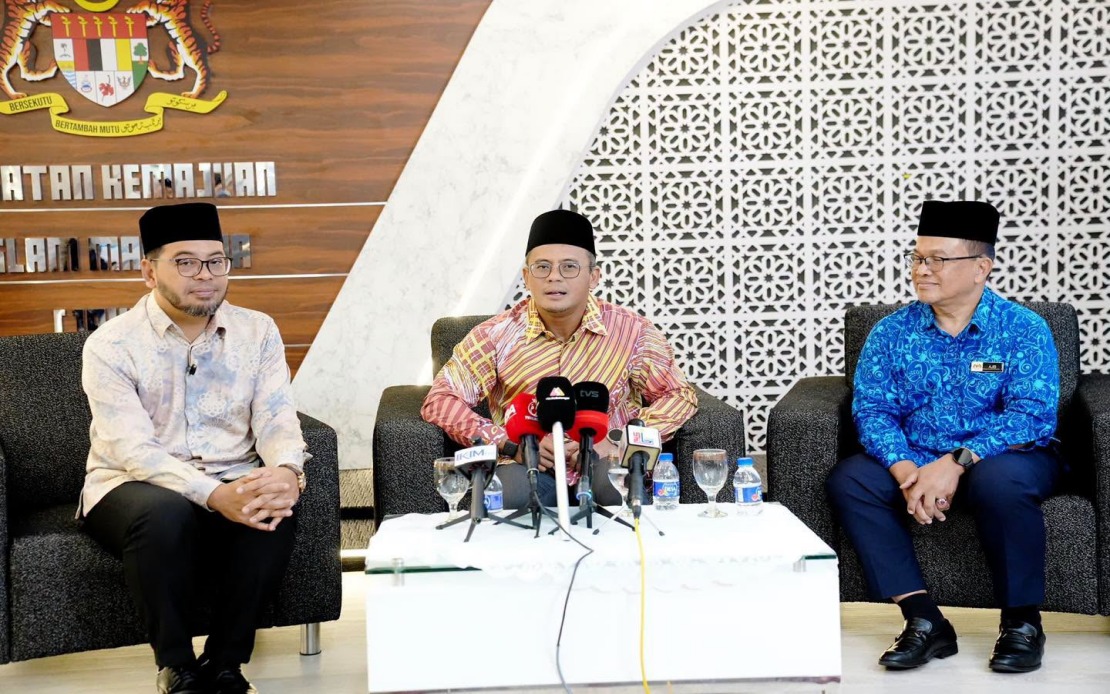
What began as a Selangor state initiative three years ago has now earned elevation to the national stage. The Festival Turath Islami Malaysia 2026 represents a significant milestone in Malaysia's institutional commitment to preserving and promoting Islamic scholarly heritage, moving beyond regional boundaries to establish itself as a nationwide intellectual and cultural endeavour. Selangor Menteri Besar Datuk Seri Amirudin Shari announced the expanded scope during a media briefing in Putrajaya, signalling that the festival will now operate under joint stewardship of both the Selangor State Government and the Federal Government through the Prime Minister's Department (Religious Affairs).
The decision to elevate the festival reflects broader recognition that Islamic intellectual traditions deserve prominent institutional backing and public engagement across the country. By becoming a national event, FTIM 2026 seeks to anchor Islamic heritage as a foundational element for societal development and the cultivation of knowledge-based communities. The expansion from state to national level also positions Malaysia as a custodian of classical Islamic scholarship, particularly Sufi thought, which carries significant resonance throughout the Malay-speaking world and beyond. Minister in the Prime Minister's Department (Religious Affairs) Dr Zulkifli Hasan's attendance at the announcement underscores federal commitment to the initiative.
The festival will unfold over eight days beginning September 13, with the Putra Mosque in Putrajaya serving as the primary venue, replacing the Selangor State Mosque used in previous iterations. This shift to a national architectural landmark symbolises the festival's transition from regional to federal status. The choice of location carries symbolic weight, situating discussions of Islamic thought within Malaysia's seat of power and governance, thereby integrating scholarly and spiritual reflection into national consciousness.
This year's theme, "Hikmah Warisan Islam," centres on Al-Hikam al-Ata'iyyah, a foundational text by Ibn Ata-illah As-Sakandari, a renowned Islamic scholar and Sufi master whose writings have profoundly shaped spiritual practice across Islamic civilisation. The work explores fundamental spiritual principles—sincerity, reliance on the divine, and the intimate relationship between servant and God—concepts that remain viscerally relevant to contemporary Muslim communities navigating complex modernity. The selection of this particular classical text positions the festival as an intellectual bridge connecting medieval Sufi wisdom to present-day seekers of meaning and guidance.
Since its inception in 2023, the festival has systematically engaged with major Islamic scholarly works. The inaugural edition explored Imam Al-Ghazali's monumental Ihya' 'Ulumuddin, followed by engagement with Imam al-Nawawi's Al-Arba'in al-Nawawiyah and Imam Jalaluddin al-Suyuti's Tafsir al-Jalalain. This progressive approach to classical texts reflects a curated educational methodology, allowing audiences to deepen their understanding of Islamic intellectual traditions through structured, year-by-year engagement with canonical works.
The scholarly calibre assembled for FTIM 2026 underscores the festival's ambitions and credibility within Islamic academia. The gathering will feature 23 scholars from Malaysia and internationally, including Sheikh Dr Ali Jum'ah, whose reputation as a contemporary Islamic intellectual extends across the Arab world. Alongside him, participants include Prof Dr Sayyid Idris al-Fasi al-Fihri, Ustaz Dr Adi Hidayat, Ustaz Wadi Annuar, and Selangor Mufti Datuk Setia Dr Haji Anhar Haji Opir. These scholars will conduct more than 42 distinct scholarly sessions over the eight-day period, ensuring comprehensive exploration of themes from multiple intellectual perspectives.
Beyond lecture-format engagement, the festival programming encompasses diverse modalities of Islamic learning and practice. Daily Kuliah Subuh sessions will offer early-morning spiritual instruction, while Dalail al-Khairat recitations and structured Talaqqi Kitab sessions spanning five days will provide alternative pathways for participants to encounter classical texts. Evening programmes including Tausiah Perdana lectures, Qasidah ceremonies featuring devotional music, and an Islamic Book Festival will create an holistic intellectual and spiritual atmosphere, recognising that heritage transmission occurs through multiple sensory and emotional channels beyond academic discourse.
A particularly novel addition to FTIM 2026 is the inaugural National Muzakarah Ulama Turath, bringing together Islamic scholars from across Malaysia to engage in structured dialogue and collaborative problem-solving. This gathering seeks to strengthen intellectual networks among Malaysian ulama while directing scholarly attention toward contemporary challenges facing Muslim communities. The conference framework transforms what might otherwise remain individual scholarly pursuits into a coordinated national intellectual project, fostering institutional cooperation and knowledge-sharing across Malaysia's diverse Islamic scholarly ecosystem.
The expansion to national status carries implications extending beyond cultural programming. By institutionalising engagement with classical Islamic texts at the federal level, Malaysia signals that heritage preservation and intellectual transmission constitute matters of national significance rather than marginal religious concerns. This positioning potentially elevates public discourse around Islamic thought, moving conversations beyond contemporary political and sectarian divisions toward foundational philosophical and spiritual principles that unite rather than fragment Muslim communities. For Southeast Asian observers, the festival demonstrates how regional Islamic scholarship can be systematically preserved and transmitted through contemporary institutional frameworks.
For Malaysian audiences, FTIM 2026 offers unprecedented access to world-class Islamic scholarship delivered by both local ulama and internationally recognised scholars, creating a rare platform where classical wisdom encounters contemporary sensibilities. The festival's emphasis on Sufi texts and spiritual disciplines addresses a growing appetite among Malaysians seeking deeper engagement with Islam beyond routine observance, particularly among younger and urban populations navigating pluralistic societies. The registration process and full programming details will be released through the festival's official channels, with institutions and individuals encouraged to participate in what promises to be Malaysia's most substantial annual gathering devoted to Islamic intellectual heritage.

