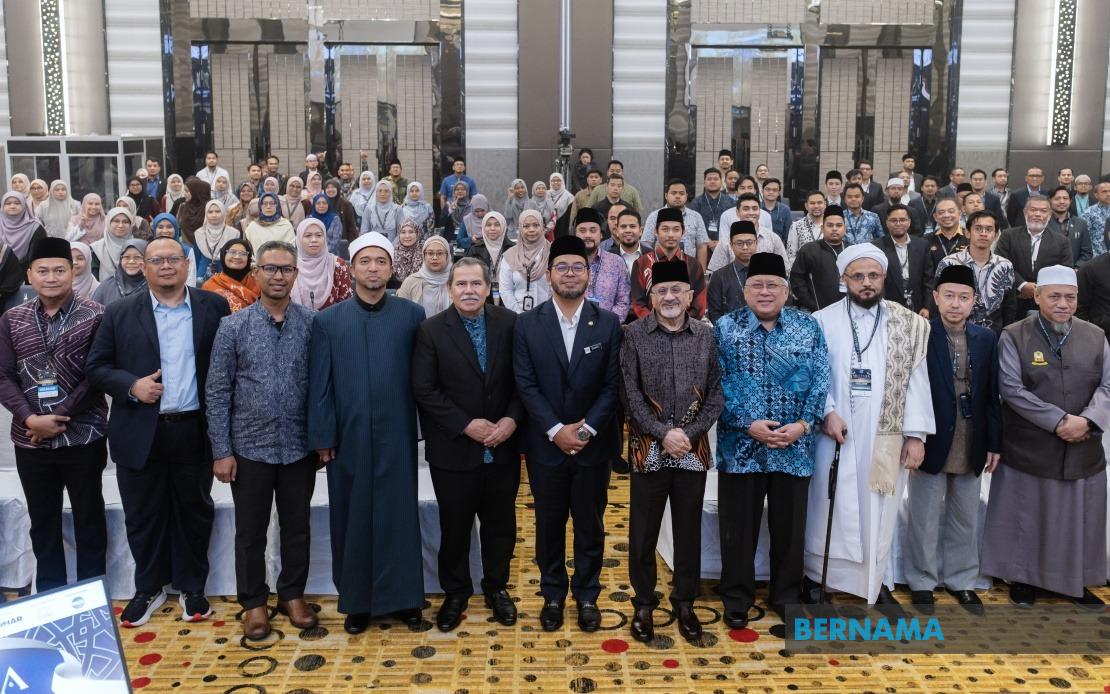
Islamic social finance represents an underutilized but powerful mechanism for addressing poverty and spurring economic growth in Malaysia, according to Minister in the Prime Minister's Department (Religious Affairs) Dr Zulkifli Hasan. Speaking at the MULTAQA SIDR Islamic Social Finance Conference in Kuala Lumpur, he outlined an emerging governmental vision that positions the sector as a third pillar of financial activity alongside conventional banking and capital markets, each serving distinct but complementary societal functions.
The government's commitment to expanding this sector reflects recognition that traditional approaches to welfare and poverty reduction, while necessary, require complementary mechanisms that build productive capacity rather than merely providing immediate relief. Islamic social finance instruments—which include waqf (endowments), zakat (almsgiving), sukuk (Islamic bonds), and microfinance—operate within a distinct ethical framework that prioritizes asset-building and community empowerment. These tools, when properly structured and governed, can channel capital toward entrepreneurship, education, and livelihood development in ways that conventional aid programmes sometimes cannot.
Central to the government's strategy is the elevation of the Department of Waqf, Zakat and Haj (JAWHAR) as the coordinating body responsible for enhancing governance standards and professionalism across Islamic organisations. This institutional redesign signals official recognition that the sector's potential has been constrained not by lack of funds but by fragmented management, inconsistent standards, and governance weaknesses that undermine public confidence. By establishing JAWHAR as a lead agency, the government aims to create a unified framework within which diverse Islamic NGOs and financial institutions can operate with greater transparency and accountability.
Zulkifli emphasized that meaningful progress requires collaboration extending far beyond government circles. Universities and higher education institutions, he argued, must engage actively with the voluntary sector to develop governance capacity, professional standards, and evidence-based practices within Islamic organisations. This tri-partite approach—involving government, academia, and civil society—reflects an acknowledgment that sustainable institutional strengthening cannot be imposed top-down but must emerge through genuine partnership and knowledge-sharing. The private sector's involvement adds commercial expertise and operational discipline that can professionalise how Islamic social finance organisations manage funds and measure impact.
The launch of Malaysia's Islamic Social Finance Report 2026 at the conference provides critical infrastructure for this advancement. The report, which examines the ecosystem's current state, identifies structural obstacles, and projects future potential, offers practitioners and policymakers alike a shared analytical foundation. Such documentation is particularly valuable in a regional context where Islamic finance expertise is concentrated but often siloed by institution. Malaysian researchers and policymakers can now position the country's experiences and innovations as reference points for the broader Southeast Asian region, potentially establishing Malaysia as a centre of intellectual leadership in this domain.
A notable dimension of Zulkifli's remarks concerned the relationship between governance integrity and sectoral credibility. He cautioned that weaknesses in how Islamic institutions manage resources do not harm those organisations alone but cast shadows across the entire Islamic financial ecosystem and, by extension, Islamic institutions generally. This observation carries particular weight given ongoing parliamentary scrutiny of Tabung Haji's investment losses and governance lapses. While Zulkifli declined to comment on calls for a new Royal Commission of Inquiry into Tabung Haji, his emphasis on the interconnectedness of institutional reputations underscores the high stakes involved in addressing governance failures.
The framing of Islamic social finance as 'The Third Force' represents a conceptual reorientation with significant implications. Whereas traditional welfare assistance aims to meet immediate consumption needs—food, shelter, healthcare—and conventional commerce pursues profit maximisation, Islamic social finance is positioned to serve a third purpose: the productive empowerment of communities through capital provision, skills development, and asset accumulation. This distinction is not merely semantic; it implies different metrics for success, different time horizons, and different relationships between providers and beneficiaries. Where consumptive assistance creates dependency and commercial finance requires proven creditworthiness, Islamic social finance aspires to build economic agency among populations historically excluded from conventional banking.
For Malaysian policymakers and institutions, the strategic importance of mainstreaming Islamic social finance extends beyond social welfare objectives. Southeast Asia hosts significant Muslim populations, many in countries where conventional financial infrastructure remains limited or inaccessible. Malaysia's development of a coherent, professionally-managed Islamic social finance sector could generate replicable models and training capacity sought by neighbouring countries and Islamic finance centres throughout the region. The sector's growth would also create new professional opportunities and institutional capabilities that strengthen Malaysia's position as a global Islamic finance hub.
The conference's emphasis on collaboration across sectors reflects pragmatic recognition that government resources and Islamic NGO capacity, though important, remain insufficient to address poverty at scale. By engaging universities, the government gains access to research capabilities, student volunteers, and training programmes that can multiply institutional impact. Private sector involvement introduces operational efficiency, technological capability, and market discipline that can improve financial outcomes. These partnerships, if properly structured with clear accountability mechanisms, can accelerate the sector's professionalisation while distributing implementation responsibility across institutions with distinct comparative advantages.
The government's outlined approach also acknowledges that Islamic social finance operates within a broader ecosystem of development finance, including microfinance, development banks, and poverty-alleviation programmes. Rather than proposing that Islamic social finance replace these mechanisms, the strategy contemplates a complementary architecture where Islamic instruments serve particular populations and purposes while other mechanisms address different needs. This pluralistic approach may prove more resilient than approaches that privilege single mechanisms, as different tools can be deployed where they demonstrate comparative advantage.
Moving forward, the sector's success will depend upon translating stated commitments into concrete regulatory frameworks, standardised governance protocols, and sustained institutional capacity-building. The designation of JAWHAR as the lead agency provides a potential focal point for coordination, but effective implementation will require sustained political commitment, adequate funding, and genuine buy-in from the diverse institutions comprising the Islamic social finance ecosystem. Malaysian policymakers appear to recognize these challenges; whether execution matches ambition will become evident in coming months.

