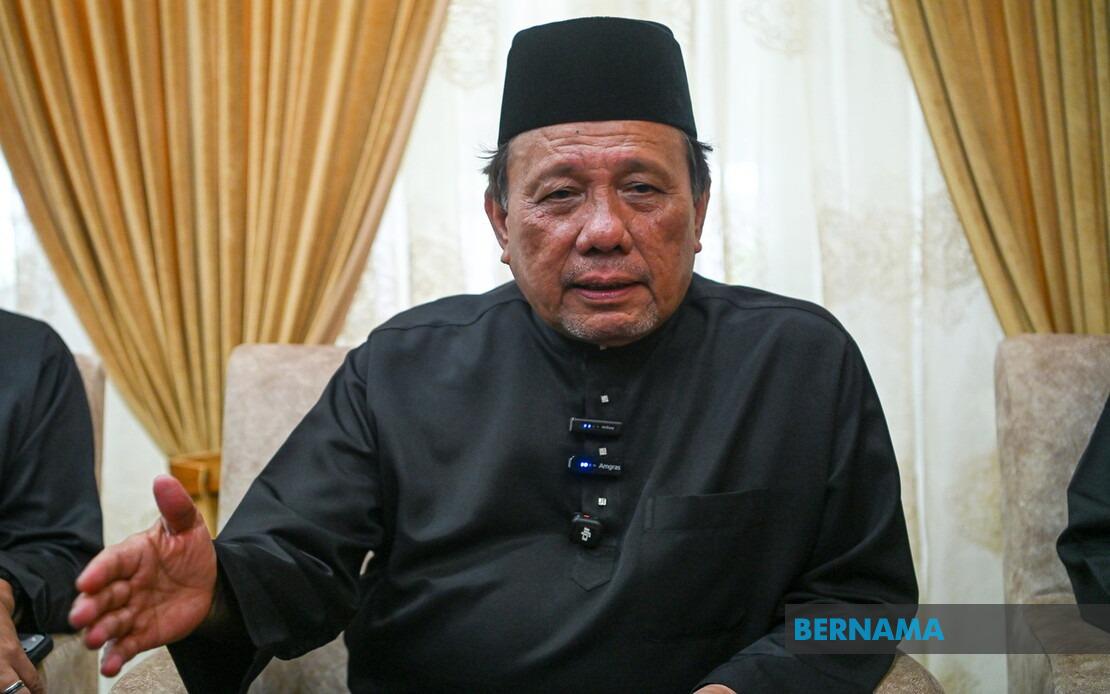
Datuk Ismail Lasim, the Menteri Besar of Negeri Sembilan, has assumed the position of chairman at Negeri Sembilan Football Club (NSFC) in a move announced on August 14. The appointment marks a significant leadership transition following the departure of Datuk Seri Aminuddin Harun, with Tunku Besar Tampin Tunku Syed Razman Tunku Syed Idrus Al-Qadri, president of the Negeri Sembilan Football Association (PBNS), confirming the change through an official statement issued from Seremban.
Ismail's appointment represents a homecoming of sorts for a figure deeply embedded in the state's football history. During the 1990s and early 2000s, he served as the state team manager, gaining intimate knowledge of the organization's operations, player development systems, and the unique culture surrounding Negeri Sembilan football. This extended tenure in a foundational role positioned him as an insider to the club's structures and aspirations, establishing relationships and understanding that remain relevant to contemporary club operations. His previous experience was further reinforced when he held the position of PBNS vice-president in 2010, demonstrating consistent engagement with football administration in the state.
The PBNS president emphasized Ismail's credentials and standing within Negeri Sembilan's footballing circles, suggesting that his appointment reflects confidence in his ability to navigate the complexities of modern club management. In his statement, Tunku Syed Razman highlighted that Ismail's familiarity with the team's traditions, values, and identity positions him to lead effectively. The president characterized the transition as a return to service, with Ismail now operating at a higher organizational level but drawing on the same institutional knowledge that guided his earlier work with the club.
Tunku Syed Razman articulated an ambitious vision for NSFC under Ismail's leadership, emphasizing that his appointment should catalyze professional development and sustained competitiveness. The statement underscored confidence that Ismail's combination of experience and leadership capabilities would prove instrumental in steering the club through strategic challenges and opportunities. This confidence reflects broader expectations that his state-level political position might facilitate enhanced support and cooperation between multiple stakeholders in Negeri Sembilan's football ecosystem.
The appointment carries implications for NSFC's strategic direction and organizational development. As chairman, Ismail is positioned to strengthen collaboration between the club, PBNS, the state government, and various stakeholders invested in Negeri Sembilan football. This multi-directional engagement is critical for Malaysian state football clubs, which often require coordinated support spanning government funding, administrative structures, and community involvement to operate effectively in the country's competitive football landscape.
Facilitating professional club operations emerges as a central priority within this leadership transition. The PBNS president outlined a comprehensive development agenda encompassing player development frameworks, organizational structure enhancement, commercial operations, and community relations. These pillars reflect the modern requirements of Malaysian football clubs operating beyond merely competitive performance to embrace sustainability and financial viability. For Negeri Sembilan, a state with moderate football prominence compared to Selangor or Johor, this professionalization agenda addresses longstanding challenges facing mid-tier Malaysian football institutions.
Player development constitutes a critical component of NSFC's forward strategy under Ismail's leadership. Malaysian football clubs at the state level serve essential functions in identifying and nurturing talent for national consideration, and Negeri Sembilan must balance grassroots engagement with pathway development that feeds regional and national competitions. Ismail's historical involvement in this sphere suggests continuity in commitment to youth football and systematic talent identification, though modern expectations demand more structured academies and professional coaching frameworks than existed during his earlier tenure.
The commercial dimensions of club operations present both opportunity and challenge for NSFC's new leadership. Malaysian football clubs struggle with revenue generation, particularly outside the major metropolitan states, and Ismail's appointment suggests strategic intent to improve the club's financial sustainability. Commercial development strategies might encompass sponsorship acquisition, merchandising expansion, and fan engagement initiatives that generate income while strengthening supporter connections. Success in this domain could differentiate NSFC from competing state clubs and provide resources for competitive squad development.
Community relations and supporter engagement form the final component of the outlined development agenda. Malaysian football clubs derive legitimacy and emotional support from their communities, and state clubs particularly depend on provincial pride and grassroots enthusiasm. Ismail's position as Menteri Besar provides unique opportunity to position NSFC as a source of state identity and pride, potentially mobilizing resources and support that might not otherwise be available. This political dimension, while not explicitly stated, represents an implicit advantage of his dual leadership position.
The timing of this appointment occurs within a broader context of Malaysian football administration seeking modernization and professionalization. State football clubs have historically operated with variable governance standards and institutional capacity, and appointments like Ismail's suggest growing recognition that leadership quality and administrative experience directly influence competitive outcomes and organizational sustainability. His acceptance of the chairmanship despite holding the state's highest political office signals personal commitment to football development and reflects the sport's cultural significance within Malaysian governance.
Looking forward, Ismail's tenure will be measured against NSFC's competitive performance, organizational development, and financial sustainability. The club competes within Malaysia's domestic football ecosystem, where state clubs compete for resources, talent, and competitive success against established rivals. Success will require balancing immediate competitive aspirations with long-term institutional development, a challenge that Ismail's experience and political position position him to address more effectively than his predecessor might have managed.
The appointment ultimately represents strategic realignment within Negeri Sembilan football administration, consolidating leadership around a figure with demonstrated historical commitment and contemporary political authority. Whether this translates into competitive success and organizational improvements remains contingent on implementation and the broader resources allocated to state football development. Nevertheless, the appointment signals institutional confidence in Ismail's capacity to advance NSFC's interests and cement Negeri Sembilan's position within Malaysian football's competitive hierarchy.

