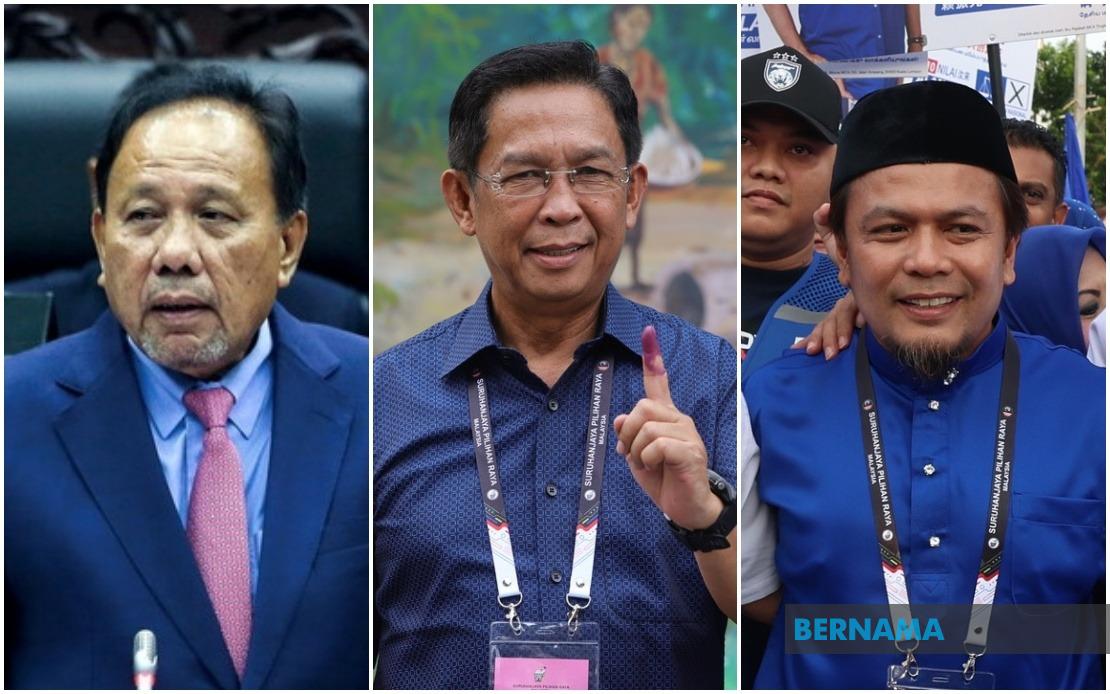
Kuala Pilah UMNO chief Datuk Ismail Lassim has emerged as a leading contender for the position of Negeri Sembilan Menteri Besar following the state's recent electoral contest. The 67-year-old administrator and UMNO Supreme Council member secured the Juasseh state constituency in yesterday's polling, strengthening his candidacy for the coveted executive role. An oath-taking ceremony for the incoming Menteri Besar was scheduled for approximately 11.00 am today at Istana Besar Seri Menanti in Kuala Pilah, with Ismail among those observed arriving at the venue.
Two other contenders are being actively considered for the appointment. Datuk Seri Jalaluddin Alias, 62, who chairs the Negeri Sembilan UMNO liaison committee and represents Jelebu in Parliament, retained his Pertang state seat in the election. The third candidate is Datuk Mohd Asna Amin, 47, a former state deputy speaker who won the Lenggeng constituency. Each candidate brings distinct credentials and constituency support to the selection process, reflecting the depth of leadership talent within the ruling coalition.
The leadership decision came after Barisan Nasional secured 18 state seats while Perikatan Nasional won 11 in the 16th Negeri Sembilan state election. Combined, the two coalitions command a two-thirds majority within the 36-seat assembly, providing a stable mandate for governance. Out of 103 candidates who contested across all constituencies, the result marked a significant realignment from the previous state assembly composition and sets the stage for a reshuffled state cabinet.
Yesterday evening, BN chairman Datuk Seri Dr Ahmad Zahid Hamidi presented the three shortlisted candidates to Tuanku Muhriz at Istana Hinggap in Seremban, formally initiating the royal selection process. The presentation of multiple names reflects customary constitutional practice in Malaysian state appointments, allowing the Yang di-Pertuan Agong's representative to exercise discretionary judgment before final appointment. This ceremonial step underscores the institutional importance of the position within Negeri Sembilan's governance structure.
The path to this election was precipitated by dramatic political shifts earlier in the year. On April 27, Negeri Sembilan's BN faction withdrew support from then-Menteri Besar Datuk Seri Aminuddin Harun, triggering an acute political crisis. The state assembly was subsequently dissolved on June 5, setting in motion the campaign season that culminated in yesterday's voting. This sequence of events highlighted ongoing factional tensions within the coalition structures and the volatile nature of state-level politics across Malaysia's peninsular states.
The electoral outcome represents a striking reversal from the previous assembly's balance of power. In the 2018 state election, Pakatan Harapan had captured 17 seats, with BN securing 14 and Perikatan Nasional obtaining five. That configuration resulted in a PH-BN coalition government that governed until the recent defection triggered the dissolution. Yesterday's results demonstrate shifting voter sentiments and the effectiveness of the BN-PN collaborative messaging during the campaign period.
For Malaysian observers tracking state-level political developments, the Negeri Sembilan outcome holds broader implications for coalition stability across the federation. The state's electoral verdict validates the BN-PN partnership strategy that has been implemented in several other state contests over the past two years. The two-thirds majority secured provides the incoming Menteri Besar with considerable legislative latitude for pursuing government initiatives without requiring opposition cooperation, a significant advantage in implementing policy agendas.
Ismail Lassim's advancement reflects his standing within UMNO's internal hierarchy and his successful electoral performance in a competitive three-way contest. As a member of the party's Supreme Council, he carries institutional weight within the movement's decision-making structures. His constituency victory in Juasseh, despite the competitive environment, suggests retained grassroots support and mobilisation capability that would be valuable assets in executing state-level responsibilities.
The Negeri Sembilan post carries substantial executive authority within the Malaysian federal framework. The incoming Menteri Besar will oversee state administration, manage fiscal resources from the federal allocation and internally generated revenue, and lead policy implementation across sectors including education, public health, agriculture, and economic development. The incumbent's performance will be closely monitored both by coalition partners and by electorate segments whose voting patterns proved decisive in yesterday's outcome.
Regional political observers within Southeast Asia have noted Malaysia's distinctive position in maintaining constitutional monarchies with active roles in governmental transitions. The practice of presenting multiple candidates for vice-regal selection, rather than unilateral appointment by electoral coalitions, preserves formal institutional checks even within a Westminster-influenced system. The Negeri Sembilan succession process exemplifies this distinctive governance model where electoral outcomes guide but do not entirely determine executive appointments.

