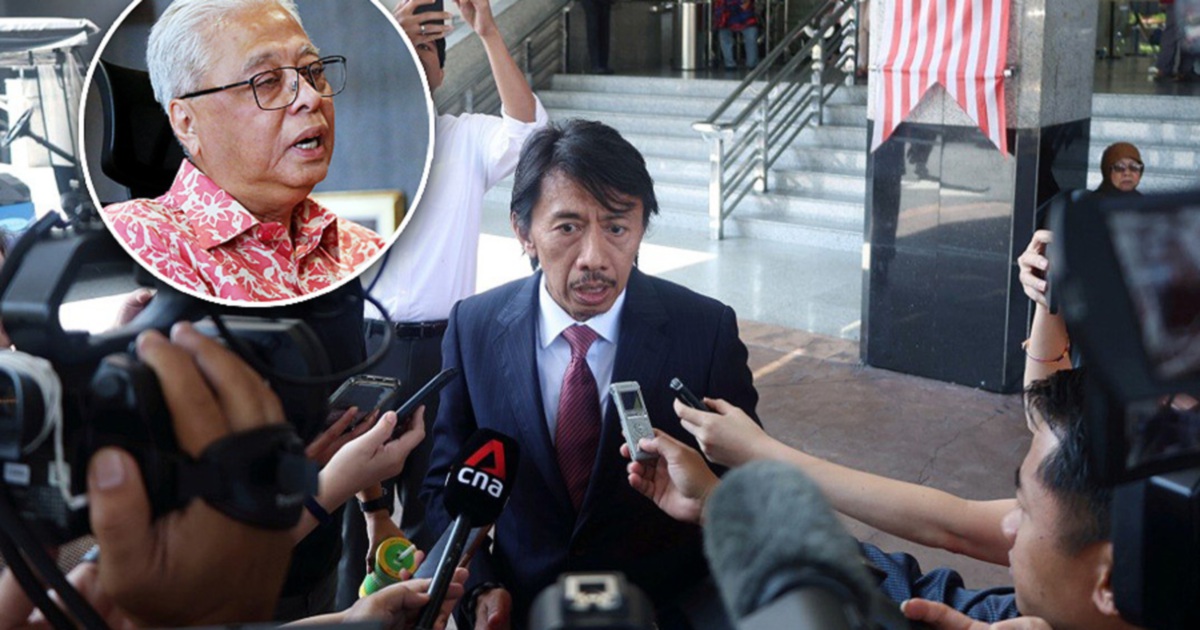
The former prime minister is moving forward with his legal defence despite personal health difficulties that have tested his resilience in recent times. Datuk Seri Ismail Sabri Yaakob has signalled his unwavering commitment to addressing the accusations levelled against him under the Malaysian Anti-Corruption Commission Act, with proceedings expected to advance significantly in the coming weeks.
Ismail Sabri's determination to contest the charges marks a crucial moment in Malaysian politics, as one of the country's recent chief executives faces the legal machinery that has increasingly scrutinised the conduct of high-ranking officials. The timing of these proceedings reflects the ongoing national conversation about accountability and governance standards at the highest levels of government, a theme that has dominated Malaysian public discourse over recent years.
The health complications that have emerged represent a personal challenge distinct from the legal battle itself, yet they underscore the pressure facing individuals navigating simultaneous personal and institutional crises. Despite these obstacles, Ismail Sabri has indicated that health considerations will not deter him from mounting a vigorous defence and participating fully in the legal process ahead.
For Malaysian observers following the trajectory of the country's political establishment, this case carries broader significance beyond the individual circumstances. The proceedings against a former chief executive demonstrate the functioning of institutional checks on executive power, a mechanism that has become increasingly visible in Malaysia's post-2018 political landscape. The MACC's enforcement actions, whether viewed as strengthening accountability or as selective application of legal authority depending on political perspective, continue to shape perceptions of governance and rule of law.
Ismail Sabri's public statements emphasizing his commitment to clearing his name reflect a strategic positioning that acknowledges public concern about integrity in high office while asserting his confidence in his legal standing. This approach balances the need to maintain dignity during proceedings while engaging with the broader Malaysian audience whose trust in political leadership remains contested ground.
The implications for the Malaysian political system extend beyond this singular case. The willingness of former office-holders to face legal processes, combined with institutional mechanisms designed to investigate high-level conduct, illustrates how Malaysia's checks on power operate in practice. Whether these mechanisms function as intended, however, remains a matter of considerable debate among analysts, legal scholars, and civil society observers who scrutinize patterns in enforcement and outcomes.
As the proceedings develop throughout the month ahead, attention will likely focus not only on the specific allegations but also on the broader questions surrounding evidence, procedure, and the substantive standards applied to evaluate the conduct of top officials. These procedural elements carry significance for understanding how governance standards are enforced across Malaysia's institutional landscape.
For Ismail Sabri personally, the path forward requires balancing health management with legal preparation, a combination that poses practical and psychological demands. His insistence on moving through the process despite these challenges speaks to both personal determination and the stakes he perceives in clearing his name amid Malaysia's complex political environment.
The former prime minister's situation also highlights the vulnerability of political figures once they lose executive office, a dynamic that has characterised Malaysian politics with increasing frequency. The transition from wielding executive power to facing legal scrutiny marks a dramatic reversal in status and influence, a trajectory that resonates across Malaysia's political fraternity and contributes to ongoing conversations about the security and security of former leaders.
Observers of Malaysian politics will be watching closely as developments unfold, particularly regarding how the legal proceedings progress and what implications they might carry for political accountability more broadly. The case represents a test of institutional independence and consistency in applying legal standards, factors that Malaysian citizens and international observers view as central to democratic governance.
The month ahead will prove pivotal not only for Ismail Sabri's personal vindication or legal liability, but also for what these proceedings reveal about Malaysia's capacity to investigate, prosecute, and adjudicate cases involving the nation's highest offices fairly and transparently. His determination to see the process through, notwithstanding health obstacles, underscores the personal costs of political leadership and the accountability frameworks that increasingly constrain those who have held Malaysia's top positions.

