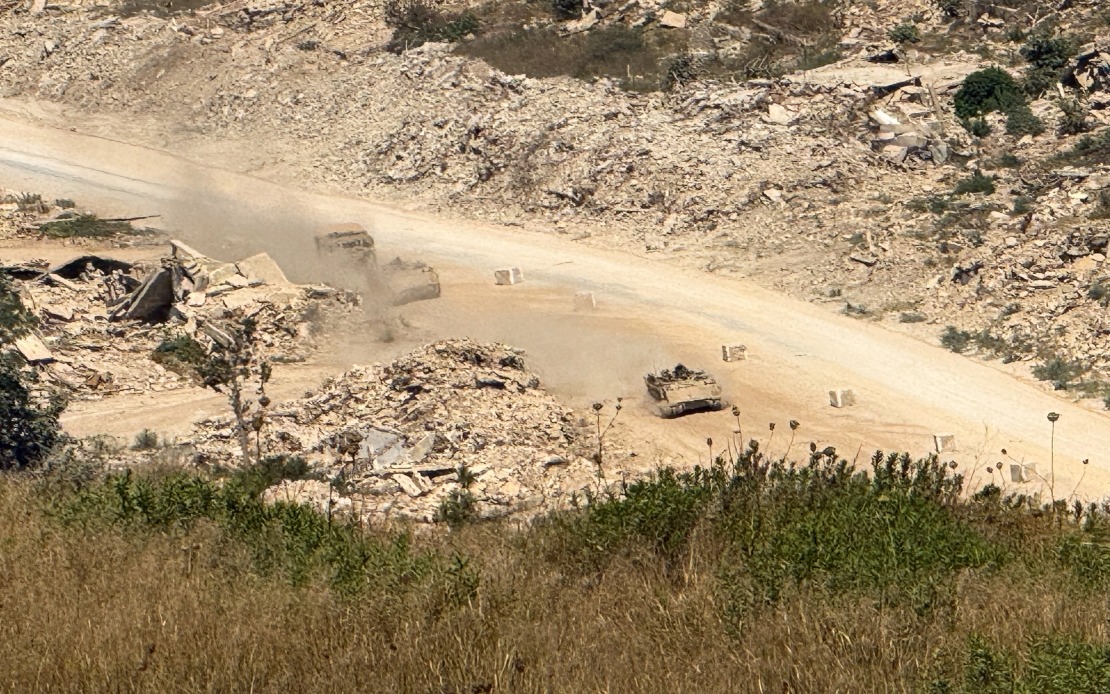
The Israeli military launched a series of coordinated operations across southern Lebanon on Monday, escalating tensions on the ground even as diplomatic efforts to resolve the conflict continued in European capitals. Lebanese state news agency reports documented machine gun fire directed at Wadi al-Salouqi in Nabatieh governorate overnight, followed by artillery bombardment of the town of Mansouri and multiple explosions across the region. The operations underscore a pattern of military activity that has persisted despite international mediation and framework agreements aimed at establishing a sustainable ceasefire.
The extent of Monday's operations revealed Israeli forces operating across multiple locations simultaneously. Kfar Tebnit in Nabatieh witnessed a major explosion, while nearby Nabatieh al-Fawqa endured sporadic artillery fire from Israeli positions throughout the day. In the western outskirts of Mays al-Jabal, Israeli forces advanced further into Lebanese territory with supporting artillery fire targeting structures in the area. The operations also included the deliberate burning of several houses in Khiam, a town that has seen repeated Israeli military presence since operations commenced earlier this year. Low-altitude drone flights were reported over the Zahrani area, suggesting reconnaissance activities accompanying the ground operations.
These incidents emerge at a critical juncture in negotiations between Lebanon and Israel, mediated by the United States. The seventh round of talks concluded just days earlier on Thursday in Rome, with both parties discussing implementation mechanisms for a framework agreement originally established on June 26. Lebanese President Joseph Aoun characterised discussions during a Cabinet meeting as producing "positive progress" on border-related issues and the status of detainees, remarks that stood in sharp contrast to the military developments unfolding simultaneously across southern Lebanon.
The framework agreement itself articulates a structured approach to resolving the territorial dispute. It envisions a phased Israeli withdrawal from occupied Lebanese territory, beginning with designated "pilot zones" in specified areas. This withdrawal is contingent upon the Lebanese state deploying its military forces to these regions and ensuring the disarmament of armed groups, primarily Hezbollah. The arrangement reflects international efforts to restore Lebanese state sovereignty while addressing Israeli security concerns regarding cross-border threats.
However, the persistence of military operations on the ground suggests significant obstacles remain to translating diplomatic language into practical implementation. Israeli forces currently occupy portions of southern Lebanon, some areas seized decades ago and others captured during the recent 2023-2024 conflict. During the current military campaign that began in March, Israeli forces have penetrated more than 10 kilometres into Lebanese territory, establishing positions that complicate any eventual withdrawal process. The maintenance of these positions through active military operations indicates Israeli reluctance to vacate strategic locations pending satisfactory guarantees regarding border security.
The humanitarian toll of the conflict remains substantial and serves as an urgency factor in negotiations. Lebanese authorities document over 4,300 deaths since operations began in March, with more than 12,000 wounded. The displacement figure exceeds one million people, representing a significant portion of Lebanon's population and creating enormous social, economic, and political pressures on the government. These casualty figures and displacement statistics operate as background context to diplomatic discussions, where Lebanese negotiators must balance technical details of implementation against public expectations of swift conflict termination.
The broader Middle Eastern context adds layers of complexity to Lebanese-Israeli negotiations. Israel simultaneously maintains occupation of Palestinian territories and Syrian land, having consistently refused to withdraw or support the establishment of an independent Palestinian state as called for in multiple United Nations resolutions. This wider pattern of territorial retention shapes regional perceptions regarding Israeli intentions in Lebanon, with observers questioning whether any framework agreement will prove durable given historical patterns of Israeli policy in neighbouring territories.
For Malaysian and Southeast Asian observers, the Lebanon-Israel situation illustrates the difficult terrain separating military and diplomatic tracks in conflict resolution. The simultaneity of intense negotiations and continued military operations reflects a negotiating strategy wherein both parties maintain pressure whilst discussing terms. This dynamic is not unique to the Levantine context and has parallels in various regional disputes affecting Southeast Asian states, where military posturing and diplomatic engagement often advance in parallel rather than sequentially.
The international mediation effort, anchored by United States involvement, demonstrates that external powers continue attempting to broker regional peace arrangements despite structural obstacles. The Rome talks represent a multilateral approach to conflict management, though their efficacy remains uncertain given the disconnect between diplomatic progress and ground-level military activity. For regional actors observing these developments, the experience underscores both the potential value and inherent limitations of external mediation in resolving disputes where fundamental territorial and security questions remain unresolved.
The timing of these operations, emerging mid-negotiation cycle, suggests Israeli military commanders maintain operational autonomy despite diplomatic engagement occurring at political levels. Whether Monday's activities represent tactical adjustments, pressure tactics designed to strengthen negotiating positions, or manifestations of underlying disagreement within Israeli decision-making structures remains unclear. Nonetheless, the operations demonstrate that achieving and maintaining ceasefire compliance requires far more than framework agreements signed in distant capitals—it demands sustained commitment to deescalation at the tactical military level, where commanders face immediate situational pressures and security concerns.
As negotiations continue, the credibility of any eventual agreement will depend substantially upon demonstrable restraint from military operations and verifiable compliance with ceasefire terms. The pattern established so far, combining diplomatic progress with continued military activity, creates justifiable scepticism among Lebanese civilians and regional observers regarding whether diplomatic channels will ultimately succeed in bringing the conflict to a sustainable conclusion.

