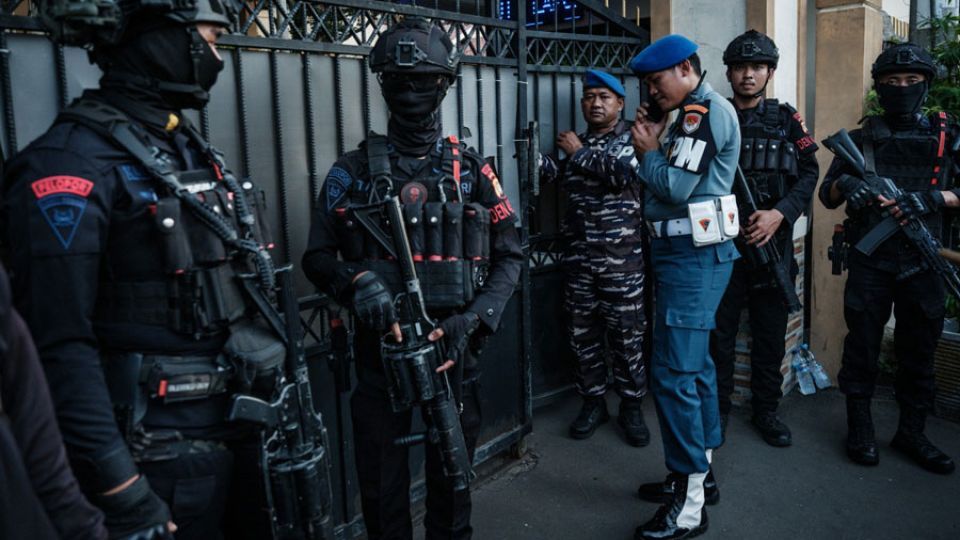
A 34-year-old man has been taken into custody by Greater Jakarta Police following his alleged involvement in a bomb threat that forced the evacuation of SD Srengseng Sawah 15 Pagi state elementary school in the Jagakarsa district of South Jakarta on Monday morning. The suspect, referred to only by the initials MY, was apprehended near the school premises just hours after a WhatsApp message circulated among staff members claiming that explosives had been positioned at eleven separate locations throughout the educational facility.
The threatening communication arrived while the school's entire student body was assembled for the traditional morning flag-raising ceremony, a routine educational ritual across Indonesia's public schools. Teachers and administrative personnel who received the message on their WhatsApp accounts immediately reported the threat following the completion of the ceremony, triggering rapid response protocols designed to address potential security incidents on school grounds. The discovery that the suspect lived in close proximity to the school raised immediate concerns about the threat's credibility and potential accessibility to the facility.
Lawyer enforcement response was swift and comprehensive. Greater Jakarta Police mobilised the Gegana bomb disposal unit, a specialised team trained to handle explosive devices and conduct controlled detonations, alongside personnel from Densus 88, Indonesia's elite counterterrorism squad. These units conducted an exhaustive search of the school complex, methodically examining the eleven locations mentioned in the threatening message. The operation's conclusion—that no explosives were actually present—brought significant relief to parents and school administrators, though the disruption to the academic calendar on opening day represented a concerning security incident.
Greater Jakarta Police spokesperson Sr. Comr. Budi Hermanto confirmed on Monday that investigators had secured MY for questioning at South Jakarta Police headquarters. The authorities maintained a measured approach to public disclosure, providing limited identifying information while indicating that the investigation was proceeding into both the suspect's motivations and the underlying purpose behind the alleged threat. This measured communication reflects standard police protocol when dealing with school security incidents, particularly when young people and their safety remain the paramount concern.
According to Jagakarsa Police chief Comr. Nurma Dewi, the threatening message had been distributed exclusively to teaching staff and school administrative personnel rather than broadcast more widely. The timing of the message—coinciding precisely with the flag-raising ceremony when staff would be occupied supervising students—suggested a calculated effort to maximise disruption and response. The evacuation process that followed involved safely moving students away from the premises while specialist teams conducted their investigation, a procedure that all Indonesian schools are trained to execute given the nation's experience with security threats to educational institutions.
The incident occurs against a backdrop of heightened awareness regarding school security throughout Southeast Asia. Indonesia, with its large student population and decentralised school administration systems, faces periodic security challenges ranging from administrative threats to more substantive security concerns. The fact that this particular threat proved unfounded does not diminish the legitimate anxiety it generated among parents, educators, and students who must now return to the same facility. The psychological impact of evacuation procedures on young learners, even when precautionary, represents an understudied consequence of such incidents.
Investigators are still working to establish the specific circumstances that motivated the suspect to send the threatening message. Whether MY acted alone, whether the threat stemmed from personal grievances with school administration or staff, or whether other factors contributed to his alleged actions remains subject to ongoing police investigation. The proximity of the suspect's residence to the school grounds may prove significant to understanding how he became familiar with the facility's layout and administrative communications channels.
The incident highlights the vulnerability of Malaysia's regional neighbours to disruptions of school operations through hoax threats, particularly given the ease with which digital messaging platforms can now facilitate such communications. Unlike bomb-related incidents that require physical materials and technical knowledge, threatening messages can originate from almost anywhere and require minimal resources. This asymmetry between the cost to send a threat and the cost to respond to one has emerged as a persistent challenge for law enforcement agencies across the region.
For Malaysia's education sector, this incident in Jakarta offers relevant lessons regarding security protocols and communication procedures. While Malaysia's schools have their own established safety procedures, the experience of Indonesian educators in managing school evacuations and coordinating with police bomb disposal units demonstrates the practical challenges of balancing educational continuity with genuine safety concerns. The question of how to distinguish credible threats from hoaxes remains a critical operational challenge that affects resource allocation and public confidence in school security systems throughout Southeast Asia.

