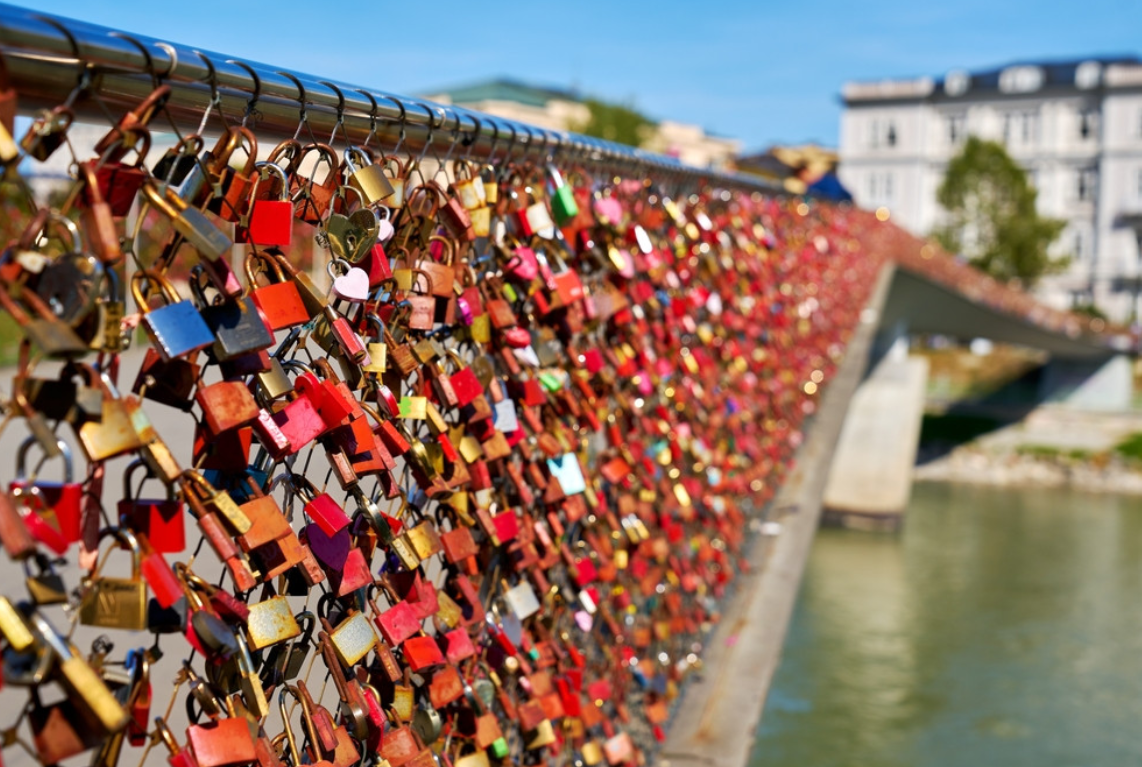
Jakarta's administration has unveiled plans to construct several romantic "love lock" bridges spanning the Cideng River alongside one of the capital's busiest thoroughfares, reigniting a fundamental debate about how Indonesia's largest city allocates its resources. Governor Pramono Anung unveiled the concept as part of a broader beautification initiative for Jl. Rasuna Said, a major South Jakarta artery that currently struggles with congestion and aging infrastructure. The proposed structures would link the highway to Jl. Kuningan Persada, directly fronting the headquarters of the Corruption Eradication Commission, and represent a significant shift in how the city views public space development.
The inspiration behind these installations draws from similar attractions that have gained popularity internationally, particularly in Paris and Seoul, where couples affix personalised padlocks to urban structures as tokens of romantic commitment. Pramono framed the initiative as a youthful outlet for self-expression, envisioning between three and four bridges that would accumulate colourful locks over time. Special gubernatorial staffer Cyril Raoul "Chico" Hakim elaborated on the vision during planning discussions, emphasising that contemporary design principles would govern the structures while maintaining accessibility for pedestrians. The administration has committed Rp 91 billion—approximately US$5 million—to the overall revitalisation of the 3.8-kilometre section, which encompasses sidewalk improvements and removal of dilapidated concrete remnants from the failed early-2000s monorail venture that has long blighted the landscape.
Yet this ambitious aesthetic project has provoked considerable scepticism among both ordinary Jakartans and urban planning professionals who question whether romantic symbolism should dominate development decisions in a capital chronically starved of fundamental infrastructure. The thoroughfare cuts through an established commercial district anchored by the Mega Kuningan office complex, which raises practical concerns about whether the location would genuinely attract the young demographic it purportedly targets. A 27-year-old employee working nearby captured the sentiment of many residents: while acknowledging the bridges might possess novelty appeal, she expressed doubt that office workers would deliberately visit the site during leisure time rather than merely passing through during commutes. Her countervailing suggestion—that younger Jakartans prioritise accessible, cost-free gathering spaces served by efficient public transit—reflects generational expectations about how cities should function.
Urban planning consultant Trubus Rahadiansyah delivered a more pointed critique, dismissing the project as fundamentally misguided symbolism that mistakes aesthetics for functionality. He emphasised that the area's traffic patterns, dominated overwhelmingly by vehicles rather than pedestrians, render it unsuitable for infrastructure designed to enhance human-scale movement through the city. The underlying tension Trubus articulates reflects a broader Southeast Asian challenge: rapidly developing cities often concentrate prestige investments in showcase districts while neglecting the infrastructure investments ordinary residents desperately require for safety and mobility. He specifically referenced the catastrophic April incident in Bekasi, West Java, where an unguarded railway level crossing became the site of a collision between a Commuter Line train and the Argo Bromo Anggrek intercity service, killing 16 people and injuring at least 91 others. The tragedy stemmed partly from a preceding incident in which a commuter train struck an electric vehicle trapped on the crossing, highlighting the cascading dangers posed by inadequate safety infrastructure.
Surveys of Jakarta's railway network have documented extensive gaps in fundamental protective infrastructure, with numerous crossings throughout the metropolitan area operating without proper gates or warning systems. Trubus contends that these genuinely life-threatening deficiencies should command immediate investment priority, positioning basic protective infrastructure as manifestly more essential than romantic installations serving primarily aesthetic objectives. This argument taps into longstanding frustrations among residents across the city's peripheral zones—West, East, and North Jakarta particularly—where development investment consistently lags the central and southern business districts that dominate mayoral announcements.
Kevin Wu, an Indonesian Solidarity Party councillor, has formally challenged the administration to conduct transparent reviews of the love lock bridge allocation, explicitly questioning whether Rp 91 billion should support beautification when substantial populations lack equitable access to fundamental amenities. Wu emphasised that accessible sidewalks, safer pedestrian crossing infrastructure, and adequate public green spaces remain unevenly distributed across Jakarta's diverse communities. His intervention reflects broader political tensions about how development rhetoric in Southeast Asian megacities often emphasises showcase projects that attract international attention while marginalising the unglamorous infrastructure maintenance that meaningfully improves daily life for working families. The councillor's warning against creating impressions that "iconic projects take precedence over basic public needs" directly challenges the administrative framing that romantic symbolism constitutes legitimate use of scarce public resources.
The project remains in preliminary budgeting stages, with final cost estimates still pending completion of detailed engineering designs, suggesting opportunities for substantive policy reconsideration before significant expenditures materialise. The administration has not yet disclosed specific timelines or confirmed the precise bridge locations, allowing space for dialogue between planners and residents about alternative uses for the Jl. Rasuna Said revitalisation investment. Urban development scholars across Indonesia and the broader region have increasingly emphasised the concept of "tactical urbanism"—relatively modest, community-responsive interventions that address documented safety and accessibility needs rather than top-down aesthetic impositions. Such approaches frequently generate stronger community enthusiasm while producing measurable improvements in daily mobility and safety outcomes.
The love lock bridge controversy exemplifies persistent tensions within Jakarta's governance structure regarding how development priorities should be sequenced. Governor Pramono inherited a capital confronting enormous infrastructure deficits: congested transportation networks, inadequate drainage systems contributing to seasonal flooding, unreliable pedestrian infrastructure, and persistent gaps in public transit connectivity. The romantic bridge project, regardless of its merits as a leisure destination, must be evaluated within this constrained resource environment where competing demands substantially exceed available funding. International examples from Paris and Seoul often obscure the fact that both cities constructed their iconic love lock installations after establishing comprehensive basic infrastructure systems that reliably served residents' fundamental needs. Jakarta's sequence differs markedly—proposing romantic investments before foundational safety and accessibility infrastructure reaches acceptable standards.
The debate extends beyond individual project merits to fundamental questions about administrative accountability and equitable resource distribution across a sprawling metropolitan area. Residents in peripheral zones have articulated justified grievances about concentrated development investment benefiting central business districts while their communities experience chronic infrastructure deficits. The love lock bridge project, positioned alongside a major commercial corridor and offered without parallel commitment to distributed infrastructure improvements across underserved areas, reinforces historical patterns that marginalised communities perceive as systematically inequitable. Transparency regarding budget allocation decisions and community consultation processes becomes essential for rebuilding trust in governance institutions that residents increasingly view with scepticism.
Moving forward, Jakarta's administration faces a meaningful choice: proceeding with the romantic bridge installation while defending resource allocation priorities against documented infrastructure needs, or reconsidering the project's scope and redirecting portions of the Rp 91 billion investment toward demonstrable safety and accessibility improvements with broader metropolitan benefits. Urban planning experts suggest hybrid approaches could preserve aesthetic enhancement goals while prioritising functional infrastructure, such as combining attractive pedestrian bridge improvements at genuine crossing points with thoughtful landscaping. Such reframing would acknowledge legitimate desires to create appealing public spaces while demonstrating responsiveness to the documented safety and accessibility deficits that have prompted substantial professional and community criticism. The outcome of this particular debate will signal how Indonesia's capital city intends to approach the perpetual tension between making global impressions and serving ordinary residents' legitimate infrastructure expectations.

