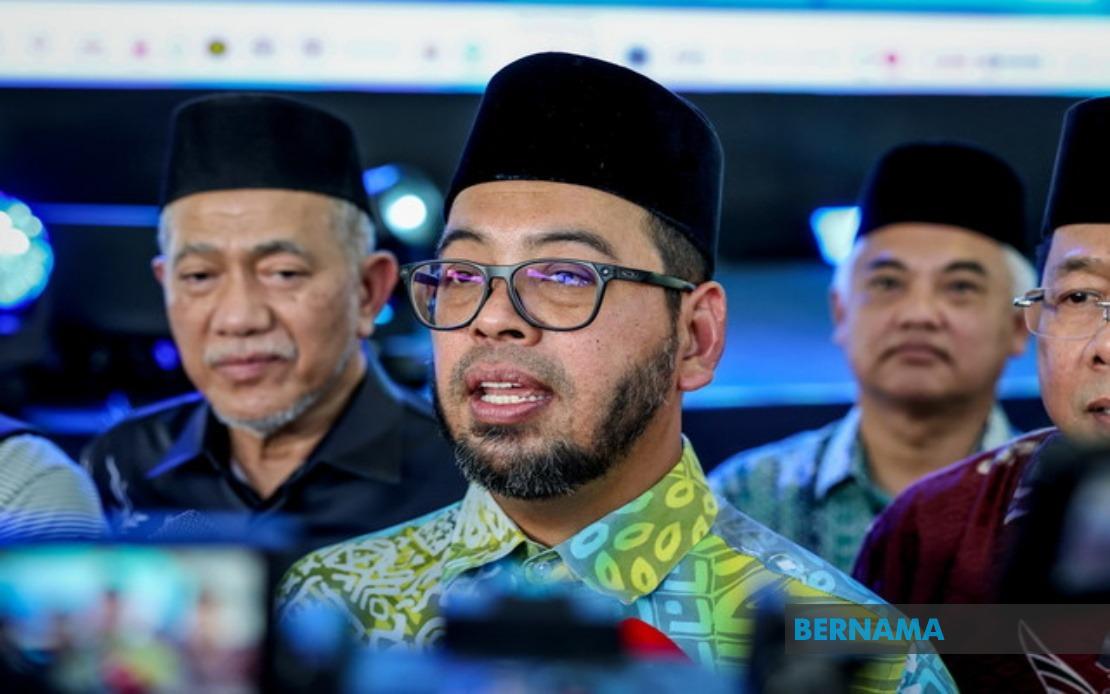
The Department of Islamic Development Malaysia (JAKIM) is moving to establish uniform funeral management standards across the country, prompted by a controversy that recently gained significant traction on social media. Minister in the Prime Minister's Department (Religious Affairs) Dr Zulkifli Hasan announced the initiative during an official event in Bukit Mertajam, signalling a coordinated federal response to procedural inconsistencies that have raised public concerns about the handling of Muslim burials.
The standardisation effort comes at a moment when funeral practices have become increasingly scrutinised by the Malaysian public, particularly regarding delays and coordination failures between religious authorities, cemetery management, and grieving families. While several Malaysian states have already developed their own funeral guidelines, JAKIM recognises that a more integrated approach would better serve the nation's diverse Muslim population and prevent disputes that undermine public confidence in religious institutions.
Dr Zulkifli explained that the refined guidelines will serve as a comprehensive reference point for states that currently lack detailed protocols, while simultaneously improving those that already exist. The department's approach balances centralised standardisation with respect for federalism, acknowledging that each state operates under its own enactments and religious legislation. This careful distinction is crucial in Malaysia's constitutional framework, where Islamic affairs remain largely a state matter, requiring JAKIM to work collaboratively rather than impose uniform rules unilaterally.
The timeline for completing these guidelines remains flexible but expedited. Dr Zulkifli indicated that the process should not require an extended period, since foundational frameworks are already in place and only require refinement and expansion. This assessment suggests JAKIM has already commenced detailed work, leveraging existing best practices from states with established systems. The completion will depend on consultation with state religious authorities and broader stakeholder engagement, ensuring buy-in from the institutions responsible for implementation.
The immediate catalyst for this initiative was a funeral management dispute in Selangor that escalated into a public controversy. Allegations emerged regarding burial delays at Ukay Perdana Muslim Cemetery in Hulu Kelang, with complications involving Masjid Nurul Hidayah in Kampung Pandan Dalam and welfare organisation Badan Kebajikan Salatulrahim (BKS). The incident exposed gaps in coordination between mosque management, cemetery operations, and Islamic religious authorities—a chain-of-custody problem that affects families at their most vulnerable moment.
In response to the Selangor situation, the Selangor Islamic Religious Council (MAIS) convened an urgent meeting bringing together the deceased's family, mosque representatives, the welfare organisation, and the Selangor Islamic Religious Department (JAIS). This mediation approach reflects a preference for collaborative resolution within existing institutional frameworks rather than regulatory intervention. MAIS chairman Datuk Salehuddin Saidin framed the intervention as both solving the immediate grievance and establishing protocols to prevent recurrence, demonstrating an acknowledgment that systemic reform is necessary.
Dr Zulkifli's public call for calm and unity among all stakeholders reflects awareness that funeral controversies carry sensitive religious and communal dimensions. The handling of Muslim burials intersects deeply with Islamic law, cultural practice, and family dignity. Disputes in this arena can quickly polarise communities and undermine trust in religious institutions if mismanaged. By emphasising collaborative resolution rather than blame assignment, federal religious leadership aims to preserve institutional legitimacy while advancing practical improvements.
The standardisation initiative carries implications beyond procedural efficiency. Malaysia's Muslim population deserves assurance that funeral arrangements will be handled consistently, respectfully, and promptly, regardless of location. For families already grieving, navigating bureaucratic complexities or experiencing unexplained delays compounded their distress. Standardised guidelines should clarify timelines, responsibility allocation, communication protocols, and escalation procedures, reducing ambiguity that can lead to costly disputes.
From a broader governance perspective, this effort reflects how federal-state cooperation can address gaps in service delivery. JAKIM's coordinating role allows best practices to be identified and shared, while state authorities maintain implementational autonomy. The model suggests how Malaysia's decentralised religious administration can achieve standardisation through collaboration rather than centralisation—a particularly important distinction given sensitivities about Islamic governance structures.
For Malaysian families, the practical impact should be noticeable in coming months and years. Clear guidelines should reduce confusion about where to lodge complaints, what timeline to expect, and which authorities bear responsibility at each stage. Cemetery operations should be better integrated with mosque management and welfare organisations. Delays caused by unclear procedures or miscommunication should diminish as authorities operate from shared protocols.
The initiative also addresses a gap in public awareness. Many Muslims may not understand the procedural requirements for burials or their rights when complications arise. Standardised, accessible guidelines—published in multiple languages and distributed widely—could prevent misunderstandings that escalate into public controversies. Community education efforts should accompany the release of new guidelines.
Looking forward, JAKIM's commitment to completing these guidelines represents a measured response to legitimate public concerns. The religious establishment is acknowledging that current arrangements contain inefficiencies and proposing systematic improvement. Success will depend on genuine implementation by state authorities and willingness to address emerging gaps once guidelines are in place. The real test comes not in policy formulation but in how Malaysian communities experience funeral services in practice.

