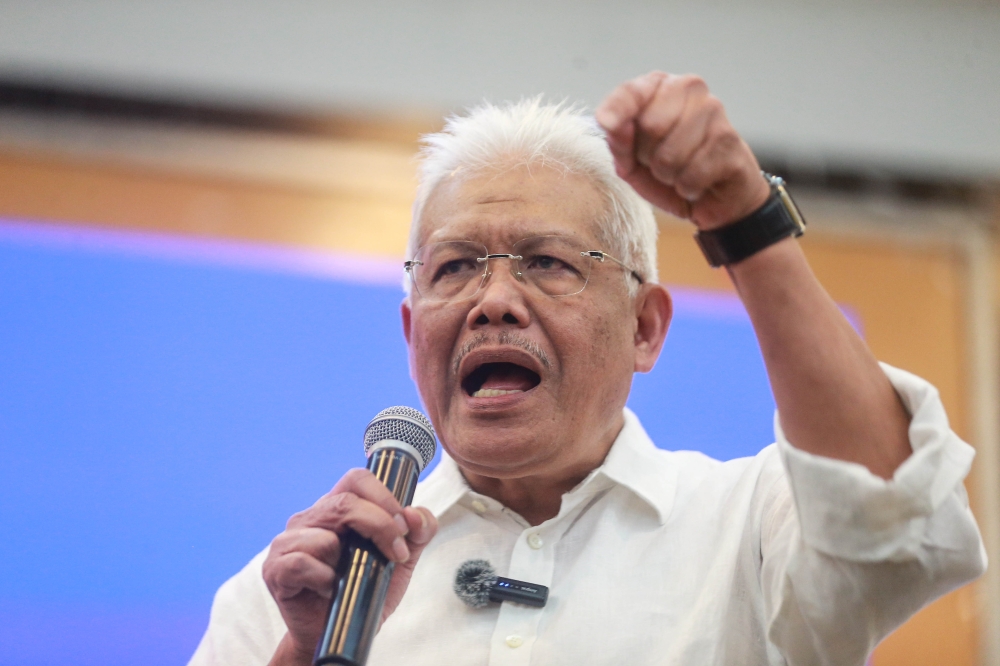
Negeri Sembilan Umno chairman Datuk Seri Jalaluddin Alias has been identified as one of several contenders for the Menteri Besar position in the event that the Barisan Nasional-Perikatan Nasional coalition secures victory in upcoming state elections, according to federal Deputy Prime Minister Hamzah Zainudin. The announcement comes as both major coalitions intensify their preparations and candidate selection processes ahead of what is shaping up to be a pivotal electoral contest in the central region.
Hamzah Zainudin's confirmation that Jalaluddin Alias remains in consideration for the top state leadership position reflects the careful political calculations currently underway within the BN-Perikatan alliance. The statement, made during a public appearance, underscores the significance of the Menteri Besar selection process, which remains a carefully guarded matter involving multiple stakeholders across the coalition's constituent parties. Such selections typically involve complex negotiations between Umno, Malaysian Chinese Association, Democratic Action Party, and various Perikatan components, each seeking to secure influential roles in state government.
Jalaluddin Alias brings considerable political experience to the table. His tenure as Negeri Sembilan Umno chairman has positioned him as a prominent figure within the party's state structure, though the final decision on the Menteri Besar candidate will ultimately depend on coalition negotiations and the outcome of the election itself. The confirmation that multiple candidates are being considered suggests that the selection process remains fluid, with final determination likely to occur only after electoral results become clear.
Negeri Sembilan holds strategic importance within Malaysia's political landscape. Located centrally and encompassing several urban and semi-urban constituencies, the state has traditionally been a bellwether for broader political trends. The outcome of elections there often carries implications for the national political climate and the fortunes of competing coalitions. Control of the state government grants significant patronage power and serves as a platform for advancing party interests across the region.
The coalition framework between Barisan Nasional and Perikatan Nasional represents a significant political development. This collaboration, which consolidated various parties under a unified banner, was designed to present a more cohesive alternative to other political groupings. However, maintaining unity within such coalitions requires careful management of expectations and equitable distribution of key positions among coalition members. The Menteri Besar position represents precisely the kind of high-profile role that requires delicate negotiation to maintain coalition stability.
Jalaluddin Alias's background within Umno places him at the intersection of the coalition's dominant party structure. Umno, as the largest component of Barisan Nasional, traditionally maintains significant influence over state-level selections, though this influence must be balanced against the interests of coalition partners and broader political realities. His positioning as a state-level party chairman suggests he commands organizational support within Negeri Sembilan's Umno membership, which could be instrumental should he advance as the coalition's choice.
The Negeri Sembilan electorate comprises approximately 800,000 voters spread across multiple constituencies with varying demographic compositions. Urban areas around Seremban and Nilai present different political dynamics compared to more rural constituencies, requiring candidates with broad appeal across diverse voter communities. Any potential Menteri Besar must demonstrate capacity to address concerns spanning economic development, education, infrastructure, and social welfare across these varied constituencies.
Electoral outcomes in Negeri Sembilan have historically reflected shifts in voter sentiment across Malaysia more broadly. The state's mixed composition of traditional constituencies and newer urban developments makes it a microcosm of Malaysian political preferences. Success here could provide momentum for the ruling coalition, while setbacks might signal deeper challenges requiring strategic reassessment at the national level.
The timing of Hamzah Zainudin's statement reflects the campaign calendar and the necessity for coalitions to provide clarity to their supporters regarding leadership intentions. Voters often make electoral decisions partly based on who they believe will lead the state government, making candidate identification a crucial component of campaign messaging. By confirming Jalaluddin Alias's candidacy consideration, coalition leadership seeks to consolidate support among Umno and Barisan Nasional constituents.
Looking forward, the final determination of the Menteri Besar candidate will depend on multiple variables including internal party preferences, coalition partner demands, and ultimately the distribution of seats following the election. Should the BN-Perikatan coalition secure a majority, negotiations between coalition leaders and state party representatives would commence immediately to finalize the Menteri Besar appointment. Jalaluddin Alias's inclusion among serious contenders positions him as a figure to watch in these forthcoming developments.

