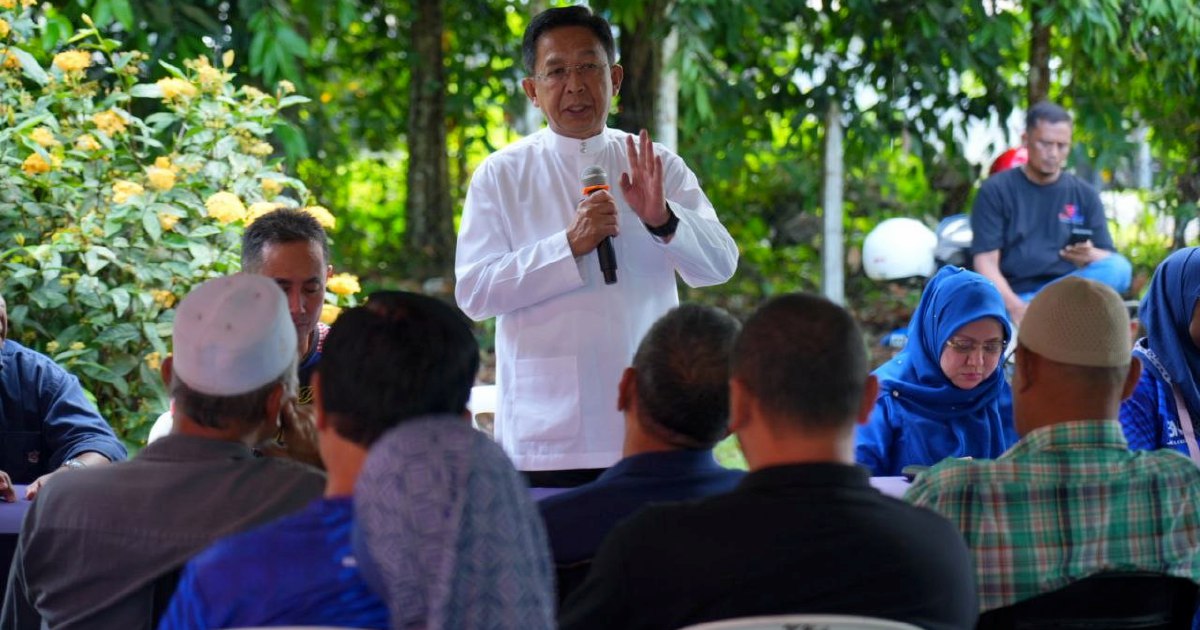
Perikatan Nasional has signalled its intention to nominate Negri Sembilan Umno chairman Datuk Seri Jalaluddin Alias as a leading contender for the menteri besar post, should the PN-BN coalition emerge victorious in the August 1 state election. The announcement positions Jalaluddin among a select group of candidates being considered for the top executive position in the state, reflecting PN's strategic planning for the upcoming polls.
The identification of Jalaluddin as a potential MB candidate underscores the coalition's confidence in his leadership credentials and standing within Umno's Negri Sembilan branch. As state Umno chairman, Jalaluddin carries significant political weight within the component party and has maintained a visible presence in state-level affairs. His selection as a frontrunner suggests that PN views him as capable of commanding support both within the coalition framework and among grassroots voters in the state.
Negri Sembilan holds particular strategic importance within the broader Malaysian political landscape. The state, whilst geographically modest, serves as a political battleground where coalition dynamics often reflect wider national trends. An PN-BN victory in Negri Sembilan would represent a significant consolidation of conservative Malay-Muslim political forces, reinforcing the influence of both coalitions in the peninsula's central region.
The PN-BN understanding in Negri Sembilan represents a deliberate attempt to avoid vote-splitting among pro-establishment parties. Rather than competing directly, the two coalitions have negotiated an electoral arrangement intended to maximise their combined representation in the state assembly. This cooperation model differs from contested state elections elsewhere and reflects the fluid nature of Malaysian coalition politics, where formal alignments frequently shift according to electoral mathematics and local power dynamics.
The consideration of Jalaluddin for the MB position also speaks to Umno's residual institutional strength in Negri Sembilan, despite the party's national electoral setbacks in recent cycles. Within state politics, Umno remains a significant force capable of negotiating for high-profile positions. The choice of the state Umno chairman as a potential chief executive demonstrates that traditional factional hierarchies within the party continue to influence leadership succession planning, even as newer political coalitions reshape the broader electoral environment.
For regional stability and investor confidence, the anticipated clarity around Negri Sembilan's leadership matters considerably. The state hosts significant economic activity, including industrial zones and service sectors that depend on predictable governance. Knowing the likely composition of the state government allows businesses and development agencies to plan infrastructure and industrial initiatives with greater certainty.
The August 1 election itself comes amid broader Malaysian efforts to stabilise political institutions following years of constitutional and electoral turbulence. State elections provide crucial testing grounds for coalition cohesion and policy platforms before potential national-level contests. The Negri Sembilan outcome will signal whether PN-BN cooperation can sustain itself across multiple election cycles or whether underlying tensions between the coalitions will resurface.
Jalaluddin's potential elevation also has implications for Umno's internal factional balance. Different camps within the party maintain varying degrees of alignment with PN, particularly its Bersatu wing. The selection of candidates for high office often reflects these internal dynamics, and Jalaluddin's positioning as a lead MB candidate may indicate which Umno faction has gained advantage in pre-electoral negotiations with PN leadership.
The broader regional context matters as well. Neighbouring Selangor, governed separately by Pakatan Harapan, and Pahang, controlled by PN, create a political mosaic across central Malaysia. Negri Sembilan's alignment within this tripartite system affects inter-state coordination on matters ranging from environmental management to economic development corridors that transcend state boundaries.
For voters in Negri Sembilan, the identification of potential MB candidates represents an opportunity to assess leadership alternatives before casting ballots. Whilst the PN-BN understanding somewhat constrains voter choice by pre-determining coalition composition, the specific selection of individuals for ministerial roles remains subject to post-election negotiation and internal coalition decision-making.
The coming weeks will likely see further announcements regarding coalition candidate selections across constituencies and potential alternative MB contenders. Such announcements function as political signalling, allowing coalition partners and rival coalitions to gauge strength, build momentum, and mobilise supporter networks. The rhetorical emphasis on Jalaluddin's credentials serves to anchor voter expectations and establish his legitimacy within the PN-BN framework before the formal campaign period accelerates.

