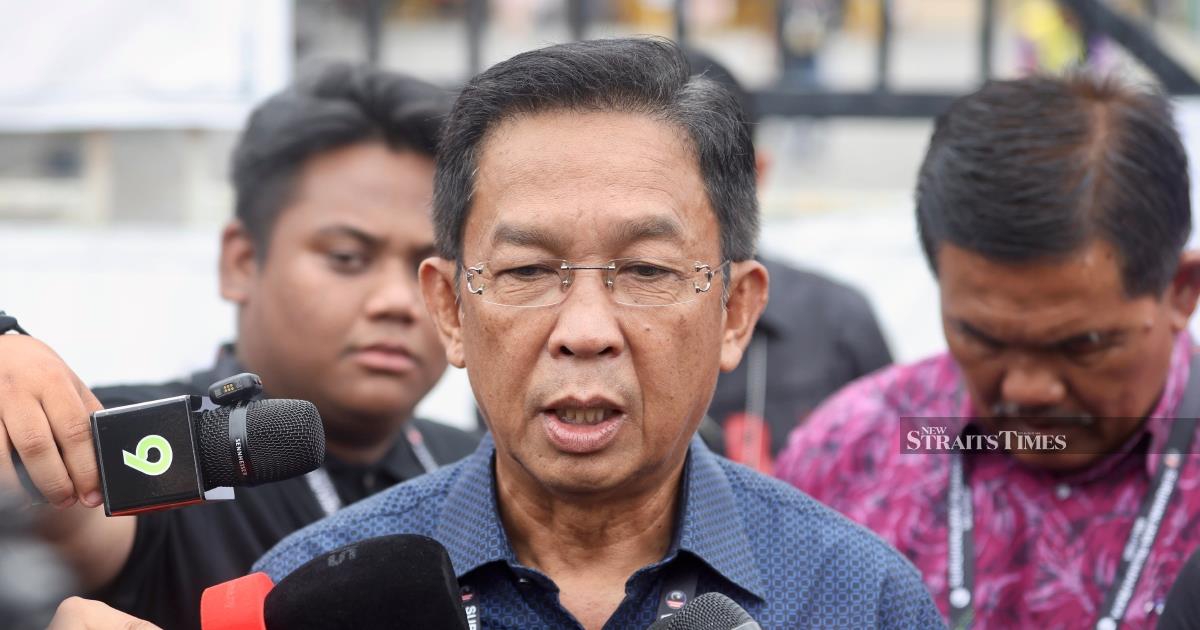
Datuk Seri Jalaluddin Alias, who chairs the Negri Sembilan Umno Liaison Committee, has moved to clarify the circumstances surrounding his non-attendance at the menteri besar swearing-in ceremony held at Istana Besar Seri Menanti yesterday. His explanation addresses what could have otherwise been interpreted as a notable absence during a significant state-level occasion in Seremban.
The Umno official attributed his inability to attend the formal ceremony to insufficient advance warning. The short notice, he indicated, left him without adequate time to arrange his schedule or make the necessary preparations for attending the high-profile event. This explanation came as the political machinery in Negri Sembilan continues to settle into its new configuration following the recent transition in the menteri besar position.
Institutional events such as the swearing-in of a chief minister typically command the presence of senior party figures across the state, particularly those holding leadership positions within the ruling coalition. The Istana Besar Seri Menanti ceremony represented one of the official milestones marking the beginning of a new administration, making senior party representation a customary protocol element. Jalaluddin's clarification suggests that organisational communication channels may not have functioned as anticipated in alerting key stakeholders.
The incident reflects broader patterns observed in Malaysian state-level governance transitions, where coordination between palace officials, the chief minister's office, and party leadership occasionally encounters logistical challenges. In Negri Sembilan, where Umno maintains considerable influence through both legislative representation and committee structures, the participation of party liaison officials carries symbolic significance beyond mere ceremonial attendance.
For observers tracking Negri Sembilan's political dynamics, Jalaluddin's proactive statement served a dual purpose: it addressed immediate speculation about any potential discord within Umno ranks while simultaneously normalising what might otherwise have appeared as a deliberate slight. The explanation emphasised a procedural failure rather than any political disagreement or fractured relationships among state-level party operatives.
The Umno Liaison Committee structure represents one layer in the party's complex administrative architecture, designed to coordinate between party machinery and state government operations. Committee chairmen like Jalaluddin occupy positions that, while not legislative, carry influence in internal party affairs and state governance coordination. Their attendance at major state functions—particularly those involving executive transitions—is generally expected as part of their role in maintaining party cohesion and institutional continuity.
Negri Sembilan's political landscape has experienced considerable shifts in recent years, with leadership transitions reflecting the evolving fortunes of different political coalitions at both state and federal levels. Against this backdrop, maintaining clear communication protocols between administrative entities becomes particularly important. The menteri besar swearing-in constitutes precisely the type of event where such protocols should function seamlessly, ensuring that senior party figures receive timely notification and can plan their participation accordingly.
The clarification also underscores how in contemporary Malaysian politics, even routine administrative matters can generate scrutiny and require formal explanation. With social media amplifying observations about who attends and who notably absents themselves from public events, senior figures increasingly find themselves obliged to account for their movements and commitments. Jalaluddin's swift response thus represents standard practice in managing public perception around political engagements.
Moving forward, the incident may prompt a review of notification procedures for state-level ceremonies, particularly those involving executive appointments or transitions. Ensuring that committee leaders and other senior party officials receive adequate advance notice enables fuller representation and prevents situations where absences might be misconstrued or generate unnecessary questions about internal party dynamics. Such procedural refinements, while procedurally mundane, contribute to smoother functioning of state governance infrastructure.
The broader context involves Negri Sembilan continuing to navigate its governance structure following recent political developments. The state remains an important testing ground for coalition dynamics, given its mixed representation and the ongoing competition between different political forces. Clear institutional communication and full participation by senior figures in official ceremonies support the appearance and reality of stable, unified state administration during transitional periods.
For readers tracking Malaysian state politics, this episode illustrates how procedural matters frequently intersect with political symbolism in ways that demand public explanation. What might in some contexts remain an internal administrative matter becomes, in the Malaysian political environment, something requiring formal clarification to prevent speculation or misinterpretation. Jalaluddin's response reflects his understanding of these dynamics and his desire to maintain confidence in both his commitment to state governance and the unity of Umno's operational structures within Negri Sembilan.

