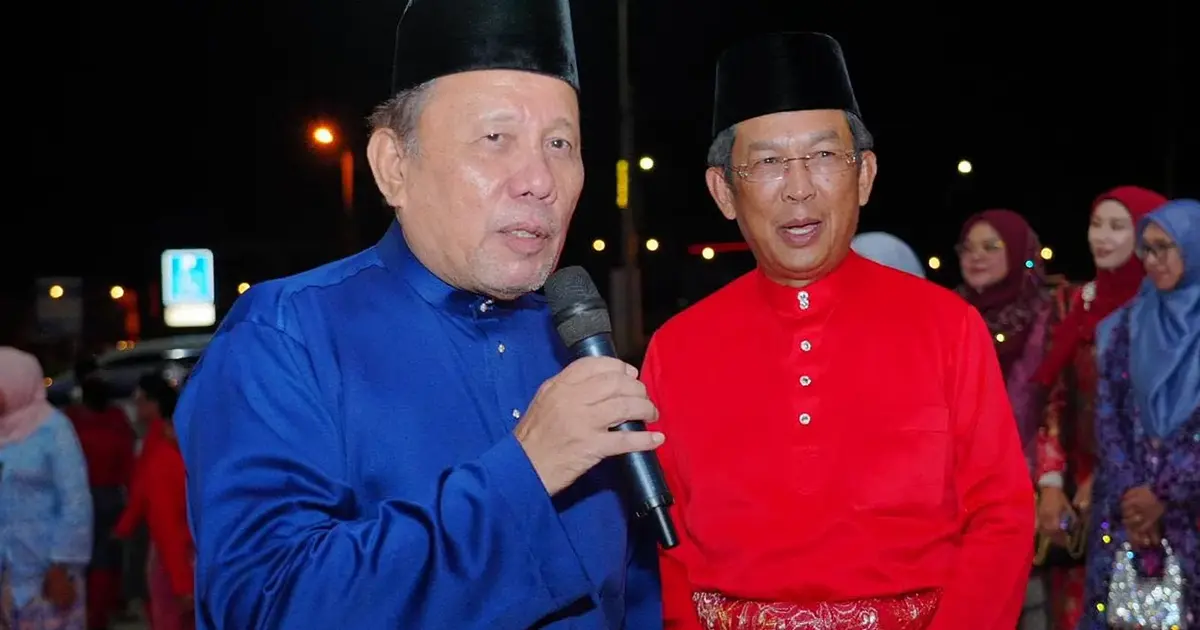
The Umno chief for Negeri Sembilan has moved to distance himself from allegations suggesting he orchestrated efforts to destabilize the state's political leadership. Jalaluddin's denial comes after reports emerged that he played a hand in compelling the Menteri Besar to affix his signature to a controversial document, one whose stated purpose centres on the removal of Negeri Sembilan's constitutional ruler.
The accusation touches on one of Malaysia's most sensitive constitutional questions: the relationship between elected officials and hereditary state rulers. In Negeri Sembilan, where the ruler holds significant ceremonial and constitutional authority, such allegations carry considerable political weight and raise questions about the institutional balance that underpins state governance. The timing of these claims suggests deepening fissures within the state's governing coalition, with figures apparently willing to leak damaging allegations to the media as a tactical manoeuvre.
Jalaluddin's swift rebuttal signals the gravity with which party leadership views the accusations. In Malaysia's context, being associated with moves against a ruler can damage political credibility and invite accusations of constitutional impropriety, particularly among traditionalist constituencies whose support the party relies upon. His denial, therefore, serves multiple audiences: the palace, which monitors threats to its prerogatives; fellow party members, who may harbour doubts about his intentions; and the broader public, for whom institutional stability remains a paramount concern.
The alleged scheme reportedly centred on pressuring the Menteri Besar into endorsing a document whose implications extended to the ruler's status or powers. Such a manoeuvre would represent an extraordinary breach of constitutional norms, given that state rulers occupy positions insulated from electoral politics and derive legitimacy from custom and law rather than legislative will. The fact that such allegations have surfaced publicly, rather than being managed quietly within party structures, underscores the degree of internal discord now visible in Negeri Sembilan's political landscape.
Negeri Sembilan's governing arrangements differ markedly from other Malaysian states, given its unique electoral college system for selecting the ruler from among the state's hereditary chiefs. This institutional peculiarity means that attempts to circumvent or undermine the ruler carry implications beyond typical state-level politics, touching on the delicate mechanisms through which the federation's constitutional monarchy is preserved. Any serious challenge to a ruler's position therefore resonates throughout Malaysia's broader political system.
The emergence of these allegations reflects broader instability affecting Malaysia's state governments following the 2022 elections. Multiple states have witnessed leadership contests, defections, and factional disputes as various coalitions compete for control of state machinery and resources. Negeri Sembilan has proven no exception to this pattern, with reports of internal Umno tensions periodically surfacing in media coverage over recent months. The current controversy appears to represent an escalation in these struggles, with antagonists willing to invoke the most serious constitutional questions as ammunition.
For the Menteri Besar, the situation presents acute challenges. Should he have genuinely been pressured to sign such a document, acknowledging this publicly invites accusations of weakness or complicity in constitutional impropriety. Remaining silent, conversely, allows others to shape the narrative surrounding his leadership and decision-making. The absence of direct statement from the MB himself in coverage of these allegations only compounds uncertainty about what actually transpired behind closed doors.
Jalaluddin's denial may prove insufficient to fully extinguish suspicions, particularly if other party figures have evidence of his involvement or intention. In Malaysian politics, categorical denials frequently attract demands for substantiation, with rivals and media scrutiny intensifying when public figures reject serious allegations without providing detailed counter-explanation. His statement therefore likely represents merely the opening salvo in a potentially extended dispute.
The broader implications for Negeri Sembilan's governance merit consideration. Persistent allegations of backroom scheming against both the MB and the ruler risk undermining public confidence in state institutions and the integrity of its political processes. For ordinary residents, such turmoil suggests a political class more preoccupied with factional advantage than substantive governance concerns. Investors and business interests monitoring the state's stability will also note these disturbances as potential risks to policy continuity.
Other Umno figures and coalition partners will be observing how this controversy resolves. Should Jalaluddin's position become untenable due to accumulating evidence or further allegations, his replacement could reshape the balance of forces within Negeri Sembilan's ruling coalition. Equally, if he successfully rides out this storm, it may embolden others within the party to pursue similar strategies in pursuit of factional objectives, normalizing the approach within party culture.
Looking ahead, resolution of these allegations may require intervention from higher party authorities or, in an extreme scenario, palace involvement. The Negeri Sembilan ruler, unlike some counterparts in other states, commands considerable respect and institutional authority; should he determine that his position faces genuine threat, he possesses mechanisms through which to assert his constitutional prerogatives. This dynamic—the implicit power the ruler wields, whether or not actually exercised—constrains what even ambitious state-level politicians can attempt without triggering consequences beyond normal electoral competition.

