A collision involving a luxury Aston Martin has claimed the life of a 26-year-old mall employee in Hyderabad, and the incident has swiftly spiralled into a political controversy. Lingamaneni Sanjush, son of Jana Sena Party MP Lingamaneni Ramesh, has been released on station bail following the August 16 crash that killed Bharati Mukhi, who worked at a Lifestyle store outlet. The young man was served notice under Section 35(3) of the Bharatiya Nagarik Suraksha Sanhita (BNSS) as investigators pursue their enquiries into the circumstances surrounding the fatal incident.
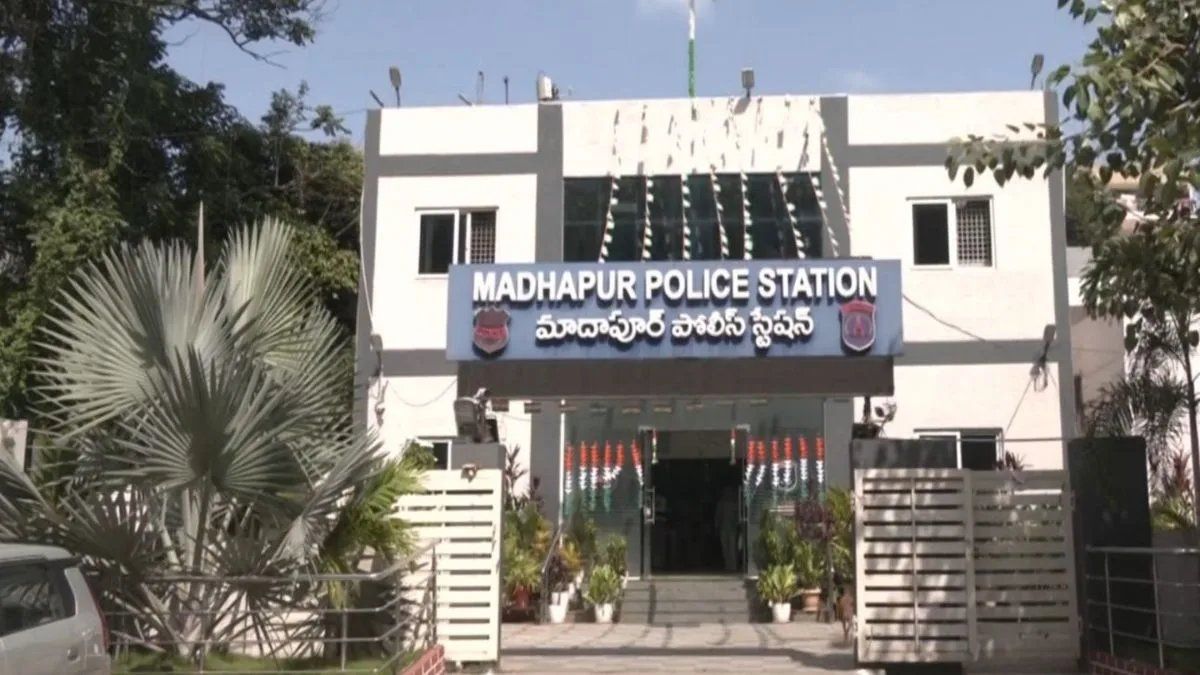
The tragedy unfolded in the afternoon outside Inorbit Mall in Madhapur when Bharati and her colleague Pooja Ashok were returning from nearby ITC Kohenur, where they had gone to collect meals. Bharati was struck while crossing the road, sustaining severe head injuries that proved fatal. She was rushed to Apollo Hospital in Jubilee Hills, where medical staff confirmed her death. The incident was recorded as a criminal case at Madhapur Police Station under Section 106(1) of the Bharatiya Nyaya Sanhita (BNS), which addresses death caused by act endangering life or personal safety.
According to police statements, the Aston Martin was being driven at excessive speed in a manner considered rash and negligent. Sanjush, identified as the driver, was apprehended on the same day as the incident. Investigators conducted sobriety testing and toxicology screening, with blood samples collected and forwarded to the Forensic Science Laboratory for comprehensive analysis. The vehicle itself has been impounded as part of the ongoing investigation, which continues as authorities wait for the postmortem examination report. The procedural steps taken suggest police have followed standard protocols for fatal traffic accidents, at least in their documented actions.
However, the case has assumed a distinctly political character as the opposition has seized upon the handling of the matter. The YSRCP, through its national spokesperson Karthik Yellapragada, has levelled accusations that authorities have deliberately suppressed public discussion of the fatality. Yellapragada highlighted that five days elapsed between the registration of the FIR on August 16 and his public statement, during which minimal media coverage or official commentary emerged regarding the incident. He questioned why such apparent silence had been maintained and suggested this silence indicated political arrangement between state leadership.
The YSRCP spokesperson specifically invoked the names of Chief Minister Revanth Reddy and Telugu Desam Party leader Chandrababu Naidu, insinuating that an understanding between these figures had resulted in preferential treatment for the accused. Yellapragada demanded immediate justice and raised concerns about whether the case was being handled according to different standards than ordinary traffic fatalities involving non-political families. The allegations, while potent in political discourse, remain unsubstantiated and reflect the adversarial nature of Telugu state politics rather than confirmed investigative findings.
The incident highlights an enduring sensitivity in Indian public life regarding the treatment of cases involving politically connected individuals. Jana Sena Party, led by actor-politician Pawan Kalyan, remains a significant force in Andhra Pradesh politics and frequently aligns with the Telugu Desam Party against the YSRCP. The party's status as an important coalition partner in various political arrangements means incidents involving its members' families attract scrutiny beyond what similar cases might otherwise receive. The quick grant of station bail, while potentially consistent with normal bail procedures, has inevitably been interpreted through a political lens by opposition figures.
For Malaysian observers, this incident underscores how traffic accidents can rapidly acquire political dimensions in South Asian contexts, particularly when individuals with parliamentary connections are involved. The layering of criminal investigation with political accusation creates a complex legal landscape where public confidence in impartial justice administration becomes contested. The contrast between procedurally correct investigative steps and allegations of substantive bias reflects broader concerns about differential access to justice based on political or social standing.
The YSRCP's intervention introduces questions about investigation transparency that extend beyond this single case. While police acknowledged serving the notice and granting bail, they have not provided detailed public updates on investigative progress or findings. This reticence, whether motivated by standard confidentiality protocols or other considerations, inevitably creates space for political speculation. In an era of instant communication and social media amplification, such information vacuums tend to fill with conjecture rather than facts.
Meanwhile, Bharati Mukhi's death represents a human tragedy that risks becoming secondary to political maneuvering. Her family's pursuit of justice and accountability depends on thorough, impartial investigation and prosecution regardless of the accused's political connections. The preliminary investigative steps—toxicology testing, vehicle impoundment, and forensic analysis—provide the evidentiary foundation necessary for whatever judicial outcome ultimately emerges. However, the political allegations now surrounding the case may complicate public and judicial perception of even straightforward facts.
The incident also reflects ongoing concerns about traffic safety in rapidly developing Indian cities where high-speed vehicles navigate crowded commercial areas. Hyderabad's development as a major tech and business hub has transformed its transportation landscape, but infrastructure and enforcement have sometimes struggled to keep pace with increased vehicular density. Deaths caused by rash driving remain a persistent public safety challenge across India, claiming far more lives than high-profile political cases, yet receiving comparatively less public attention except when prominent figures become involved.
As investigations continue, several critical questions remain pending. The Forensic Science Laboratory analysis of Sanjush's blood samples may reveal whether intoxication was a factor. The postmortem examination report will detail the precise nature and severity of injuries sustained. Traffic surveillance footage from the mall area may establish vehicle speed and the pedestrian's actions at the moment of collision. These technical and forensic elements will ultimately form the evidential backbone of any prosecution case.
The grant of station bail does not prejudge investigation outcomes or indicate guilt or innocence. Under Indian criminal procedure, bail at the police station stage is relatively routine in many cases, particularly when immediate custodial interrogation needs have been addressed. However, the political framing of this procedural step has shifted its meaning in public discourse, transforming what might ordinarily be an unremarkable administrative decision into a symbol of alleged preferential treatment. The case thus demonstrates how investigative neutrality becomes increasingly difficult to maintain or perceive once political actors insert themselves into proceedings.

