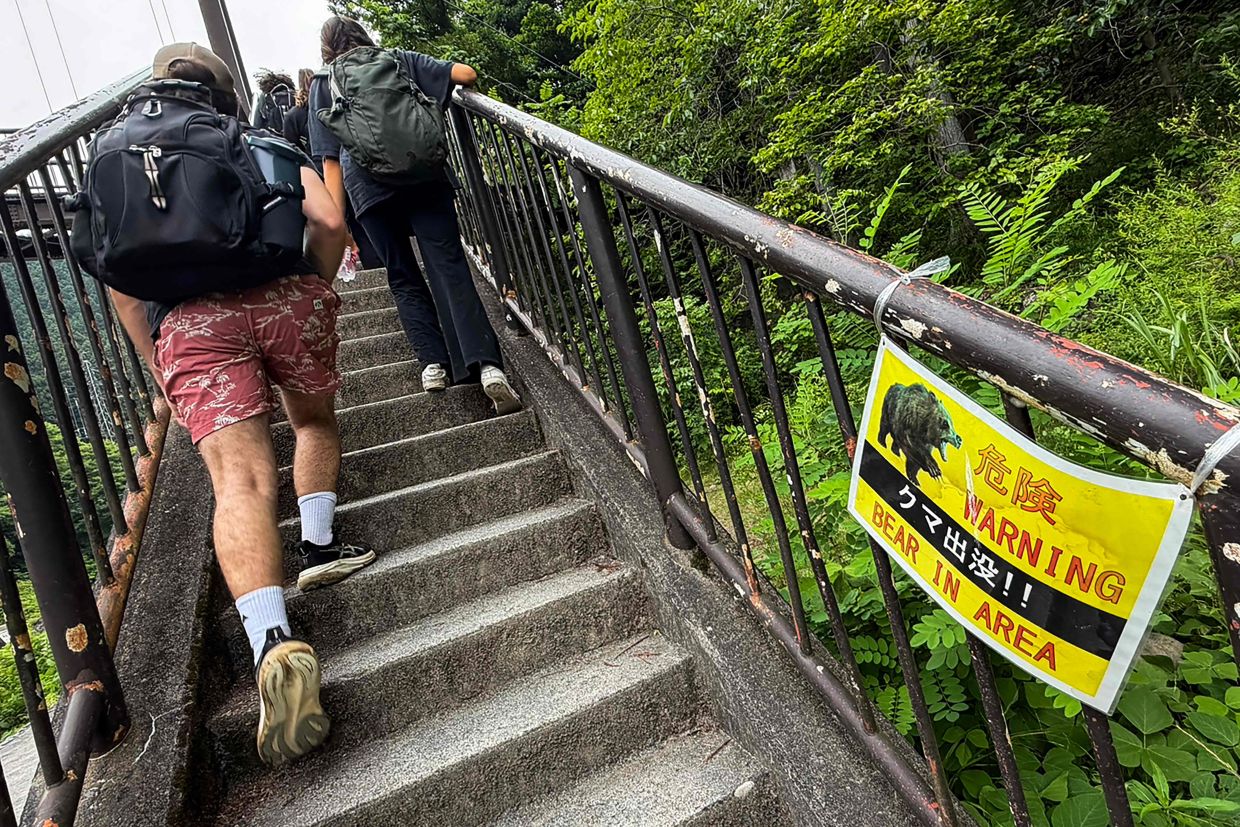
Japan is deploying over 800 infrared cameras throughout its mountainous regions to conduct a systematic survey of bear populations, marking a significant escalation in wildlife management efforts. The ambitious four-year initiative, set to begin with six major bear habitats in the northern Tohoku region, represents the government's most comprehensive attempt yet to understand and respond to what has become a public safety crisis. Environment ministry official Yu Takahashi confirmed the deployment this week, underscoring the urgency of addressing a wildlife problem that has captured national attention and sparked widespread public anxiety.
The surge in bear-related incidents has been striking. Since April 1, at least five people have been killed by bears in Tohoku alone, continuing a troubling trend that saw Japan record 13 fatal bear attacks across the entire country during the previous fiscal year. These fatalities represent the deadliest pattern in recent memory, fundamentally altering how rural communities perceive their relationship with nature and prompting government intervention at the highest levels. The scale of the problem has grown sufficiently acute that daily news coverage now tracks bear sightings at shopping centers, schools, and public parks—incidents that would have been extraordinary a decade ago but have become almost routine.
Scientists and wildlife experts attribute the population surge to demographic changes in rural Japan. As fewer people choose to live in mountain communities and agricultural areas, human pressure on bear habitats has diminished, allowing populations to expand unchecked. This paradoxical situation—where abandonment of rural areas has led to increased human-wildlife conflict—reflects broader demographic challenges facing Japan. The declining rural population means fewer people manage forests, fewer farmers maintain agricultural land that once provided buffer zones, and fewer rural communities maintain the infrastructure that traditionally deterred bears from approaching settlements.
The new monitoring system employs an innovative methodology designed to capture detailed population data. Researchers will position jars containing honey mixed with wine at approximately human head-height throughout target zones. The aromatic mixture attracts bears, which typically stand on their hind legs to investigate, allowing cameras to photograph each animal's distinctive white chest markings. This approach enables researchers to identify individual bears and track movement patterns across regions, providing the granular data that previous ad-hoc surveys could not deliver. Takahashi explained that local governments previously conducted bear surveys using inconsistent methodologies and varying schedules, resulting in fragmented and unreliable population estimates. The centralized approach promises standardized data collection that can inform evidence-based policy decisions.
The expansion from Tohoku across the entire nation over four years reflects recognition that bear encroachment is not merely a regional phenomenon. Mountains comprise approximately 80 percent of Japan's landmass, creating vast territories where human-bear interaction is virtually inevitable given current population trends. Southeast Asian readers familiar with similar wildlife challenges in their own countries will recognize the complexity of balancing species preservation with public safety—a tension that has no simple resolution. Japan's decision to invest heavily in understanding bear behavior and distribution suggests policymakers believe that knowledge precedes effective management.
Recent incidents underscore the unpredictability of bear behavior and the vulnerability of urban residents. In June, authorities in Utsunomiya, located north of Tokyo, mobilized dozens of police officers, professional hunters, and city officials to apprehend a single bear that had entered the city. The operation lasted four days and forced schools to close, demonstrating how wildlife incidents can disrupt essential services. Another bear that displayed what officials characterized as exceptional intelligence—it reportedly opened a window and turned on a tap at a facility—attacked four people at two separate factories in Fukushima, eluding capture for days. These incidents reveal that some bears have apparently learned to navigate human environments, a development that complicates traditional deterrence strategies.
Authorities are distributing bear spray—an aerosol containing capsaicin, the compound responsible for chili pepper heat—to rural residents and outdoor enthusiasts. The chemical causes acute burning sensations when sprayed directly at animals, providing individuals with a last-resort defense mechanism. However, the effectiveness of spray depends on proximity and proper handling, as demonstrated by an incident in Nagoya this week. A 22-year-old Vietnamese national inadvertently discharged bear spray in a post office, requiring hospital treatment for five people and resulting in his arrest on obstruction-of-business charges. The mishap highlights how defensive tools themselves can pose hazards in public spaces.
Official guidelines for mountain safety have become increasingly stringent. Authorities now recommend that individuals avoid entering forests alone and suggest carrying bells attached to bags to alert bears to human presence. Additionally, carrying bear spray has transitioned from optional precaution to essential equipment for those venturing into mountainous areas. These recommendations reflect an implicit acknowledgment that coexistence with bears requires constant vigilance and preparation. For rural residents and outdoor workers whose livelihoods depend on forest access, these safety requirements represent an additional burden layered onto economic challenges already facing Japan's countryside.
The possible sixth fatality discovered this week—a man found with bite marks in a mountainous Tohoku area currently under investigation—suggests that actual death tolls may exceed official counts if remotely located bodies go undiscovered for extended periods. This possibility underscores a darker dimension of the crisis: some fatal encounters may occur in locations where discovery is delayed, making precise casualty accounting impossible. The investigation into this case represents ongoing uncertainty about the true scale of human suffering caused by bear encounters.
For Southeast Asian nations grappling with their own human-wildlife conflicts—whether involving elephants, tigers, or other apex predators—Japan's systematic approach to population monitoring and risk assessment offers instructive lessons. The investment in technology, standardized data collection, and coordinated government response demonstrates how developed nations confront wildlife management crises. Yet Japan's experience also illustrates how demographic hollowing of rural areas can paradoxically create conditions favoring wildlife population growth, a pattern that may emerge in other aging societies across Asia.
The four-year timeline for completing the national survey suggests government recognition that data collection alone cannot resolve the underlying tensions. Ultimately, managing bear populations will require difficult decisions about population control, habitat management, and rural development strategies. The cameras represent a first step toward understanding the scope of the problem, but their footage will need to inform more controversial interventions if the pattern of fatal attacks continues. As Japan proceeds with this ambitious monitoring initiative, the nation faces broader questions about how to sustain rural communities while respecting the wildlife that increasingly dominates those landscapes.

