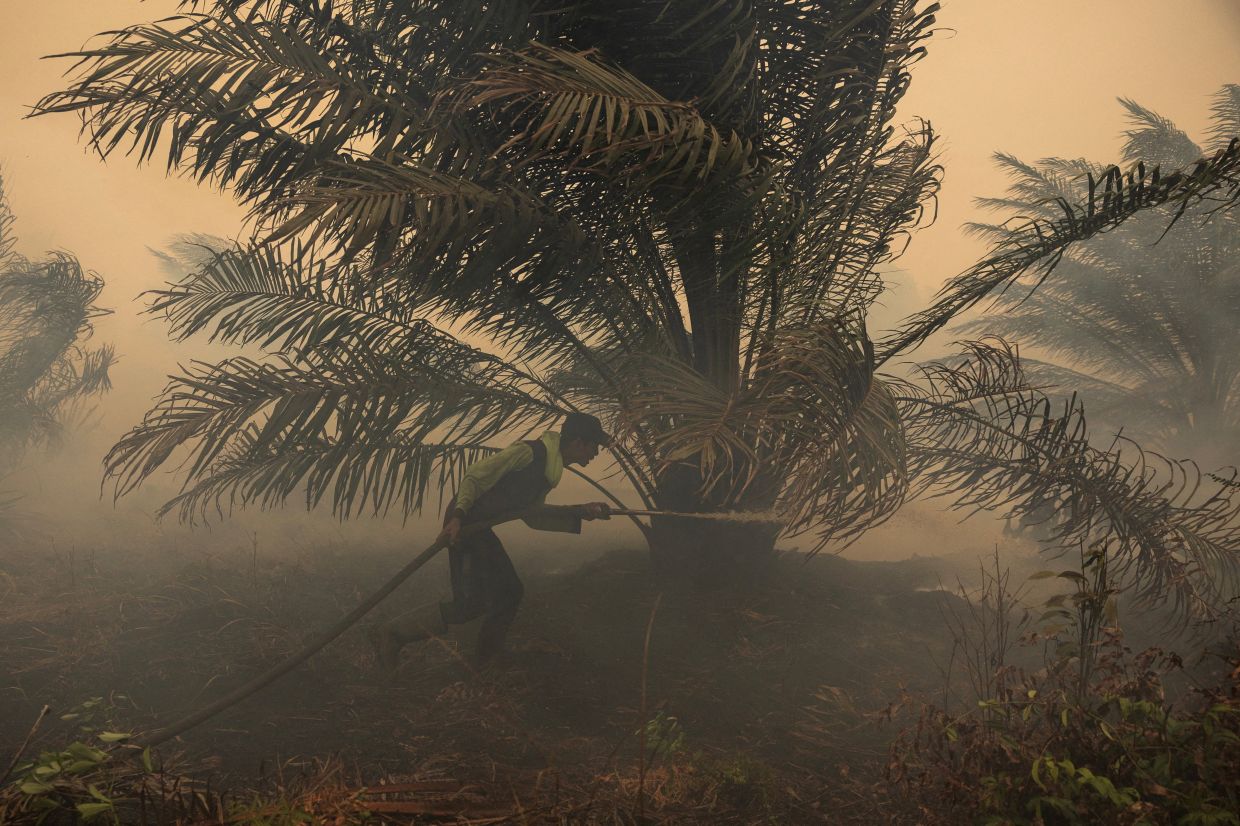
Japan is deploying three helicopters to bolster Indonesia's increasingly desperate battle against raging forest and land fires across Kalimantan, with operations slated to commence on September 10 as air quality conditions plunge into hazardous territory. The offer marks a significant international intervention as the Air Pollutant Standard Index (ISPU) in the region's worst-affected areas has shattered previous records, with readings now exceeding 1,000—a level that poses severe health risks to vulnerable populations and threatens to disrupt activities across Southeast Asia. This development underscores the transnational nature of Indonesia's fire crisis, which has historically affected neighbouring countries including Malaysia and Singapore through transboundary haze.
According to Berton Panjaitan, Acting Head of the Data, Information and Disaster Communication Centre at Indonesia's National Disaster Mitigation Agency (BNPB), the Japanese assistance comprises one Chinook helicopter alongside two additional water-bombing aircraft. The three-nation collaboration reflects growing international concern about the scale and intensity of this year's fire season, which has already demonstrated capacity to surpass previous environmental disasters. Site surveys are currently underway, with Japanese and Indonesian officials coordinating logistical arrangements to ensure seamless integration of foreign assets into existing domestic firefighting frameworks, Panjaitan explained during an online briefing on Saturday, August 29.
The crisis has reached alarming proportions in Kalimantan's major population centres. Official measurements from Indonesia's Environment Ministry documented an ISPU reading of 1,108 in Jekan Raya, Palangka Raya, Central Kalimantan, recorded at 4:55 pm on Saturday—among the highest pollution levels ever recorded in Southeast Asia. Simultaneously, South-East Pontianak in West Kalimantan registered 1,075 ISPU, placing both locations firmly within the hazardous category where health authorities typically recommend evacuation of elderly residents, children, and those with pre-existing respiratory conditions. These measurements represent air quality conditions considered dangerous even for the general population, with prolonged exposure potentially triggering serious health complications.
The underlying cause of this atmospheric catastrophe lies in the proliferation of active fire hotspots across the three Kalimantan provinces. BNPB's latest assessment identified 9,242 burning locations across West, Central, and South Kalimantan, with all three regions experiencing concerning upward trajectories. West Kalimantan has emerged as the crisis epicentre, where hotspot numbers surged dramatically by 1,629 fires to reach 3,371 total locations—a concentration suggesting large-scale land clearing operations may be occurring. Across all three provinces, authorities have documented 171 discrete fire spots that have already achieved visible surface manifestation, indicating that subsurface peat burning and smouldering vegetation likely account for the remaining active hotspot detections.
Indonesia's domestic response infrastructure, while substantial, remains insufficient to contain the expanding firestorm. The BNPB currently operates a fleet of 52 aircraft dedicated to suppression efforts, comprising 38 water-bombing helicopters and fixed-wing aircraft alongside 14 aircraft assigned to aerial reconnaissance and cloud-seeding missions. Despite these considerable resources, the agency has deployed approximately 3.5 million litres of water across six priority provinces—a volume that, while substantial in absolute terms, represents only marginal impact against thousands of simultaneous burn sites across Kalimantan's vast terrain. The mathematical reality of the situation demonstrates that water-bombing operations, though operationally significant, constitute a holding action rather than a comprehensive solution.
Weather modification operations have yielded mixed results across the Indonesian archipelago. Berton acknowledged that cloud-seeding activities successfully induced rainfall across portions of Sumatra, particularly in Riau, South Sumatra, Jambi, and Lampung provinces, providing temporary air quality relief in those regions. However, the same tactical approach could not be executed in Central and South Kalimantan due to fundamental meteorological constraints—specifically, the absence of cloud formations suitable for seeding operations. This weather dependency reveals a critical vulnerability in Indonesia's firefighting strategy: technological interventions remain constrained by natural atmospheric conditions beyond human manipulation.
The timing of Japan's intervention carries strategic significance for regional stability. The Japanese government's willingness to rapidly mobilise military aviation assets demonstrates high-level political commitment to preventing the haze crisis from reaching levels comparable to the catastrophic 1997-1998 fires that caused billions in regional economic damage. For Malaysian policymakers monitoring the situation, the deployment represents both reassurance that major trading partners are engaged in crisis mitigation and acknowledgment that unilateral Indonesian efforts have proven inadequate. Regional air quality predictions suggest that without successful intervention, the haze corridor may again extend across the Strait of Malacca, affecting Malaysian urban centres and impacting the shipping lanes that constitute vital economic arteries for regional commerce.
The hazardous ISPU readings already observed in Kalimantan establish a concerning baseline from which further deterioration remains possible. Air quality scientists note that ISPU levels exceeding 1,000 typically occur only under extreme circumstances involving massive simultaneous burning across extensive peatland areas—conditions that suggest either unusually favourable conditions for fire propagation or significantly expanded burning activities compared to recent years. The rapid escalation from manageable fire seasons to this crisis state occurred within compressed timeframes, indicating either delayed response mechanisms or accelerating causal factors that warrant urgent investigation by environmental authorities and regional monitoring bodies.
Looking forward, the success of Japan's helicopter operations will prove crucial in establishing momentum toward fire containment. Water-bombing from helicopters offers tactical advantages over ground-based suppression through access to remote burning sites across Kalimantan's dense rainforest regions where road infrastructure remains limited. The Chinook's substantial water-carrying capacity and extended operational range provide particular value for sustained operations across dispersed fire locations. However, sustainability concerns loom regarding fuel logistics, pilot rotation, and coordination protocols—factors that will determine whether the Japanese deployment represents a temporary surge in capacity or a sustained enhancement to regional firefighting infrastructure.

