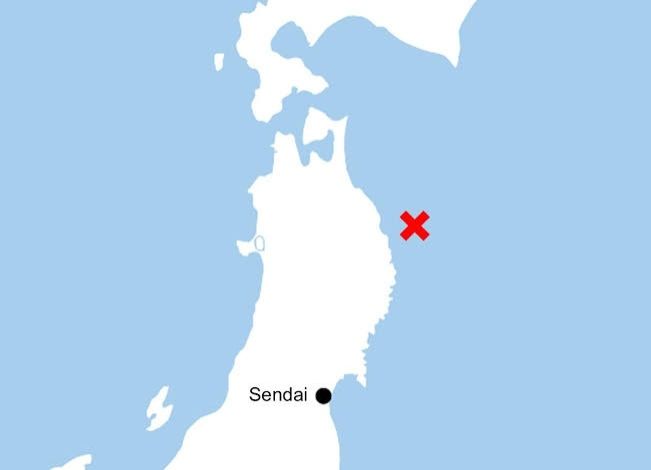
A powerful 7.2-magnitude earthquake rattled northern Japan on the morning of June 25, sending tremors across distances of several hundred kilometres to reach Tokyo, yet causing minimal harm despite its considerable intensity. The seismic event originated in waters off Iwate prefecture on Honshu island at a depth of 44 kilometres. Although initially measured at 6.9 magnitude, the Japan Meteorological Agency revised its assessment upward to 7.2 following a more thorough analysis of the seismic data. The absence of a tsunami warning meant that coastal communities faced no additional threat from ocean waves, allowing emergency responders to focus on inland assessment and recovery efforts.
The earthquake's effects manifested across the affected regions in ways both dramatic and mundane. Kitchen cupboards spilled their contents onto floors in homes and shops, saucepans and dishes scattering in the sudden violent motion. Television footage captured the characteristic aftermath of such tremors—merchandise tumbled from shelves, picture frames fell from walls, and everyday objects lay strewn across floors. In Hashikami, a municipality in Aomori prefecture further north, resident Mutsumi Shimohata described her experience with the practical clarity of someone accustomed to seismic activity. The 61-year-old food processing company employee noted that beyond a fallen picture frame, her home sustained no significant damage. She recalled that a smartphone alarm activated nearly instantaneously after the shaking began, and while the duration of the tremor felt prolonged, her family emerged physically unharmed. However, her employer took a cautious stance, directing employees to remain at home on standby because the office's automatic doors had malfunctioned and portions of the ceiling had given way.
Transportation networks experienced disruption, though not catastrophically. Several shinkansen bullet train services suspended operations as a safety precaution while engineers assessed track integrity and infrastructure. In Hashikami, local education authorities made the decision to temporarily close a primary school, prioritising student safety until building inspections could be completed. Emergency services across the region fielded urgent calls from concerned residents, with at least four calls reaching Hashikami and Hachinohe fire departments. Reports indicated that at least one person became trapped in a lift due to the tremor, while other incidents involved stuck doors and a tanker truck that overturned, though the circumstances and consequences of these events remained limited.
Government officials moved swiftly to communicate both the situation and precautions to the public. Chief Cabinet Secretary Minoru Kihara issued a statement confirming the absence of confirmed human casualties while committing to continued monitoring of damage assessments. Prime Minister Sanae Takaichi ordered ministries and government agencies to coordinate with local authorities on response efforts. She publicly urged residents in areas that experienced strong shaking to remain vigilant for potential aftershocks that could reach comparable intensity, a standard safety recommendation given Japan's earthquake-prone geography and the risk of cascading seismic events. The nuclear sector, always a focal point of concern following any significant tremor in Japan, generated reassuring news from the Nuclear Regulation Authority, which confirmed no abnormalities at regional nuclear power stations.
In Aomori prefecture, the shaking registered as level 6 on Japan's seven-point Shindo intensity scale, a classification that describes conditions where people struggle to maintain their balance without support and can be physically thrown to the ground. At this intensity threshold, unsecured furniture typically topples, windows frequently shatter, and structural damage to buildings becomes possible. Yet the region's preparedness infrastructure and construction standards designed for seismic resilience prevented catastrophic outcomes. Traffic in Hachinohe city resumed its normal patterns as emergency services completed initial assessments, with traffic signals continuing to function properly and urban life quickly returning to routine.
This earthquake arrives within the context of Japan's exceptional seismic activity. Positioned atop four converging major tectonic plates along the western Pacific Ring of Fire, the archipelago represents one of Earth's most geologically active regions. With a population exceeding 125 million, Japan experiences hundreds of earthquakes annually, accounting for approximately 18 percent of the world's seismic events. Most tremors cause negligible impact, though damage variability depends critically on epicentre location, depth, and the resilience of local infrastructure. The nation's earthquake engineering standards, refined through generations of experience and tragedy, contribute substantially to the ability to withstand powerful tremors.
Historical memory shapes contemporary earthquake response in Japan. The catastrophic 9.0-magnitude undersea earthquake of March 2011 triggered a devastating tsunami that killed or left missing approximately 18,500 people and catastrophically damaged the Fukushima nuclear facility, remaining a defining tragedy in modern Japanese history. The broader implications—environmental, economic, and psychological—continue reverberating through Japanese society. Only three months before this latest earthquake, on April 20, a 7.7-magnitude tremor struck the country's northern regions, injuring at least ten people and shaking large buildings in Tokyo with sufficient force to prompt authorities to issue a special advisory warning of elevated risks of magnitude 8.0 earthquakes or stronger. That advisory was withdrawn after one week, but such events reinforce public and official alertness.
For observers across Southeast Asia and the broader Asia-Pacific region, Japan's earthquake resilience holds instructive value. The nation's sophisticated early warning systems, rigorous building codes, comprehensive disaster preparedness protocols, and public education campaigns demonstrate how advanced earthquake-prone societies can minimise casualties and rapid recovery mechanisms despite living with constant seismic hazard. As countries like Indonesia, Philippines, and Malaysia contend with their own significant seismic and volcanic risks, Japan's combination of technological sophistication, institutional coordination, and cultural preparedness offers models worthy of consideration and adaptation to regional contexts.

