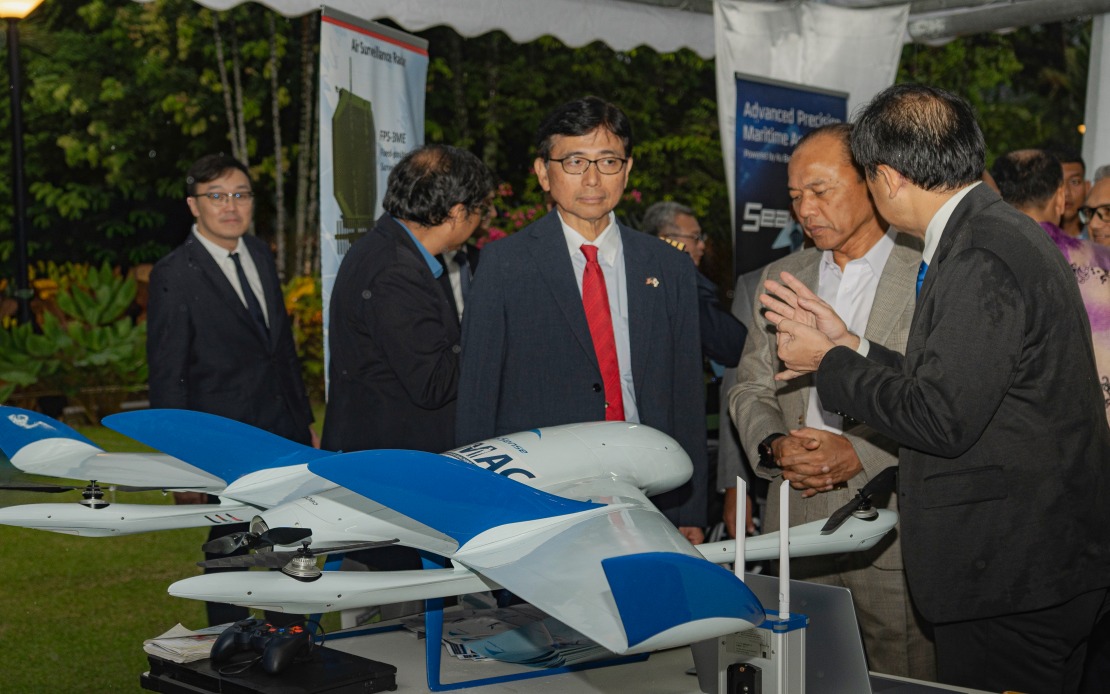
Japan is positioning itself as a committed security partner for Malaysia, with Tokyo signalling readiness to deepen defence cooperation amid mounting geopolitical pressures across the Indo-Pacific region. The commitment came during remarks by Japanese Ambassador to Malaysia Noriyuki Shikata at the 72nd Japan Self-Defence Forces Day Reception in Kuala Lumpur on Wednesday, where he underscored that Japan sees enhanced security cooperation with Malaysia as a priority area for bilateral engagement.
The announcement follows Prime Minister Datuk Seri Anwar Ibrahim's recent visit to Japan, where he met with Prime Minister Sanae Takaichi. Both leaders reaffirmed their determination to strengthen strategic cooperation with defence and security as central pillars. This high-level engagement reflects the importance both nations place on their relationship, particularly as regional stability becomes an increasingly pressing concern. For Malaysia, the dialogue represents an opportunity to build stronger institutional ties with a technologically advanced partner that shares concerns about maintaining freedom of navigation and peaceful resolution of disputes in contested waters.
Alignment between Japan's Free and Open Indo-Pacific vision and ASEAN's Outlook on the Indo-Pacific represents a significant diplomatic development. This convergence suggests that Tokyo and Southeast Asian nations, including Malaysia, are finding common ground on how to maintain regional equilibrium despite rising great power tensions. The two frameworks complement each other by promoting transparency, rules-based order, and economic prosperity while implicitly addressing concerns about coercive actions in the region.
The Japan-Malaysia relationship itself has evolved considerably, having been elevated to a Comprehensive Strategic Partnership in 2023. As the two countries approach the 70th anniversary of diplomatic ties next year, Shikata indicated that further institutionalisation of defence cooperation is anticipated. This trajectory suggests that security engagement will move beyond episodic military exercises toward more structured, long-term institutional arrangements that embed defence cooperation into the broader bilateral relationship.
Practical military cooperation through the MALPAN exercise represents the tangible face of Japan-Malaysia defence ties. These bilateral naval drills in the South China Sea and the Strait of Malacca have become increasingly important as maritime security concerns dominate regional discourse. The expansion of MALPAN in April to include the Royal Malaysian Air Force signals that cooperation is deepening across domains. Such exercises build operational familiarity between forces, establish communication protocols, and demonstrate commitment to maintaining open sea lanes that carry vital regional trade. For Malaysian defence planners, participation alongside the Japan Maritime Self-Defence Force provides exposure to advanced maritime capabilities and tactics.
Japan's Official Security Assistance programme, launched in 2023, represents a new mechanism for Tokyo to support regional partners without the political sensitivities sometimes associated with traditional military aid. Malaysia ranks among the first recipients, having received unmanned aerial vehicles and rescue boats in 2024. The expansion of this assistance under OSA 2025, which will include equipment for ceasefire monitoring provided to the ASEAN Observer Team and a diving support vessel for the Royal Malaysian Navy, demonstrates Japan's willingness to translate strategic rhetoric into concrete material support. These contributions address specific operational needs while reinforcing Japan's role as a stabilising security actor in Southeast Asia.
The equipment Malaysia is receiving carries practical significance for regional peacekeeping and maritime operations. Diving support capabilities enhance the Royal Malaysian Navy's ability to conduct complex underwater operations, from mine countermeasures to salvage and rescue missions. The provision of ceasefire monitoring equipment to ASEAN's observer mechanisms reflects Japan's support for the association's conflict prevention and resolution efforts. Through these contributions, Japan positions itself as a partner invested in ASEAN's security architecture and operational effectiveness.
Defence industry cooperation represents another dimension of deepening Japan-Malaysia ties. The participation of 10 Japanese companies in Defence Services Asia 2026 in Kuala Lumpur provided a platform for showcasing advanced technologies to Malaysian defence decision-makers and policymakers. More significantly, Japan and Malaysia signed a Terms of Reference to establish a bilateral defence industry dialogue during the event. This institutionalisation of defence-industrial engagement suggests future collaboration on technology transfer, joint development initiatives, or licensing arrangements that could enhance Malaysia's indigenous defence capabilities and create sustained commercial opportunities for Japanese defence firms.
From a Malaysian perspective, the expanding security relationship with Japan addresses several strategic imperatives. As Malaysia seeks to modernise its armed forces amid budget constraints, Japanese partnerships offer access to advanced capabilities without the long-term geopolitical entanglements that might accompany closer ties with other major powers. Japan's emphasis on rules-based order and ASEAN centrality aligns with Malaysia's multilateralist foreign policy orientation. Furthermore, strengthened Japan-Malaysia ties contribute to a balance of power in Southeast Asia that prevents any single external actor from dominating the region's security environment.
The timing of Shikata's remarks reflects broader regional dynamics. With tensions in the South China Sea persisting and great power competition intensifying, Japan and Malaysia recognise that deepening security cooperation serves mutual interests. Japan requires stable sea lanes and operational access across Southeast Asia as a maritime trading nation; Malaysia needs credible security partners to defend its interests in disputed waters. This convergence of interests provides a foundation for sustained cooperation that transcends electoral cycles or leadership changes.
Looking forward, the 70th anniversary of Japan-Malaysia diplomatic relations next year will likely serve as a symbolic milestone for announcing further defence cooperation initiatives. Observers should watch for announcements regarding advanced technology transfers, expanded intelligence sharing arrangements, or joint development projects. As the regional security environment continues evolving, Japan-Malaysia security cooperation represents one element of a broader effort by like-minded democracies to maintain a rules-based order and ensure that no single power can unilaterally determine the region's future.

