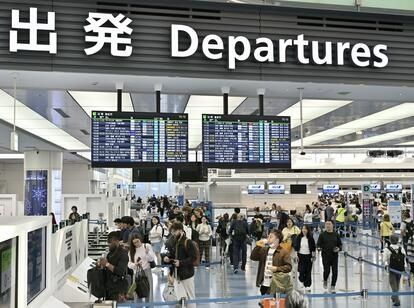
Japan has taken decisive steps to manage the challenges posed by unprecedented numbers of international visitors by implementing substantial increases to both the departure tax and visa fees from Wednesday, July 1. The departure tax, officially known as the international tourist tax, has been raised to 3,000 yen per person—triple the previous 1,000 yen charge—marking a significant shift in Japan's approach to funding tourism management infrastructure. Simultaneously, visa fees for foreign nationals seeking entry into Japan have surged fivefold, with single-entry visas now costing 15,000 yen and multiple-entry visas reaching 30,000 yen, representing the first increase in such charges since 1978.
The twin increases reflect Tokyo's determination to address mounting pressures from record inbound tourism, which has strained popular destinations, public facilities, and local communities across the country. The departure tax, collected through airlines, cruise lines, and travel agencies at the time of ticket purchase, has emerged as a critical revenue stream for managing these challenges. During the fiscal year ending March, the tax generated approximately 49 billion yen, a figure expected to more than double to around 130 billion yen in the current fiscal year—a projection that underscores how substantially this measure will reshape tourism funding.
The revenue from the increased departure tax will be directed towards alleviating congestion at Japan's most celebrated sites, where overcrowding has become a persistent headache for authorities and an unwelcome experience for many visitors. The government intends to establish designated viewing areas at renowned photography locations that routinely attract massive crowds, particularly in Tokyo and Kyoto. Beyond these crowd management initiatives, the funds will support broader regional tourism development projects designed to distribute visitor flows more evenly across the country rather than concentrating them in well-known hubs.
Regional tourism initiatives will benefit significantly from this funding stream. Local railways will be developed as tourist attractions in their own right, encouraging visitors to explore less-visited prefectures and communities. Station building renovations will enhance the infrastructure and aesthetic appeal of transport hubs in secondary cities, creating incentives for tourists to venture beyond the capital and major urban centres. These efforts reflect a strategic shift towards what the tourism industry calls 'spreading the load'—dispersing international visitors across a wider geographic area to reduce pressure on overtaxed popular destinations.
Tourists transiting through Japan or spending less than 24 hours in the country will be exempt from the departure tax, alongside children under two years of age. Travellers who purchased tickets before Tuesday were charged at the original rate, providing a brief transition period. The collection mechanism remains straightforward: the tax is levied regardless of passenger nationality when tickets are purchased, making it effectively universal amongst those departing Japanese territory by air or sea.
To offset the additional financial burden imposed on Japanese citizens through the departure tax increase, the government has implemented a substantial reduction in domestic passport application fees. The charge for applying at designated counters such as passport centres has dropped dramatically from 16,300 yen to 9,300 yen for ten-year passports issued to applicants aged 18 or older. Five-year passports for applicants under 18 have been standardised at 4,800 yen, eliminating previous age-based variations that had created administrative complexity. For citizens willing to apply online, further discounts apply: 8,900 yen and 4,400 yen respectively, incentivising the adoption of digital application processes.
Foreign Minister Toshimitsu Motegi emphasised that visa fee increases reflect both inflation pressures and the depreciation of the yen against major international currencies, positioning the measure as an economic adjustment rather than a deliberate deterrent to tourism. Officials have indicated that the fee hike is unlikely to significantly impact visitor arrivals in the near term, suggesting confidence that Japan's appeal as a destination remains robust despite the increased cost of entry. Japan's visa fees, even after the fivefold increase, remain comparatively modest relative to those charged by other Group of Seven nations, indicating that the country is still a relatively affordable option for international travellers.
The government's rationale for reducing passport fees centres on efforts to increase Japan's passport ownership rate, which has lagged considerably behind that of other major developed economies. A higher ownership rate is seen as beneficial for promoting international travel among Japanese citizens and strengthening Japan's global connectivity. By making passport acquisition more affordable and accessible through online channels, authorities aim to remove financial barriers that may have discouraged some residents from obtaining travel documents.
These policy adjustments reveal how Japan is attempting to balance multiple competing objectives: generating revenue for tourism infrastructure and management, ensuring equitable burden-sharing between domestic citizens and international visitors, and maintaining Japan's competitive positioning within the global travel market. The departure tax increase represents a form of 'user pays' principle applied to tourism, where those benefiting from Japan's attractions—including foreign visitors and Japanese nationals travelling abroad—contribute directly to managing the consequences of high visitor volumes. The simultaneous reduction in passport fees suggests a sophisticated policy approach that avoids penalising domestic citizens while implementing stricter financial requirements on international tourism.
For Malaysian and Southeast Asian travellers considering trips to Japan, the changes represent a modest additional cost that is unlikely to significantly deter visits, given the attractiveness of the destination and the still-competitive pricing compared with other developed nations. However, the measures signal Japan's evolving approach to tourism management, moving from simply welcoming all visitors to implementing mechanisms that allow for better crowd management and infrastructure development. This balancing act between encouraging tourism and managing its negative externalities may serve as a model for other popular tourist destinations in Asia grappling with similar challenges.

