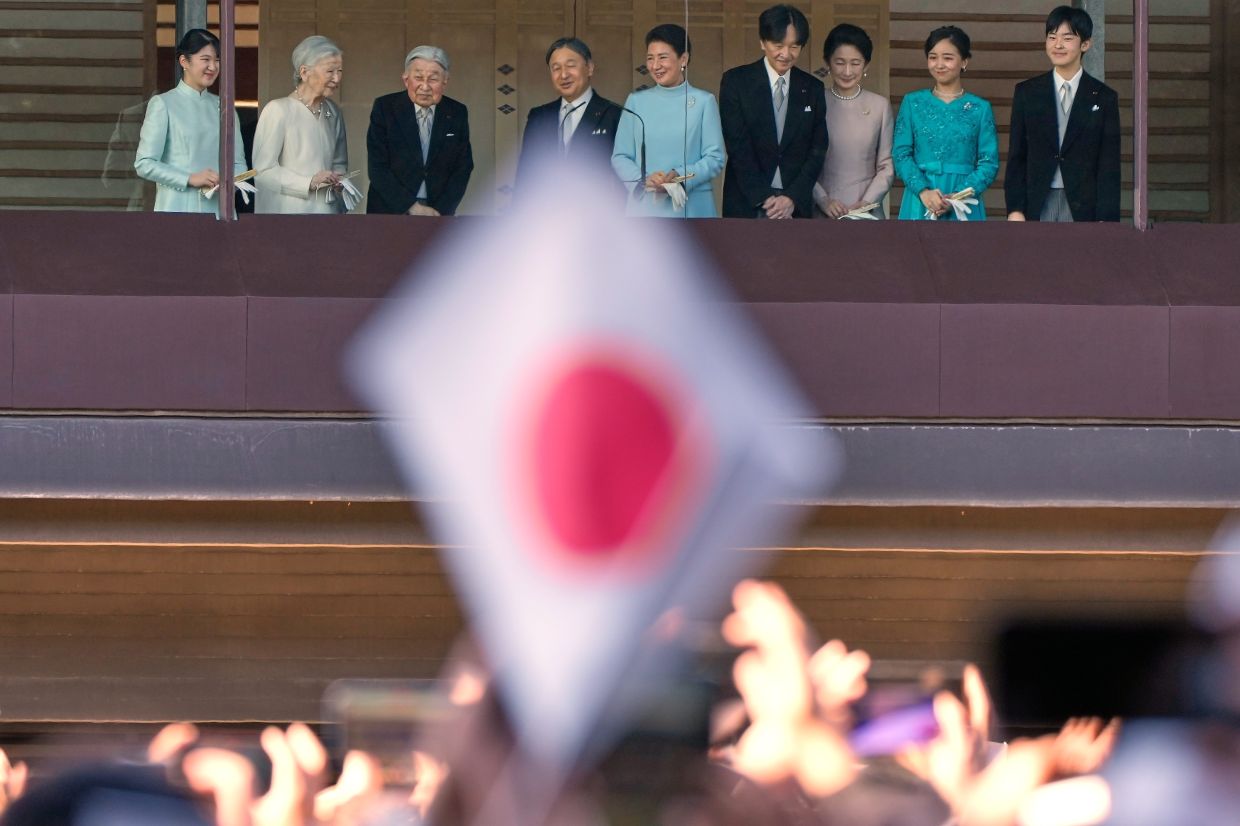
Japan's legislature has enacted modifications to its imperial succession framework on Friday, yet the nation's most significant governance bodies have deliberately preserved the prohibition preventing women from assuming the role of emperor. The decision arrives amid growing tension between public sentiment and the conservative political establishment, revealing deep divisions over the future trajectory of one of the world's oldest continuous monarchies.
The future stability of the imperial household—tracing its mythical origins to Amaterasu, the Shinto sun goddess—now rests heavily upon the shoulders of Prince Hisahito, a 19-year-old who stands as the current emperor's nephew. At present, Hisahito represents the sole viable heir to the throne in direct male succession terms. The young prince, who has only recently completed his secondary education and is currently engaged in university studies focused on biology and entomology, remains unmarried and without offspring. Should he fail to father a son, the existing succession protocols would leave the imperial line without an heir, effectively terminating a lineage that has been central to Japanese identity for centuries.
The legislation passed by the upper chamber with overwhelming support introduces several modifications to succession arrangements. Most notably, it permits the adoption of distant male relatives aged 15 and above back into the imperial family structure, provided they remain unmarried at the time of their inclusion. The reforms also extend to women members of the imperial family, granting them the ability to maintain their royal status following marriage to non-royal individuals—a provision that has long applied to male members but was previously unavailable to female relatives.
The Imperial Household Law, which has governed succession since its establishment in 1947, contains an explicit provision restricting women from ascending to the throne. Furthermore, the law stipulates that only the male lineage may transmit succession rights to subsequent generations. These constraints effectively preclude several prominent figures from ever becoming emperor, including the widely popular Princess Aiko, who is 24 years old and the eldest child of Emperor Naruhito, as well as Hisahito's two older sisters. For many Japanese observers, this represents an anachronistic framework that diverges sharply from contemporary values regarding gender equality.
The path to this legislative compromise involved considerable internal discord within Japan's ruling Conservative Party, currently led by Sanae Takaichi, who became Japan's first female prime minister. Despite her historic appointment, Takaichi has positioned herself in firm opposition to any modification that would permit female imperial succession. This apparent contradiction—a woman leading the nation while working to preserve institutional barriers against female imperial authority—has drawn considerable scrutiny and criticism from both domestic and international observers.
Dissent emerged from multiple quarters following the bill's passage through the lower chamber on July 10. Seiichiro Murakami, a seasoned member of the ruling Liberal Democratic Party, publicly characterized the continued exclusion of Princess Aiko from succession consideration as "utterly outrageous." His remarks reflected the sentiment of numerous parliamentarians and commentators who view the reforms as insufficient given the urgency of the succession question and the clear preference demonstrated by the Japanese electorate.
Criticism also emerged from unexpected quarters within Japan's traditional establishment. Asahiro Kuni, an 81-year-old former imperial family member who departed from the imperial register following World War II, offered a distinctly different perspective on the adoption proposal. Kuni cautioned that the strategy of recruiting distant male relatives would prove impractical in execution. He emphasized that by the age of 15, individuals have developed distinct personalities and life experiences within ordinary society, making the transition to imperial life extraordinarily demanding. In interviews with the Asahi Shimbun newspaper, Kuni suggested that potential candidates, were they to fully comprehend the restrictions and sacrifices inherent in imperial membership, would likely decline such invitations entirely.
Kuni belongs to one of eleven imperial branch families that were removed from the imperial register in the post-war period—a decision that created the current scarcity of male heirs. His assessment represents a profound structural critique of the legislative approach, suggesting that the reforms may address the theoretical problem of succession without resolving the practical challenges of implementing such arrangements. He warned that while some individuals might initially express interest in joining the imperial family, the harsh realities of royal existence would dissuade them from accepting such roles.
Even Japan's mainstream media, traditionally aligned with conservative political interests, has registered objections to the government's stance. The Yomiuri Shimbun, the nation's highest-circulation newspaper and a reliable supporter of the Liberal Democratic Party, published an editorial critical of the government's refusal to contemplate female succession. Such dissent from establishment figures typically sympathetic to the ruling coalition underscores the extent to which public expectations have shifted regarding this constitutional matter.
Demographic realities underscore the urgency of the succession question. The imperial family currently comprises 16 members in total, of whom only five are male: the retired Emperor Akihito, now 92 years old; his 90-year-old brother; the reigning Emperor Naruhito, aged 66; Naruhito's younger brother; and Prince Hisahito. The gender imbalance creates genuine vulnerability in the continuity of the institution. As female members of the family marry and leave the imperial household, the population of eligible male successors contracts further, intensifying the pressure to explore alternative arrangements.
Public opinion polling conducted by the Asahi Shimbun newspaper in May revealed that 72 percent of Japanese respondents supported amending the succession rules to permit women to ascend to the throne. This substantial majority demonstrates a clear disconnect between the preferences expressed by the general population and the policy choices made by Japan's political leadership. The divergence reflects broader generational and ideological differences within Japanese society regarding institutional reform, gender equality, and the appropriate relationship between tradition and contemporary democratic values.
The succession question represents more than a technical constitutional matter for Japan and the broader East Asian region. Neighboring countries including South Korea, which confronts similar questions regarding institutional gender equality and dynastic succession, will closely observe how Japan ultimately resolves this tension between tradition and modernization. The reforms enacted represent a cautious middle position that attempts to preserve core traditional elements while acknowledging certain practical necessities, yet they ultimately sidestep the more fundamental question of whether the imperial system itself should evolve to reflect contemporary understandings of merit and equality.

