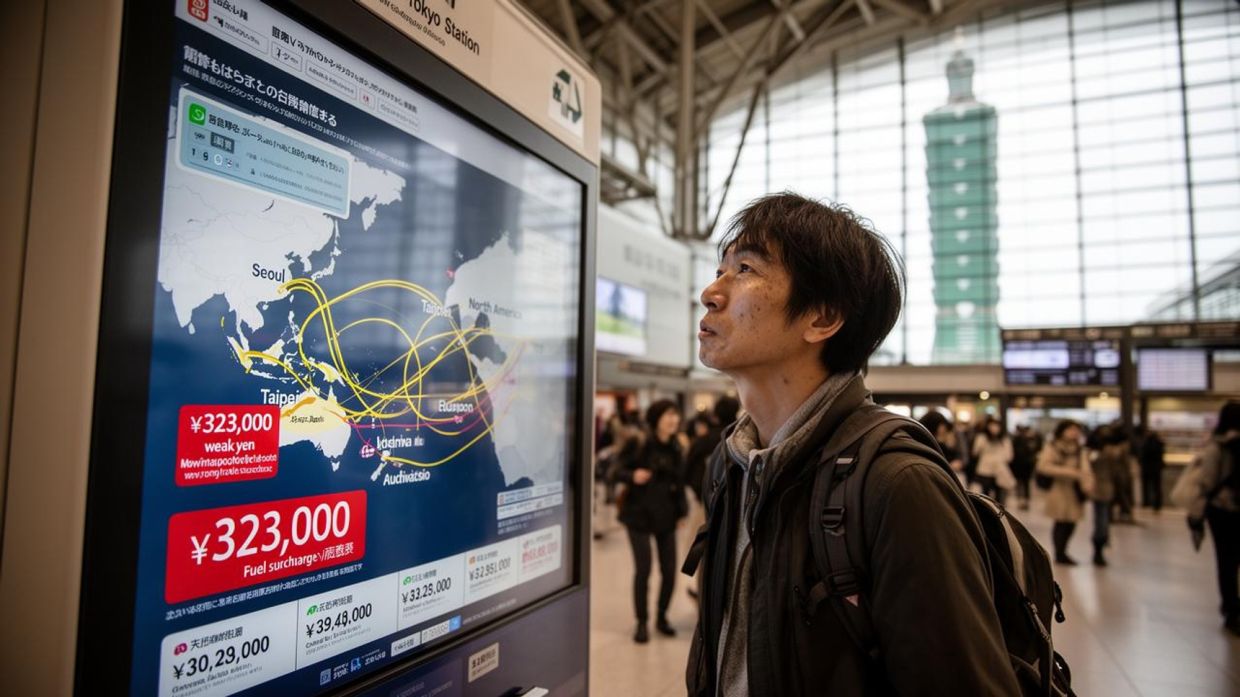
Japanese travellers are pulling back on their summer holiday plans this year as economic headwinds reshape outbound tourism patterns, signalling the first contraction in overseas departures since the Covid-19 recovery accelerated in 2023. Major travel operator JTB Corp projects that Japanese nationals will undertake 2.17 million overseas trips during the July 15 to August 31 summer period, representing a drop of 8.8 per cent compared to the same window last year. The decline reflects mounting pressure on household budgets as the yen remains weak against major currencies, inflation persists domestically, and aviation fuel surcharges remain elevated due to geopolitical tensions in West Asia.
The weakness of Japan's currency has created a particularly acute squeeze on Japanese travellers' purchasing power abroad. With each dollar or euro costing more yen, international destinations have become proportionally more expensive for Japanese consumers. This currency headwind is materialising despite rising travel spending per person—estimated at 323,000 yen (US$2,000) per trip, up 6.3 per cent from the previous year. The apparent contradiction reveals how exchange rate movements are forcing Japanese tourists to dig deeper into their pockets even as they travel less frequently. Aviation fuel surcharges, which have spiked because of ongoing instability in Middle Eastern oil-producing regions, are adding another layer of cost on top of already pricier airfares, making long-haul journeys increasingly unattractive to price-conscious holiday planners.
Japanese travellers are demonstrably shifting away from distant, expensive destinations in favour of nearby alternatives that offer reasonable value. South Korea has emerged as the top choice, commanding 26.2 per cent of projected overseas trips, leveraging its geographic proximity, affordable transport links, and strong appeal as a shopping and cultural destination. Taiwan follows with a significant 16.2 per cent share, likewise benefiting from short flight times and competitive pricing. This preference for regional neighbours reflects a rational economic calculus—shorter flights mean lower fuel surcharges, and these markets have developed robust tourism infrastructure catering to budget-conscious visitors. The data underscores how currency movements and rising costs can rapidly redirect tourism flows within Asia, potentially benefiting countries with efficient transport networks and lower-cost attractions over distant long-haul destinations.
China's projected tourism numbers tell a separate story shaped by diplomatic considerations alongside economic factors. JTB estimates Chinese destinations will attract only 10.1 per cent of Japanese outbound travellers this summer, a dramatic halving from the previous year. While economic prudence plays a role, the sharp contraction also reflects cooling bilateral relations between Tokyo and Beijing, particularly following Prime Minister Sanae Takaichi's November remarks regarding Taiwan. These geopolitical tensions have created hesitation among Japanese travellers at a moment when their budgets are already constrained, effectively compounding the dampening effect of weak currency and inflation on demand for Chinese tourism products.
Domestic travel within Japan faces its own headwinds as households respond to inflationary pressures by becoming more selective across their leisure spending. Projected domestic trips are expected to decline 4.4 per cent to 69 million journeys for the summer period. However, those who do travel domestically are spending more per person—up 3.2 per cent to 48,500 yen—indicating that Japanese leisure travellers remain willing to spend when choosing internal destinations, but are taking fewer trips overall. This pattern suggests that domestic tourism will concentrate in fewer, higher-value experiences rather than spreading across numerous shorter getaways.
Within Japan, the geography of summer travel reveals clear regional preferences that reflect both accessibility and the appeal of established tourism destinations. The Kanto region, encompassing Tokyo and surrounding areas, remains the most popular destination at 19.0 per cent of domestic trips, driven by the capital's concentration of cultural attractions, shopping, and entertainment venues. The Kinki region in western Japan, centred on Osaka and Kyoto, captures 14.9 per cent as a historic and cultural heartland. Hokkaido in the north attracts 11.2 per cent with its reputation for natural scenery, cooler summer temperatures, and distinctive regional cuisine. These figures demonstrate that Japanese domestic tourism aligns with established metropolitan and heritage hubs rather than more dispersed or emerging destinations.
JTB's analysis reveals an emerging bifurcation in Japanese consumer behaviour that extends beyond simple reductions in travel frequency or spending. According to company officials, Japanese society is stratifying into two camps: those moderating their leisure expenditure by taking shorter vacations and choosing budget options, and those with sufficient financial resilience to pursue their desired holidays despite heightened costs. This polarisation reflects broader patterns of income inequality and differentiated pandemic recovery trajectories across Japanese households. The wealthier segment is maintaining travel ambitions even when it requires deeper spending, while middle and lower-income households are pulling back more substantially. Understanding this segmentation is crucial for tourism operators across Asia, as it suggests that Japanese demand will concentrate increasingly among higher-income travellers while mass-market segments contract.
The implications of Japan's shifting travel patterns extend throughout Southeast Asia and the broader Asian tourism ecosystem. Japanese visitors represent a significant and traditionally reliable source of tourism revenue for regional destinations, bringing substantial per-capita spending. The current contraction signals tighter conditions for regional tourism operators who have depended on steady Japanese demand. However, the data also reveals opportunity: destinations like Thailand, Vietnam, and the Philippines that can position themselves as affordable alternatives to long-haul Western destinations could capture additional Japanese travellers seeking good value in familiar regional markets. The emphasis on nearby, budget-conscious travel is a structural shift that will likely persist even if the yen strengthens in future years, as Japanese consumers may retain the habit of more selective spending they are developing now.
JTB's projections are grounded in a survey conducted in June among Japanese residents planning trips of at least one night during the summer holiday season. This methodology captures forward-looking intentions rather than historical patterns, lending weight to the assessment that contraction is likely. The research period captured a moment when economic uncertainty remained high and currency weakness was persistent, suggesting that planners had already incorporated these constraints into their decision-making. The findings carry implications not only for Japanese travel operators and Asian tourism authorities but also for understanding how developed economies absorb macroeconomic pressures through changes in discretionary spending patterns.

