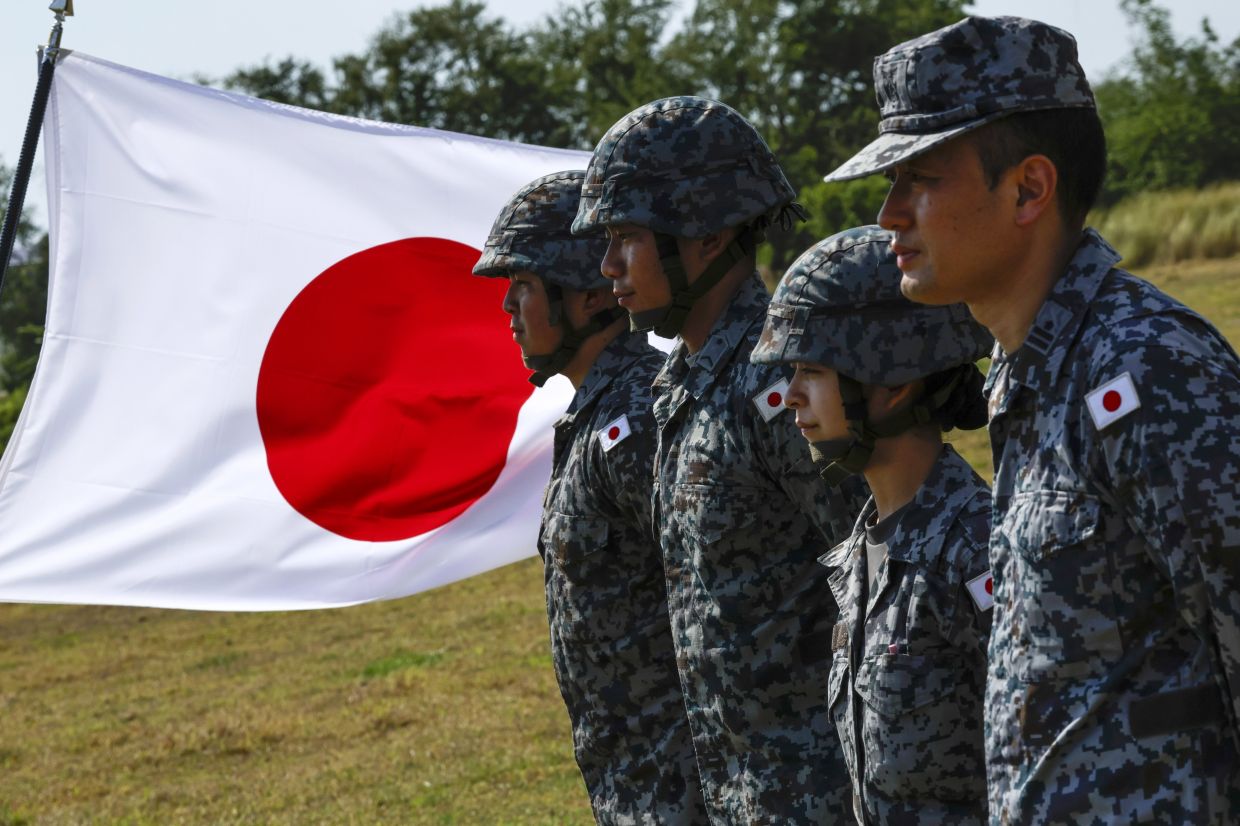
Japan's Defence Minister Koizumi demonstrated Tokyo's intensified engagement across the Indo-Pacific during last month's security forum in Singapore, signalling a fundamental shift in how the country intends to counter Beijing's growing military capabilities. Rather than relying solely on rhetorical commitments or traditional alliance structures, Japan is constructing a multilayered architecture that weaves together security partnerships, economic development, and defence industrial expansion. This represents a maturation of Tokyo's strategic thinking, reflecting both the opportunities and constraints it faces as a mid-sized power attempting to shape regional outcomes amid great power competition.
The cancellation of a scheduled session on China's cooperative partnerships at the security forum provided a telling illustration of Tokyo's diplomatic assertiveness. By preventing Beijing from presenting its regional vision, Japan signalled that it intends to actively shape the narrative around regional security rather than passively respond to Chinese initiatives. Yet this aggressive posture also revealed deeper anxieties. Koizumi's very public meeting with US Defence Secretary Pete Hegseth underscored Japan's continued dependence on American security guarantees at a moment when many regional observers question whether Washington will remain committed to Indo-Pacific stability. The carefully orchestrated nature of this bilateral encounter suggested Japanese unease about alliance reliability during an era of unpredictable US leadership.
Tokyo's defence modernization initiatives extend well beyond diplomatic positioning. Japanese officials have openly discussed acquiring nuclear-powered attack submarines, a development that would challenge the country's longstanding nuclear restraint and substantially increase its naval capabilities. Similarly, Japan has welcomed New Zealand's deployment of an upgraded Mogami-class frigate to the region, symbolizing the expansion of defence cooperation networks throughout the Pacific. These capabilities represent concrete military power rather than aspirational positioning, positioning Japan as a substantive security provider rather than merely a wealthy ally dependent on American strength.
However, analysts caution that Japan's financial resources, while substantial, cannot independently match Chinese military spending or economic influence. This reality has driven Tokyo toward a more sophisticated strategic approach that emphasizes quality of partnerships over quantity of resources. Rather than attempting to outspend Beijing or create explicitly anti-China coalitions that might alienate regional partners, Japan is constructing what Stephen Nagy of the International Christian University describes as a "hedging" strategy. This approach provides Indo-Pacific nations with alternatives to choosing between the United States and China, offering a third way that combines security assurance with economic benefits.
The updated Free and Open Indo-Pacific framework announced by Prime Minister Sanae Takaichi in May represents a significant evolution from Shinzo Abe's earlier 2016 articulation of the concept. Where the original framework emphasized abstract principles such as the rule of law, the recalibrated version focuses on tangible instruments: undersea cable infrastructure, energy supply chain security, and maritime domain awareness. This shift reflects Tokyo's recognition that many Southeast Asian and Pacific Island nations prioritize economic development and resilience over traditional security concerns. By integrating infrastructure financing with defence partnerships, Japan offers a comprehensive value proposition that addresses multiple governance challenges simultaneously.
Central to this strategy is Japan's Official Security Assistance programme, which enables Tokyo to provide direct support to the military institutions of partner nations. This mechanism represents an innovative solution to a persistent challenge: Japan's conventional development aid framework explicitly prohibits military use, creating constraints when partner nations require defence capabilities. The OSA programme circumvents this restriction while maintaining Japan's principled stance on non-military development assistance. Importantly, this approach allows Japan to support partner nation coast guards and maritime security forces without openly engaging in military alliance building that might provoke domestic political opposition in recipient countries.
The scale of this commitment has grown substantially. Within three years, the security assistance programme has expanded from supporting four countries with approximately 2 billion yen to providing assistance across twelve nations totalling 18.1 billion yen. This funding enables the provision of advanced radar systems, drone technology, and other equipment crucial for maritime domain awareness. For regional partners lacking the capital to independently procure such systems, Japanese assistance provides critical capability improvements without the political baggage of formal military alliances or explicit anti-China positioning. This has proven particularly valuable across Southeast Asia, where nations carefully balance relationships with Beijing and Washington.
Japan's broader defence export pivot amplifies these security dynamics. Following Tokyo's April decision to lift restrictions on lethal weapons exports, Japanese defence firms can now sell equipment to seventeen countries, including six ASEAN members: the Philippines, Malaysia, Indonesia, Vietnam, Thailand, and Singapore. This represents a fundamental reorientation of Japanese defence industrial policy. Tokyo and Jakarta have already initiated discussions regarding potential Indonesian acquisition of Japanese Asagiri-class destroyers, demonstrating that Tokyo's export ambitions extend to significant naval platforms rather than merely peripheral equipment.
Experts note that this industrial dimension serves multiple strategic purposes simultaneously. Beyond providing revenue for Japanese defence manufacturers, weapons exports create opportunities for Tokyo to showcase military hardware across the region. This exposure potentially enhances Japanese influence while establishing technical relationships that deepen strategic partnerships. Kei Koga of Nanyang Technological University emphasizes that defence exports contribute to Japan's own industrial base by expanding operational experience with advanced systems and establishing Japan as a credible defence supplier within international markets. For regional partners, purchasing Japanese equipment offers alternatives to Chinese systems while avoiding excessive dependence on American suppliers.
Complementing military assistance and defence exports, Japan launched the Power Asia initiative in April, committing ten billion dollars toward helping regional partners secure emergency energy supplies and build long-term resilience. This programme addresses the Strait of Hormuz crisis and broader energy security anxieties across the region, recognizing that economic stability underpins political reliability. By positioning itself as a dependable energy security partner, Japan offers reassurance that extends beyond traditional defence cooperation into the economic fundamentals that determine national prosperity.
Pratnashree Basu of India's Observer Research Foundation characterizes this comprehensive approach as representing a sophisticated understanding of regional needs. Rather than pursuing pure military balancing against China, Japan integrates security assistance with infrastructure financing and energy transition support. This holistic strategy recognizes that smaller and middle-sized Indo-Pacific nations face multiple governance challenges simultaneously. By addressing development concerns alongside security requirements, Japan enhances the durability of partnerships while avoiding the perception of opportunistic military encirclement.
The infrastructure dimension of Japan's strategy deserves particular attention, as it serves both development and strategic purposes. Funding ports and airports carries greater political palatability for recipient nations than direct military aid, yet such infrastructure projects simultaneously develop facilities that support maritime security operations and defence-related logistics. In effect, Japan views connectivity infrastructure as both a development tool and a strategic enabler of a more resilient regional order. This dual-purpose approach allows partner nations to maintain plausible deniability regarding anti-China positioning while still enhancing their capacity to operate independently of Chinese economic coercion.
Ultimately, Japan's emerging defence strategy reflects a recognition that regional stability cannot be purchased through military hardware alone or sustained through rhetoric unsupported by concrete capabilities. Instead, Tokyo is constructing an integrated system combining security partnerships, defence exports, infrastructure investment, and energy cooperation. While this approach cannot match Chinese resources, it offers something equally valuable: a demonstration that Japan remains a reliable, sophisticated strategic partner capable of understanding and addressing the multifaceted concerns of Indo-Pacific nations. As American reliability faces increasing questions under unpredictable leadership, Japan's carefully calibrated alternative positioning may prove increasingly attractive across the region.

