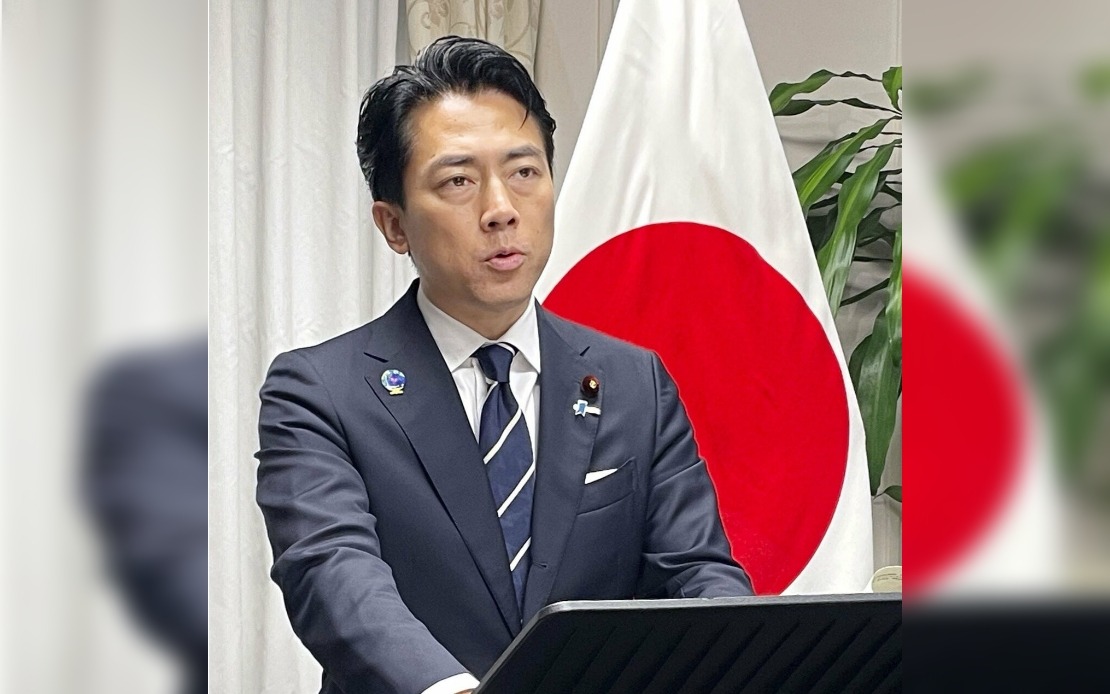
Defence Minister Shinjiro Koizumi has opened a contentious conversation about Japan's nuclear policy, arguing that the nation cannot continue avoiding substantive discussion on whether it should acquire atomic weapons. Speaking through an online programme released Friday, Koizumi framed the debate as essential given what he characterises as a markedly harsher security environment in the Asia-Pacific region. His intervention signals the Japanese government's willingness to challenge decades-old taboos as it prepares to revise three critical national security documents before year's end, potentially reshaping Tokyo's defence posture and regional implications for Southeast Asia.
Koizumi's remarks draw parallels to policy shifts occurring across Europe, where countries traditionally reliant on American nuclear protection are reconsidering their strategic positions. Finland's parliament approved legislation in June permitting nuclear weapons deployment on its territory, while France signalled in March its intention to expand its warhead arsenal under President Emmanuel Macron's leadership. These developments underscore how geopolitical tensions worldwide are prompting nations to reassess nuclear deterrence strategies, with reverberations felt throughout allied networks. For Japan, observing such recalibrations among Western allies provides both political cover and strategic rationale for examining its own historical constraints.
The Japanese government has maintained since 1967 what are known as the Three Non-Nuclear Principles, a foundational policy prohibiting the production, possession, or stationing of nuclear weapons on Japanese soil. This stance reflects Japan's unique historical experience as the sole nation attacked with atomic weapons, first at Hiroshima and then Nagasaki in August 1945. The principles have defined Japanese pacifism and regional diplomacy for nearly six decades, anchoring Tokyo's identity as a non-nuclear power despite its military alliance with the United States. Yet Koizumi's suggestion that these principles warrant examination indicates shifting calculations within Prime Minister Sanae Takaichi's government about how strictly historical commitments should constrain contemporary defence planning.
The Defence Minister's appeal for open discussion directly challenges what he describes as an artificial limitation on political discourse, where certain security topics have become categorised as unsuitable for serious examination. Koizumi argues this restriction prevents Japan from adequately addressing its genuine defence requirements in an era of Chinese military expansion, North Korean weapons development, and Russian assertiveness. By framing the debate call as about expanding legitimate political speech rather than advocating outright nuclear acquisition, the minister employs a rhetorical strategy designed to make the proposition seem reasonable and analytically rigorous rather than provocative.
Previous attempts within Japan's political establishment to broach this subject have generated substantial controversy. Last December, a government source involved in security policy formulation suggested Japan should pursue nuclear weapons, prompting fierce criticism from opposition parties and international condemnation from several nations. Similarly, former Defence Minister Itsunori Onodera argued late last year that Japan must reassess its non-nuclear commitments. These earlier interventions demonstrate both the persistence of nuclear weapons discussions among conservative policymakers and the significant political costs such proposals incur domestically and internationally.
For Southeast Asian nations, Japan's potential reconsideration of nuclear policy carries profound implications. Japan's non-nuclear status has historically reassured regional countries already anxious about their larger neighbour's military capabilities and strategic intentions. A Japanese pivot toward nuclear weapons could trigger destabilising chain reactions, potentially prompting South Korea to accelerate its own nuclear programme development or encouraging Taiwan to pursue atomic capabilities more aggressively. The resulting regional arms race could fundamentally alter the strategic balance in East and Southeast Asia, complicating security architectures throughout the region and undermining non-proliferation regimes that remain essential to regional stability.
The timing of Koizumi's remarks reflects genuine concerns within Japan's security establishment about China's military modernisation and increasingly assertive behaviour toward Taiwan and neighbouring territories. Beijing's rapid expansion of its nuclear arsenal, coupled with advances in missile technology and conventional military capabilities, has prompted serious strategic reassessment across Tokyo's defence community. Additionally, North Korea's advancing nuclear and intercontinental ballistic missile programmes represent persistent threats that Tokyo cannot dismiss. These concrete security challenges provide substantive foundation for the government's willingness to reconsider longstanding policy positions that previously seemed permanently settled.
Japan's existing alliance with the United States theoretically provides nuclear protection through Washington's extended deterrence umbrella. American strategic bombers, submarines, and military installations throughout Japan create a security architecture predicated on American nuclear commitment. However, Japanese strategists increasingly worry about the reliability of this guarantee, particularly if a future American administration questions the value of maintaining costly alliances or adopts a more isolationist posture. Such anxieties, whether realistic or exaggerated, motivate independent Japanese consideration of autonomous nuclear capability rather than continued dependence on American security assurances.
The government's upcoming revision of national security documents will likely frame nuclear weapons discussion within broader strategic reorientation rather than immediate policy implementation. This approach allows Tokyo to signal flexibility to allies, demonstrate responsiveness to security challenges, and maintain space for future decisions without immediately abandoning the Three Non-Nuclear Principles. The revision process itself becomes a mechanism through which Japan can gradually shift diplomatic positioning and domestic political expectations around nuclear weapons, preparing ground for potentially more significant policy changes if regional circumstances deteriorate further.
Opposition to expanded nuclear discussion remains substantial within Japan, spanning peace advocates, religious organisations, and historical memory preservation groups who view nuclear weapons as fundamentally incompatible with Japanese identity and values. Public opinion continues reflecting resistance to nuclear armament, with majorities consistently opposing weapons acquisition in polling data. Yet Koizumi's intervention reveals how security anxieties can gradually reshape even deeply rooted cultural and political positions, particularly when geopolitical circumstances convince influential policymakers that existing frameworks no longer adequately address emerging threats. The coming months will demonstrate whether his call for debate gains genuine political traction or remains peripheral to serious government deliberation.

