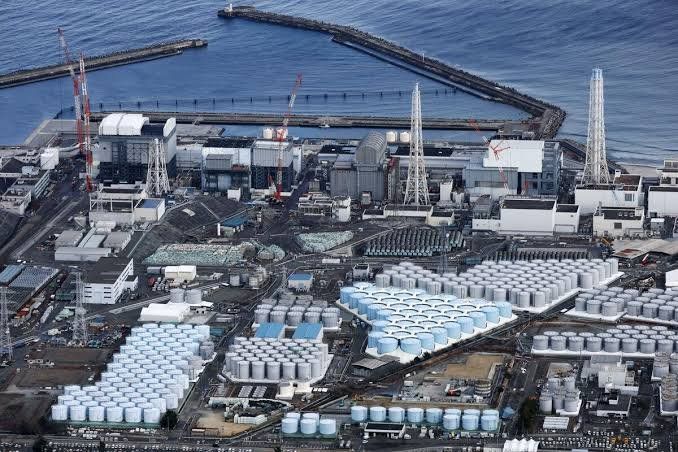
Three years into one of Japan's most contentious environmental initiatives, the crippled Fukushima Daiichi nuclear plant has discharged 172,700 tonnes of processed radioactive water into the Pacific Ocean across 22 separate operations. The milestone, reached on Monday by Tokyo Electric Power Company Holdings Inc. (TEPCO), marks steady progress toward an anticipated completion date of 2051, though the operation continues to generate regional tensions and economic fallout that extend far beyond Japan's shores.
The discharge programme has substantially reduced the burden on TEPCO's sprawling storage infrastructure. When releases began in August 2023, approximately 1.3 million tonnes of treated water filled around 1,000 storage tanks that occupied valuable space at the contaminated site. Today, that volume has contracted by 7.6 per cent to roughly 1.24 million tonnes, with operators dismantling 17 tanks after emptying them entirely. This decluttering exercise represents a critical phase in the plant's broader decommissioning roadmap, freeing physical space that TEPCO requires to construct new facilities for extracting melted fuel debris from the reactor cores.
The technical safeguards surrounding the release programme remain robust by international standards. The treated water undergoes purification through an advanced liquid processing system designed to remove 64 different radioactive elements, after which it is diluted with seawater to concentrations roughly one-fortieth below Japan's permissible safety thresholds. Batches of approximately 7,800 tonnes undergo careful measurement and verification before being discharged from an outfall point positioned one kilometre offshore. The International Atomic Energy Agency, working alongside Japan's regulatory authorities and TEPCO, continues to monitor the operation, and no abnormal tritium levels—the hydrogen isotope most commonly detected in nuclear discharge—have surfaced in adjacent waters or harvested seafood.
Yet behind these technical assurances lies an accelerating operational tempo. During fiscal year 2023, TEPCO conducted four separate discharge operations. This rhythm doubled to seven releases each in fiscal years 2024 and 2025, with TEPCO projecting eight releases in the current fiscal year 2026 after recent procedural refinements. The company has transitioned to continuous tank-to-tank transfers, eliminating operational pauses that previously punctuated the release schedule. This intensification reflects TEPCO's determination to complete the discharge phase well before the 2051 decommissioning deadline, though it also concentrates the environmental footprint into a compressed timeframe.
The rationale for releasing rather than indefinitely storing the water emerged from practical necessity. Following the catastrophic 2011 earthquake and tsunami, approximately 60 tonnes of radioactive wastewater accumulate daily at the Fukushima plant as a byproduct of cooling operations that prevent the exposed reactor fuel from overheating. Storage capacity proved finite, and in April 2021, Japan's government formally approved water discharge as the least disruptive option among limited alternatives. The decision prioritised site remediation over indefinite containment, yet proved instantly controversial among local fishing communities whose livelihoods depend on uncontaminated stock and market access.
The trade consequences have proven severe and protracted. China, historically Japan's largest seafood customer, imposed a comprehensive import ban on the day TEPCO commenced discharges. Although Chinese authorities indicated in June of last year that they might restrict the ban to 10 prefectures including Fukushima itself, Beijing has maintained an effective embargo on all Japanese seafood imports. Japanese diplomats attribute this continued stance partly to unresolved geopolitical tensions, notably Prime Minister Sanae Takaichi's remarks in November suggesting Japan might intervene militarily should Taiwan face external pressure. Russia and several other trading partners have similarly maintained import restrictions despite the technical safety assurances.
The economic toll on Japanese producers and exporters has become substantial. TEPCO has committed to compensating affected businesses for documented losses stemming from the release programme, with approximately 1,100 claims now totalling around 92.8 billion yen—equivalent to roughly US$585 million as of early August. The affected industries reveal the geographic specificity of Japan's seafood supply chains, with scallops and sea cucumbers from northern prefectures particularly dependent on Chinese and Hong Kong markets. These premium products, once mainstays of regional export portfolios, have accumulated in warehouses or found inferior markets at depressed prices.
For Southeast Asian policymakers and regional observers, the Fukushima releases exemplify the complex interplay between nuclear safety protocols, environmental governance, and geopolitical leverage. The operation reflects genuine technical competence and international oversight, yet also demonstrates how environmental decisions can become weaponised within broader diplomatic contests. ASEAN nations, several of which rely on Japanese agricultural and seafood imports themselves, must weigh scientific evidence against market pressures and political considerations when evaluating radioactive discharge operations or formulating trade policy responses.
TEPCO's chief decommissioning officer, Akira Ono, has repeatedly stressed the company's commitment to transparent communication and appropriate financial remediation for affected stakeholders. His assertion that releases have proceeded safely reflects the technical reality endorsed by international nuclear regulators, yet cannot fully address the market distortions and economic disruptions that persist regardless of radiological safety. The gulf between technical defensibility and public acceptance remains the central challenge confronting the programme as TEPCO accelerates toward its 2051 completion target, particularly as diplomatic frictions show no signs of abating and affected industries continue absorbing uncompensated losses beyond TEPCO's formal compensation scheme.

