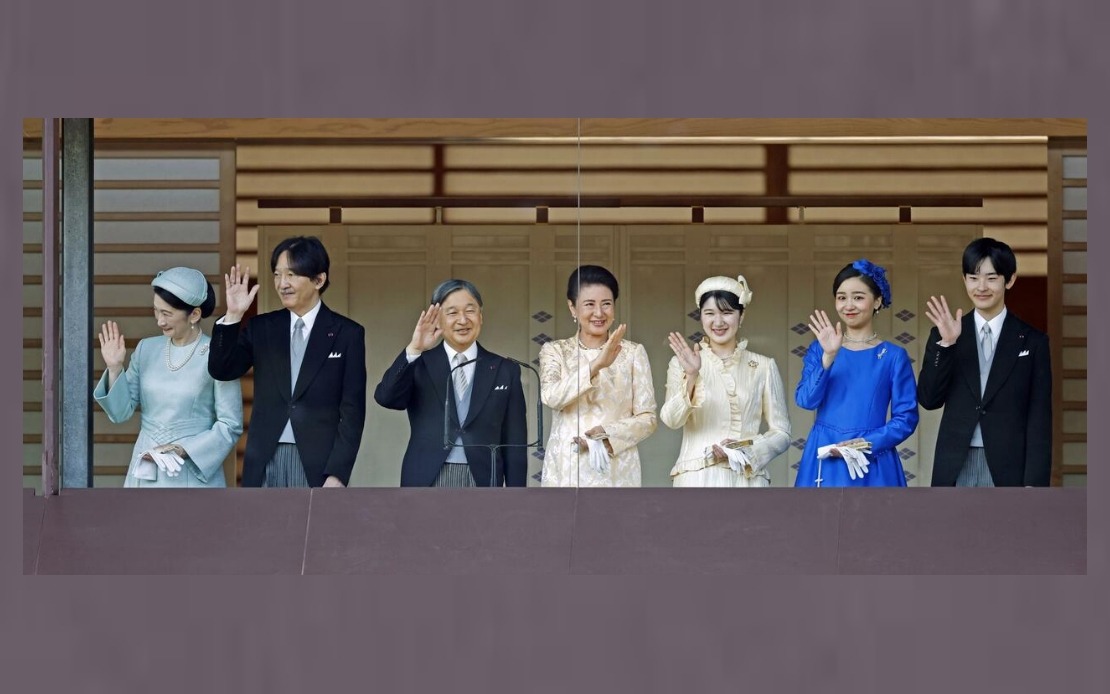
The machinery of Japan's imperial system faces considerable turbulence as officials and administrative staff grapple with profound uncertainties emerging from sweeping legal changes designed to strengthen the world's oldest hereditary monarchy. Parliament enacted a major revision to the 1947 Imperial House Law on Friday, marking the first comprehensive overhaul in decades, yet the implications for those who serve the institution remain clouded and contested. The Imperial Household Agency and its personnel are navigating uncharted procedural and institutional territory, unsure how their daily work supporting Japan's 16 imperial family members will transform under the new framework.
At the heart of this legislative push lies a specific demographic crisis: the imperial family has contracted to historically low numbers, forcing the conservative government of Prime Minister Sanae Takaichi to act decisively. The revised law creates a pathway to reverse this decline by permitting males aged 15 and older from 11 former imperial branch families—lineages that relinquished royal status following World War II in 1947—to be adopted back into the imperial household. This mechanism theoretically offers a solution to the succession challenge while preserving what many conservatives view as a foundational principle of the imperial institution. Yet the strategy has proven divisive, opening rifts between the government's intent and broader Japanese sentiment.
The reforms do contain provisions that enjoy widespread approval. Both Imperial Household Agency officials and ordinary Japanese citizens have expressed support for specific measures, particularly the allowance for men from former imperial families to be readopted and the permission for female imperial members to maintain their royal status following marriage to commoners. These provisions represent incremental progress toward modernization and gender equality within an institution steeped in centuries of tradition. An Imperial Household Agency official acknowledged that the adoption pathway is "significant in that there is now a path toward securing a stable number of imperial members," signalling institutional acceptance of the new direction, at least in principle.
However, beneath this surface approval lies genuine institutional anxiety. Agency personnel worry extensively about whether adopted individuals would genuinely comprehend the symbolic nature of the modern Japanese imperial system and whether they could authentically carry forward the contemporary values Emperor Naruhito and Empress Masako—herself a former diplomat—have embedded in the institution. The emperor serves constitutionally as the "symbol" of the state, and recent monarchs have redefined imperial duty to include frequent visits to disaster-affected regions and diplomatic engagements abroad. A senior agency official confessed uncertainty about whether adoptees would grasp these contemporary expectations. Additionally, officers question whether members of the public would accept adopted individuals as legitimate imperial family members, despite legislative sanction.
The scepticism extends beyond administrative circles into the former imperial families themselves. Asahiro Kuni, an 81-year-old member of the Kuninomiya branch family, expressed profound doubt about whether anyone from his lineage would actually volunteer for adoption into the imperial system. "I wonder if anyone would actually step forward to be adopted," he told journalists. "It doesn't seem very realistic." This candid assessment highlights a potential flaw in the legislative strategy: legal permission does not necessarily translate into practical uptake if potential candidates fear the lifestyle constraints and public scrutiny inherent to imperial status.
The new law creates a particularly complicated position for the five unmarried female imperial family members currently within the household, including Princess Aiko—the only daughter of Emperor Naruhito—and Princess Kako, daughter of Crown Prince Fumihito. Despite the reforms, female succession remains constitutionally blocked, yet these women now face an agonizing decision if they choose to marry outside the imperial family. Under the new provisions, they may elect to retain their royal status, but their spouses and any children would remain commoners, creating what one aide described as "strange having different statuses within the same family." Consequently, leaving the imperial institution may become the more practical choice for these women, contradicting modern expectations of gender equality. A senior agency official acknowledged the harshness of this reality: "Given the current state of the Imperial Household and public expectations, it will be quite difficult for them to leave. This has become a rather harsh choice."
The legislative strategy reveals what many observers see as a deliberate attempt to circumvent female succession entirely. One aide working closely with a female imperial family member stated bluntly: "I sense the government intends to rule out female emperors or emperors from the matrilineal line." This interpretation aligns with broader conservative political movements in Japan that resist gender parity in hereditary roles. However, this positioning directly contradicts public opinion polling, which consistently demonstrates substantial Japanese support for allowing a woman like Princess Aiko to eventually ascend the Chrysanthemum Throne.
Public sentiment on the reforms remains fractured, reflecting deeper generational and ideological divisions within Japanese society. Some citizens, like 76-year-old Shinichi Kokubun, who met Emperor Naruhito, Empress Masako, and Princess Aiko during their April visit to earthquake-devastated Fukushima, express qualified support for the adoption mechanism. "It depends on how those adopted would behave," Kokubun reasoned. "If they can stand by the people just as the emperor does, I don't think there will be any problem." This perspective suggests that institutional legitimacy ultimately depends on demonstrable commitment to public service rather than bloodline.
Yet younger Japanese, particularly those close in age to Princess Aiko, have voiced substantial criticism of both the reforms themselves and the process through which they were implemented. Miyu Nakao, 22, from Hiroshima, pointed to strong public opinion supporting female succession and lamented the government's exclusion of ordinary citizens from the decision-making process. "The government has made a decision on the imperial system all by itself," she complained. A 20-year-old college student in Osaka expressed frustration about inadequate public outreach, noting that "not many people around me, including myself, are familiar with what the Imperial House Law is" and that "there have been insufficient discussions or public outreach" from government authorities.
For regional observers, particularly in Southeast Asia where Japan maintains substantial diplomatic influence, the imperial succession question carries implications beyond constitutional procedure. The legitimacy and stability of Japanese governance institutions matter significantly for regional security architecture and economic relationships. Moreover, Japan's approach to adapting hereditary institutions—whether it privileges tradition over democratic modernization—sends subtle signals about the nation's orientation toward contemporary governance challenges. The division between an aging conservative political establishment and younger Japanese citizens over institutional reform mirrors similar generational tensions visible across the developed democracies of the region and globally, raising questions about how societies reconcile historical institutions with contemporary values and expectations around gender equality and democratic participation.

