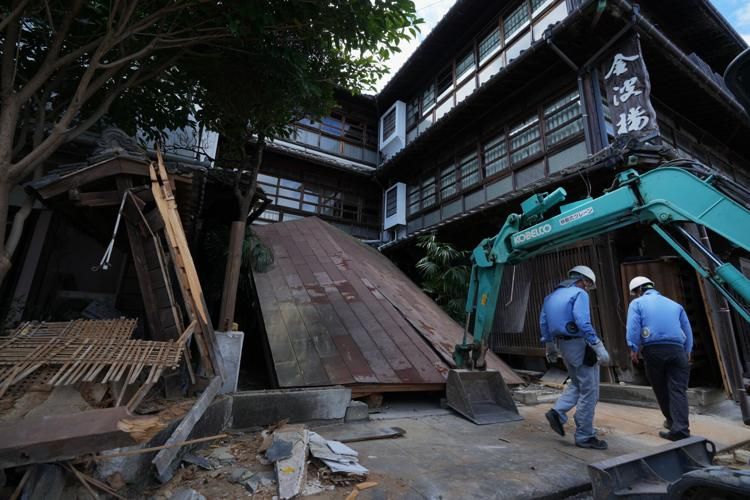
The death toll from the devastating 7.1 magnitude earthquake that struck Kumamoto Prefecture on Japan's southern island of Kyushu has reached 36, with authorities now confronting a secondary crisis as extreme summer temperatures threaten survivors struggling with inadequate shelter and resources. An elderly woman in her 70s was discovered dead in a stationary car on Thursday, having succumbed to heat stroke while seeking refuge from the powerful tremor that devastated the southwestern region last Tuesday. The tragic discovery underscores warnings long voiced by disaster management experts and government officials, who had anticipated that the combination of structural damage, crowded evacuation conditions, and Japan's notoriously hot summer would create life-threatening circumstances for displaced residents.
The woman's death occurred in a vehicle without working air-conditioning—a vulnerability that authorities had specifically flagged as dangerous during the recovery period. Kumamoto Governor Takashi Kimura expressed deep sorrow at the incident while simultaneously urging the thousands still sheltering in vehicles to either maintain continuous air-conditioning by refueling regularly or relocate to properly cooled evacuation centers. His appeal reflected growing alarm within prefecture leadership about the precarious position of residents who had chosen cars over overcrowded institutional shelters, prioritizing privacy and autonomy over comfort and safety during the initial post-disaster confusion.
The prefecture faces a compounding infrastructure emergency that extends far beyond the immediate earthquake damage. Nearly 47,000 households remain without access to fresh water, a critical shortage exacerbated by the sweltering conditions now gripping the region. Fuel supply chains, already disrupted by the earthquake's destruction, have created additional bottlenecks as survivors attempt to run air-conditioning units in their vehicles or travel to functioning gas stations. The Japan Meteorological Agency reported that temperatures in Kumamoto city reached 36.6 degrees Celsius on Saturday, with warnings that Sunday conditions could prove even more punishing. This creates an untenable situation where people must choose between running air-conditioning and depleting scarce fuel supplies, or enduring dangerous heat without protection.
More than 9,000 evacuees remain housed in crowded institutional shelters—converted community centers, school gymnasiums, and classrooms—many of which lack adequate air-conditioning systems designed for such density during peak summer months. Many others have opted instead to sleep in vehicles parked at town halls, parks, and other public spaces, hoping to escape the poor sanitation and privacy concerns that plague the larger evacuation facilities. This fragmented shelter landscape has created a public health nightmare for disaster responders, as experts have long cautioned that congested emergency shelters breed disease, psychological stress, and preventable medical complications among vulnerable populations already traumatized by the earthquake.
The rescue operation at the Aeon Mall in the town of Kashima, one of the most severely damaged sites, concluded on Saturday after extracting five survivors and recovering seven bodies. The shopping complex suffered catastrophic structural failure when an explosion—believed to have resulted from a gas leak—triggered wall and floor collapses. The incident occurred after approximately 3,000 shoppers had been successfully evacuated to a parking lot, but several employees remained working inside the building when the explosion occurred. Search teams also recovered nine bodies from the Nippon Paper Industries factory in nearby Yatsushiro city, where a collapsed chimney trapped 11 workers; two were rescued alive from that site. Across the prefecture, more than 180 homes have been completely destroyed while over 3,800 buildings sustained damage, with 20 structures deemed severely compromised.
Thousands of Self Defense Forces personnel, police officers, rescue workers, and search dogs continue systematic operations to locate missing persons, though prefectural authorities have not yet disclosed total numbers of those unaccounted for. Prime Minister Sanae Takaichi convened a government task force meeting on Saturday to coordinate the emergency response, instructing officials to deploy water, food, portable toilets, portable air-conditioning units, and privacy partitions to existing evacuation centers. Her declaration that "the government is determined to do everything we can" appeared somewhat reactive, as the death toll continued mounting and infrastructure failures compounded survivor hardship. The commitment to improve evacuation conditions represented acknowledgment that initial disaster response protocols had proven inadequate for managing both structural recovery and the secondary humanitarian crisis triggered by seasonal weather.
The earthquake has injured 105 people in Kumamoto, with authorities investigating two additional deaths to determine whether they resulted directly from seismic activity or related causes. Power restoration has progressed substantially, with fewer than 900 households still without electricity, though the local power company serving Kyushu reported no immediate outage figures. Governor Kimura's direct appeal to rescue personnel to "not leave anyone behind" reflected determination to prevent the death toll from climbing further through preventable oversights or logistical failures. Yet his statement also acknowledged the vulnerability of search operations trying to meet simultaneous demands across multiple disaster sites while managing the psychological and physical toll on rescue workers themselves operating in dangerous heat conditions.
For Southeast Asian observers, Kumamoto's struggle offers sobering lessons about how natural disasters intersect with climate vulnerabilities in densely populated, developed economies. Japan's advanced disaster response infrastructure and abundant resources have been significantly strained by this combination of earthquake damage and seasonal heat, raising questions about how less-developed regional nations might manage similar compound emergencies. The Kumamoto experience demonstrates that even wealthy, well-organized societies with extensive disaster planning frameworks face fundamental challenges when multiple crises overlap. The death of an evacuee from heat stroke—entirely preventable through adequate shelter—stands as a particularly stark reminder that post-disaster survival depends not merely on rescue capacity but on sustained attention to the mundane necessities of food, water, fuel, and climate control during what emerges as an extended recovery period rather than a resolved emergency.

