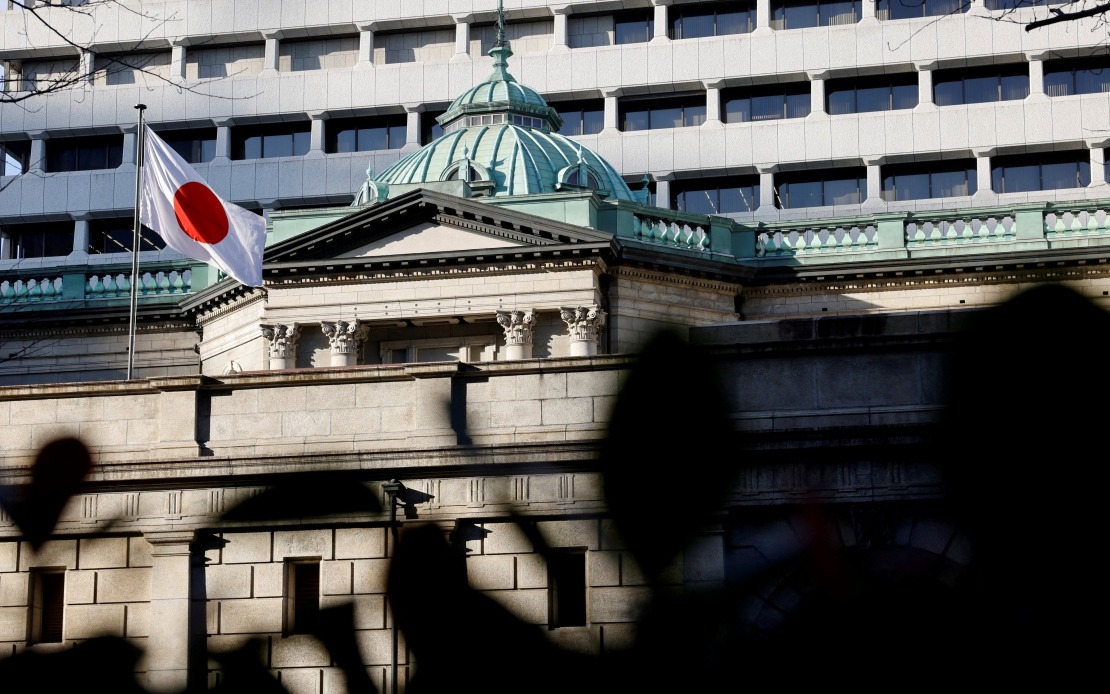
Japan's government has formally enacted a law banning the desecration of the national flag, an action that has resurrected longstanding questions about where democracies should draw the line between preserving national identity and safeguarding individual liberties. Prime Minister Sanae Takaichi's administration faces mounting criticism from civil society observers and social media commentators who contend the legislation risks normalising far-right ideology and fostering an atmosphere of nationalist fervor in a country wrestling with its post-war identity. The legislative move reflects a broader philosophical struggle unfolding across developed nations as governments grapple with how to balance reverence for national symbols against citizens' constitutional rights to dissent.
Germany, a nation acutely conscious of its historical relationship with nationalism, maintains some of the world's strictest flag protection statutes. Offences encompass not merely physical desecration of the banner itself but also disrespectful treatment of the national anthem and associated state symbols. Perpetrators face imprisonment ranging from three years for standard violations to five years when authorities determine the act was designed to undermine constitutional governance. This graduated penalty structure reflects Germany's determined effort to prevent the symbol-worship that characterised the Nazi era. Yet this protective stance has itself become contested terrain; German flags have increasingly become appropriated by anti-immigration movements in recent decades, transforming the symbol from one of unified post-Cold War identity into a marker of exclusionary politics. The irony that constitutional safeguards meant to prevent authoritarian nationalism now sometimes shield right-wing movements demonstrates the paradoxes inherent in legislating patriotism.
France takes a comparably protective approach toward its tricolour, enshrining legal penalties for public flag destruction or degradation. French lawmakers justify these restrictions by positioning the flag as embodying the revolutionary principles of liberty, equality, and fraternity—universal ideals rather than narrow nationalist signifiers. This framing allows France to claim that flag protection defends shared civic values rather than ethnic or cultural supremacy. The distinction remains largely semantic; nonetheless, it illustrates how democracies construct different philosophical justifications for similar restrictions on symbolic protest.
China enforces among the world's most stringent flag protection regimes, with violations attracting prison sentences up to three years. The state integrates flag reverence into mandatory patriotic education programming and maintains a ceremonial daily flag-raising at Beijing's Tiananmen Square at dawn. The approach extends beyond mere symbolic protection; in 2017, a Tianjin resident received a two-year sentence for slashing 66 flags at a residential compound, while another individual in Qinghai Province faced administrative detention for employing a national flag as window drapery. These cases illustrate how totalitarian systems weaponise symbol protection as an instrument of social control, criminalising conduct that would be constitutionally protected in liberal democracies.
The United States stands at the opposite end of the spectrum, having embedded flag-burning and related protest acts within constitutional free speech protections. The Supreme Court's landmark 1989 decision established that such symbolic expression constitutes protected political speech under the First Amendment. This ruling reflected America's foundational commitment to dissent as an essential democratic practice and its historical experience as an immigrant nation requiring ideological rather than cultural cohesion. However, incoming President Donald Trump has signalled intent to reverse this jurisprudence, having signed an executive order directing the Justice Department to prosecute flag desecration and similar acts. The prospective policy shift threatens to overturn three decades of settled constitutional law and would represent a dramatic realignment toward the restrictive approaches favoured by authoritarian regimes.
South Korea occupies middle ground, having established legal frameworks criminalising intentional flag damage with intent to insult the state, carrying penalties up to five years imprisonment. Simultaneously, South Korean lawmakers have pursued legislation establishing a national "flag day," attempts to institutionalise symbolic reverence through celebration rather than prohibition. Critics within South Korea argue that even this framework unduly constrains freedom of expression and reflects lingering authoritarianism from the country's recent military-ruled past.
Iran presents a distinctly different case shaped by religious and geopolitical considerations. While no explicit legislation penalises flag desecration, the state views damage to the national flag—which bears the Islamic word "Allah"—as blasphemy against Islam. Following anti-government protests last year, authorities have contemplated toughening penalties. However, current leadership, preoccupied with maintaining national cohesion amid international tensions, has generally refrained from severe enforcement. This restraint suggests that even among authoritarian states, the practical application of flag protection laws depends on shifting political priorities.
For Southeast Asian nations and Malaysia particularly, Japan's legislative development carries instructive implications. The region contains diverse democracies and hybrid regimes navigating similar tensions between national symbol protection and pluralistic governance. Malaysia's own constitutional framework protects freedom of expression while establishing boundaries around sedition and symbols of state authority. Japan's move toward stricter flag protection may influence regional approaches, particularly among nations with significant Japanese economic and diplomatic influence. The legislation signals that even established democracies are reconsidering the balance, potentially emboldening governments throughout Asia to justify enhanced restrictions on symbolic protest as alignment with international practice.
The global divergence on flag protection illuminates competing visions of national identity in the contemporary world. Liberal democracies like the United States ground national unity in constitutional principles and civic participation rather than symbolic reverence, trusting that robust debate strengthens rather than weakens state legitimacy. Authoritarian systems employ flag protection as an instrument of population control and ideological conformity. Japan's new law suggests that even consolidated democracies remain vulnerable to pressure from nationalist movements to elevate symbolic protection above individual liberties. The outcome of this global competition between approaches will substantially shape the character of political freedom in the coming decades.
For Malaysian observers and policymakers, the Japanese precedent warrants careful analysis. The legislation demonstrates how seemingly narrow measures—protecting a specific symbol from desecration—can expand into broader constraints on dissent and symbolic protest. It illustrates the importance of maintaining robust constitutional protections for freedom of expression, even when public sentiment tilts toward nationalist sentiment. As regional governments throughout Asia consider their own approaches to national symbols and patriotic expression, the Japanese case provides a cautionary example of how incrementalism in restricting fundamental freedoms can gradually erode the pluralistic character of democratic governance.

