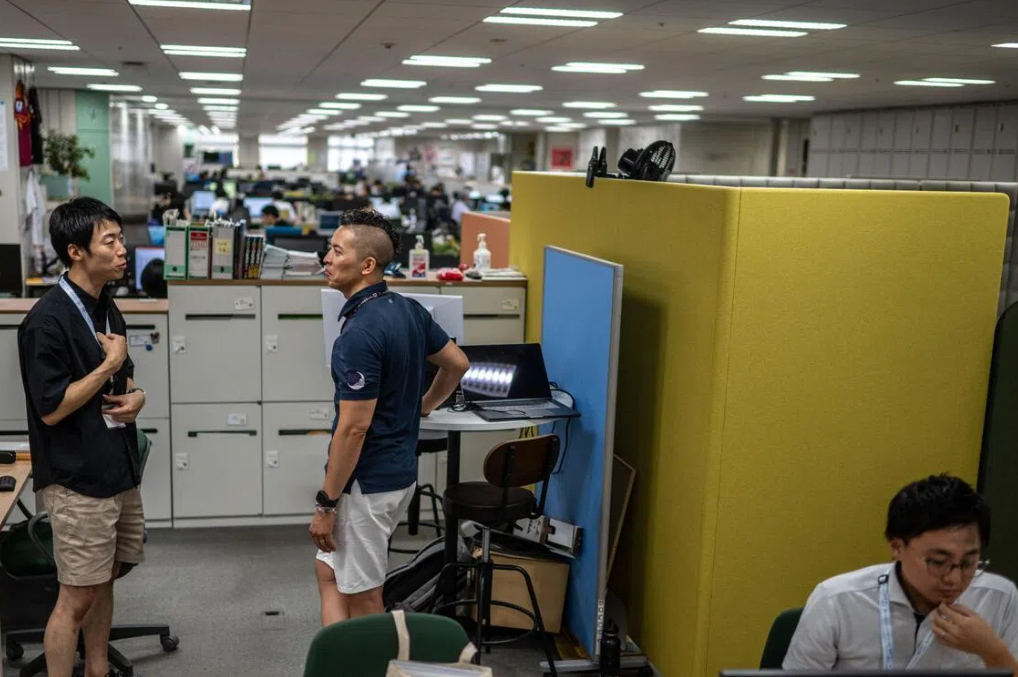
Japan's metropolitan government launched an expanded Cool Biz campaign in April designed to ease the burden of oppressive summer temperatures by permitting office workers to abandon formal business attire in favour of more breathable clothing including T-shirts, casual footwear and shorts. The initiative represents a logical response to the severe heat that regularly afflicts much of the country during the warmer months. Yet the measure has encountered an unforeseen obstacle that captures broader tensions within Japanese workplaces: widespread discomfort—particularly among women—with male colleagues displaying their leg hair in shared office environments. The phenomenon has acquired its own terminology online, with critics deploying the term "sunehara" or "leg hair harassment" to describe the social friction created by such exposure.
Tokyo environmental official Noboru Watanabe articulated the government's underlying philosophy when addressing the controversy, stating that the campaign aims to expand wardrobe flexibility during extreme weather rather than prescribe specific dress codes. According to Watanabe, provided that clothing remains inoffensive to colleagues, no legitimate grounds for complaint should exist. The reasoning appears straightforward: if the primary objective involves enabling workers to remain comfortable and functional during periods of punishing heat, expanding acceptable casual attire should logically advance that goal. However, determining what constitutes workplace offensiveness has proven considerably more nuanced than policymakers anticipated, exposing ingrained cultural assumptions about bodies, propriety and professional environments.
A survey conducted in June by Gorilla Clinic, a chain specialising in men's cosmetic treatments, illuminates the depth of resistance to the shorts proposal. The study found that 53.5 per cent of respondents opposed wearing shorts in professional settings, whilst 46.5 per cent endorsed the concept. Significantly, concerns about physical appearance and body hair featured prominently among those expressing opposition. The demographic breakdown proved particularly revealing: women respondents substantially outnumbered men among those objecting to the shorts initiative, suggesting that many female workers harbour reservations about regular exposure to their male colleagues' unshaven legs in close proximity during working hours. This gender disparity hints at broader questions about whose comfort takes precedence in defining workplace standards and whose bodies remain subject to unspoken scrutiny.
The cosmetic industry's response to this cultural moment demonstrates how business sectors swiftly identify and capitalise on emerging anxieties. Akifumi Funatsu, a director at Gorilla Clinic, observed a marked increase in male clients seeking laser hair removal treatments, citing motivations that extend beyond conventional aesthetic preferences. An expanding cohort of men now view body hair removal as a matter of professional courtesy and appropriate social etiquette when selecting shorts as office attire. This development reveals how workplace norms can internalise themselves within individual bodies, with men becoming self-conscious about their natural appearance and believing they must undergo cosmetic procedures to avoid causing discomfort to colleagues. The phenomenon encapsulates how ostensibly neutral dress codes can create subtle pressures that reshape personal behaviour and consumption patterns.
Japan's gradual shift toward permitting casual office attire has unfolded across nearly two decades. The original Cool Biz initiative emerged in 2005 when Yuriko Koike, then serving as environment minister, introduced the campaign as a mechanism for reducing energy consumption in air-conditioning systems. The proposal gained broader acceptance and visibility when Prime Minister Junichiro Koizumi appeared in public without conventional business neckwear or jacket, lending political legitimacy to the relaxation of dress standards. Following the 2011 earthquake and tsunami, which imposed severe strain on Japan's electrical infrastructure, the government introduced an intensified version called Super Cool Biz that further stretched the boundaries of acceptable workplace attire. These successive iterations have gradually normalised casual clothing in professional contexts, particularly within entrepreneurial ventures and technology sector organisations.
The contemporary expansion of the Cool Biz campaign to encompass shorts represents a logical endpoint for this incremental liberalisation. However, this final expansion has confronted cultural resistance rooted in different premises than those driving previous iterations. Earlier relaxations of dress codes focused on environmental sustainability and energy conservation—objectives commanding broad consensus. The shorts proposal, by contrast, implicates more intimate questions about bodily exposure, aesthetic standards, and the management of male sexuality in shared workspaces. For many respondents to the Gorilla Clinic survey, shorts conjure anxieties less about environmental policy and more about standards of professional decorum and acceptable bodily presentation.
Japan confronts genuinely extreme climatic conditions that create legitimate public health imperatives for policy intervention. Between July 6 and July 12 alone, the Fire and Disaster Management Agency recorded seven deaths attributable to heatstroke, with an additional 4,580 individuals requiring hospitalisation. These figures underscore that summer temperatures in Japan pose genuine medical risks demanding serious mitigation strategies. Government health officials have consequently emphasised the importance of maintaining hydration, utilising air-conditioning systems where available, and permitting bodies gradual acclimation to intensifying heat. The cultural context for the Cool Biz expansion thus involves not merely convenience but measurable threats to public health and individual survival.
Beyond institutional responses, Japanese consumers have demonstrated considerable ingenuity in independently addressing the heat challenge through market-driven solutions. Manufacturers have responded to demand by producing clothing embedded with portable cooling technology, disposable cooling wipes designed for rapid temperature reduction, parasols engineered to reflect solar radiation, and miniaturised portable fans that individuals can carry throughout their working days. This proliferation of technological approaches to managing heat exposure reveals how consumers and manufacturers can circumvent or supplement official policy changes when cultural resistance emerges. For workers unwilling to embrace the shorts proposal, these alternative methods provide pathways toward thermal comfort without requiring navigation of contested workplace norms.
The leg hair harassment controversy ultimately reflects deeper questions about workplace culture, bodily autonomy, and the mechanisms through which professional environments regulate appearance. By establishing ostensibly neutral dress codes, institutions simultaneously codify unspoken standards about which bodies count as acceptable and which require modification or concealment. The backlash against the shorts proposal suggests that for many Japanese workers—particularly women—the discomfort associated with visible male body hair registers as a legitimate workplace concern warranting institutional recognition. Yet this very resistance creates its own pressures, compelling men to consider cosmetic interventions to achieve a state of bodily acceptability. The situation exemplifies how efforts to expand individual choice and workplace comfort can paradoxically generate new forms of constraint and anxiety.
The question of how much leg exposure constitutes appropriate professional conduct remains genuinely unsettled in contemporary Japan. The government has signalled openness to expanded casual attire, yet the cultural response suggests a significant portion of the workforce, particularly women, harbours reservations about this particular form of liberalisation. Rather than resolving the tension through authoritarian prescription, Japanese workplaces appear destined to navigate an extended period of negotiation and ambiguity. This outcome reflects broader patterns within Japanese professional culture, where implicit consensus and unspoken norms often prove more powerful than formal policies. Until consensus emerges—if it ever does—the question of shorts in Japanese offices will likely remain contested terrain where individual choice meets collective anxiety about appropriate bodily presentation.

