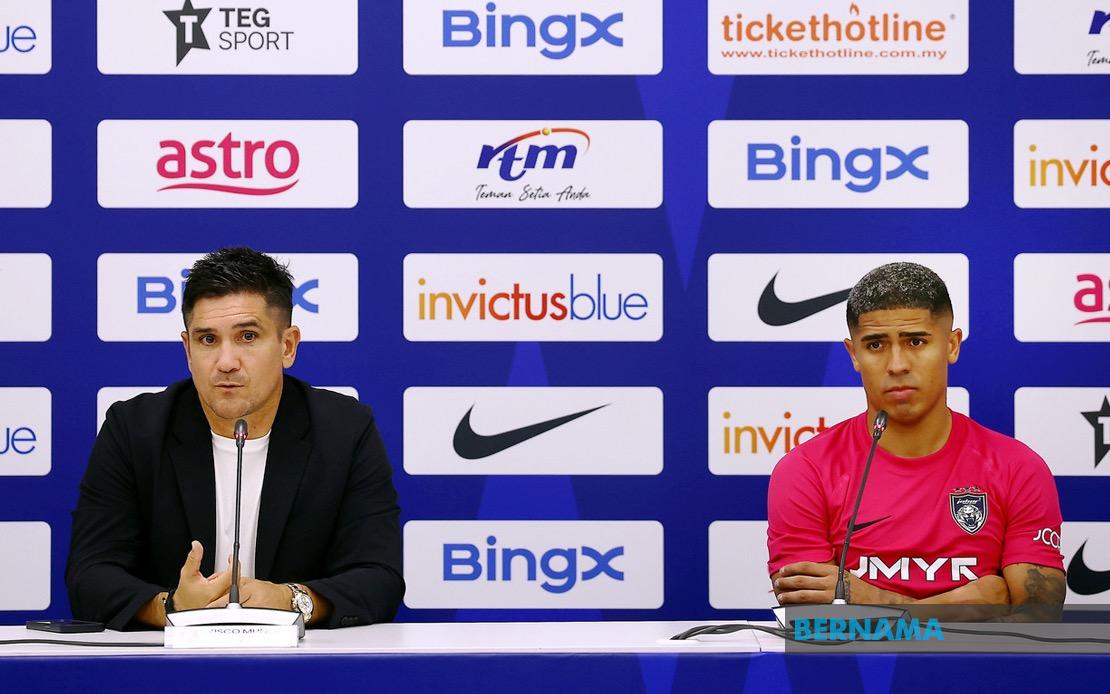
Johor Darul Ta'zim delivered an impressive performance against Chelsea FC at the Sultan Ibrahim Stadium in Iskandar Puteri on Thursday evening, securing a 3-3 draw that head coach Xisco Munoz hailed as validation of the club's intensive preparation over the off-season. The fixture against the FIFA Club World Cup champions served as both a barometer of the Southern Tigers' current form and a springboard into their domestic campaign, with the Madrid-born tactician expressing considerable satisfaction with how his players executed their game plan against world-class opposition.
Munoz's post-match assessment centred on the breadth of quality demonstrated by his squad throughout the 90 minutes, moving beyond the headline result to underscore the consistency and character his team brought to the contest. The coach emphasized that friendly matches of this calibre, while important tests, ultimately constitute just one element within a comprehensive pre-season framework designed to build competitive sharpness and tactical cohesion. His remarks reflected a manager confident that the groundwork laid during the preparatory phase would translate into sustained performance when the stakes rise in the coming season.
The structural integrity of JDT's display revealed considerable tactical evolution under Munoz's guidance. Rather than adopting a single rigid approach, the team demonstrated flexibility across multiple phases of play, seamlessly transitioning between defensive compactness at the back, medium-block positioning in midfield, and aggressive pressing in the opponent's half. This adaptability, the coach noted, stemmed directly from meticulous pre-season training and the players' developing understanding of contextual decision-making within set tactical frameworks. Such versatility would prove invaluable against the varying demands of domestic competition, where opponents employ markedly different strategic approaches.
Competition within the squad emerged as a central theme in Munoz's analysis of the team's progression. Rather than viewing internal rivalry as a destabilizing force, the coach positioned it as a critical motivator ensuring that complacency could not take root among any segment of his roster. The financial and organizational resources that JDT commands allow the club to maintain a playing staff of considerable depth, yet talent alone proves insufficient without the psychological environment that pushes each individual toward consistent excellence. Munoz's emphasis on accountability across the entire cohort reflected his understanding that championship-level consistency demands unrelenting standards applied universally.
The goalscoring contributions from Arif Aiman Mohd Hanapi, Oscar Aribas, and Bergson Da Silva provided concrete evidence of attacking depth, a prerequisite for any club harbouring serious ambitions in both domestic and continental competitions. The distribution of finishing responsibilities across different personnel illustrated that the team possessed multiple pathways to generating goals, a characteristic distinguishing high-performing units from those vulnerable to defensive adjustments by opponents. Each scorer represented different tactical roles within the side—whether through incisive play in transition, possession-based movement, or aerial dominance—suggesting that Munoz had cultivated offensive patterns operating across multiple dimensions.
The significance of the fixture extended beyond immediate performance metrics to encompass the broader regional context in which Malaysian club football operates. Matches against established European clubs remain relatively rare opportunities for local sides to evaluate themselves against the continent's highest standards, offering invaluable insights into tactical sophistication, physical conditioning, and mental resilience under pressure. For JDT specifically, such encounters reinforce the club's aspirations toward continental prominence while providing practical data regarding areas requiring further refinement.
Munoz's reference to the upcoming season as inherently demanding signalled his awareness that domestic competition, regardless of JDT's historical dominance, presents mounting competitive challenges. The Malaysian domestic game has evolved considerably in recent years, with rival clubs investing significantly in player development and coaching expertise. Against this backdrop, the pre-season preparation Munoz orchestrated attempted to establish early tactical foundations and fitness baselines that would allow his team to sustain performance levels across an extended campaign of fixture congestion and climatic challenges.
The coach's repeated emphasis on collective ambition and organizational standards rather than individual player performance reflected a deliberate managerial philosophy prioritizing team cohesion over star power. While JDT undoubtedly possesses players of individual quality, Munoz appeared determined to construct a system where no single personality could dictate outcomes, thereby reducing vulnerability to injury or loss of form among key personnel. This structural approach, if successfully implemented, would render the team resilient through multiple iterations of lineup adjustments necessitated by injury, suspension, or fatigue management.
Looking forward, the draw with Chelsea provides JDT with clear analytical reference points as they navigate the early phases of the domestic season. Rather than seeking perfection in pre-season friendlies, Munoz seemingly prioritized identifying areas requiring tactical adjustment and assessing the psychological responses of players when facing sustained pressure from elite opposition. The fact that his team managed to score three goals against Chelsea's sophisticated defensive organization, despite ultimately conceding an equal number, suggested that attacking patterns had achieved a sufficient level of effectiveness to warrant confidence going forward.
The preparation of Malaysian clubs for Continental competitions has historically suffered from insufficient integration of technical development with physical conditioning and tactical sophistication. Munoz's visible commitment to building systemic quality throughout the entire squad, combined with his willingness to utilize high-profile fixtures as educational opportunities rather than mere spectacles, suggests a more considered approach to long-term competitive development. Should this philosophy embed itself within JDT's organizational culture, it may produce sustained excellence extending well beyond individual seasons.

