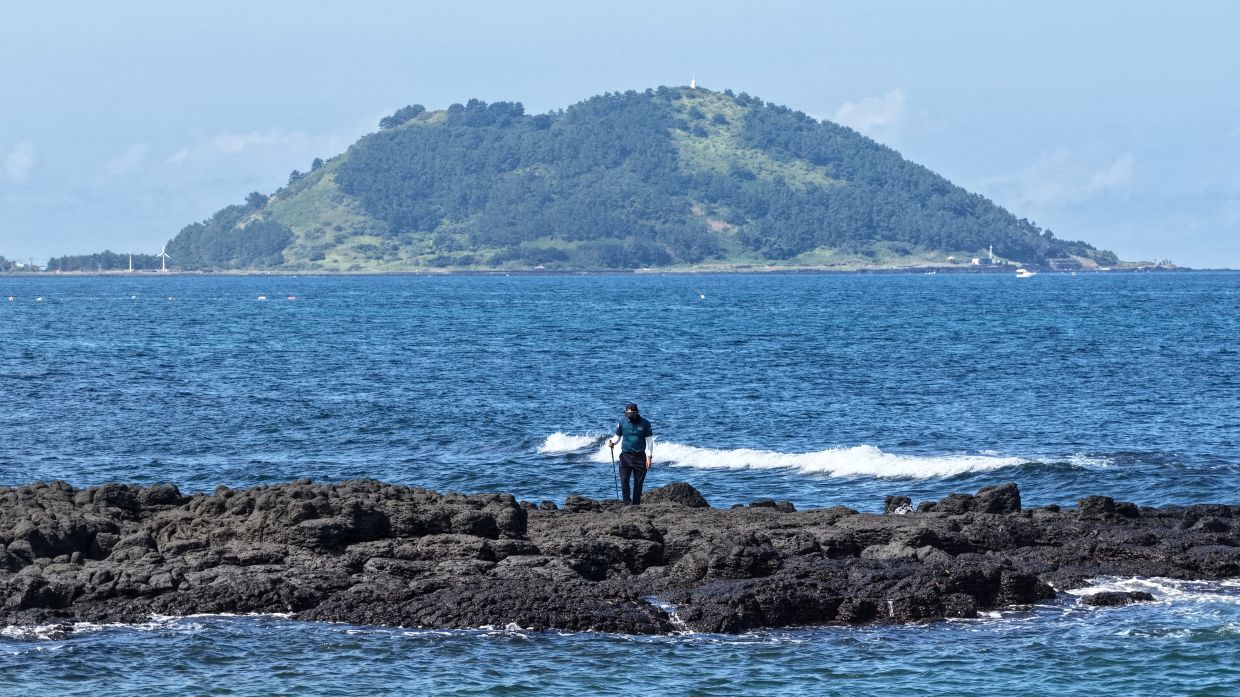
Jeju Island, long romanticized as South Korea's premier destination for newlyweds and leisure travelers, now finds itself battling an acute reputation crisis. The convergence of a major police misconduct scandal and the discovery of multiple bodies within a compressed timeframe has created a perfect storm of public anxiety that threatens to unravel the island's carefully cultivated image as a safe haven for tourism. The turmoil centres on allegations that a police officer systematically mishandled missing-person investigations, falsely closing cases without genuine investigation, a failure that has triggered broader questions about institutional competence and visitor safety.
The catalyst for this growing unease involves the disappearance of Jang Mi-ran, a 37-year-old woman who vanished sometime between late May 12 and early May 13 from her home in Hallim-eup, Jeju City. The officer overseeing her case proceeded to close it in May by falsely claiming he had made contact with her—a claim later revealed as fabricated. Nearly three months elapsed before her remains were discovered on August 25, located among palm trees less than a ten-minute walk from where she had resided. The case captured national attention not merely for its tragic outcome but for the apparent indifference and deception that characterized the official response.
What transformed this single tragedy into a broader crisis was the revelation that at least one other missing-person case had been mishandled by the same officer using identical methods. A man in his 60s, whose disappearance had similarly been falsely closed, was found dead in Gujwa-eup following a delayed and belatedly initiated search operation. The pattern of negligence and apparent falsification suggested systemic failure rather than isolated oversight, corroding public trust in local law enforcement at precisely the moment when visitors depend upon police competence for their security.
The situation intensified dramatically when, within a seventy-two-hour window through August 26, authorities discovered four missing individuals deceased. Beyond Jang Mi-ran and the elderly man in Gujwa-eup, another previously missing person was located dead near a valley in Aewol-eup on the same day Jang's remains were recovered, whilst fishermen discovered a man in his 70s in waters off Sinheung-ri, Jocheon-eup, on August 26. Authorities have not definitively linked these deaths or uncovered evidence indicating coordinated criminal activity, yet the concentration of discoveries within such a narrow timespan has fundamentally altered public perception of the island's safety profile.
The psychological impact on Jeju's tourism sector has proven substantial, manifesting across social media platforms where residents and prospective visitors express mounting anxiety. A doctor specializing in preventive medicine who has inhabited the island for seven years posted starkly on social platforms about the disturbing isolation of certain rural areas, describing cycles through remote village roads where screams would go unheard and cautioning even men against solo travel during daylight hours on ostensibly safe paved routes. Business owners managing short-term rental accommodations report cancellations from long-term tenants, whilst individuals planning wedding photography sessions have elected to relocate their events to safer-seeming alternatives.
The tourism industry's vulnerability has been magnified by pre-existing headwinds unrelated to safety concerns. According to the Jeju Tourism Organization, domestic visitor arrivals declined dramatically year-over-year, with July 2024 recording 963,401 travelers—a 12.4 percent contraction representing a loss of 136,620 visitors compared to July 2023's 1,100,021. This marked the first occasion since the onset of the Covid-19 pandemic that Jeju's monthly domestic visitor count dipped below the one-million threshold, a symbolically significant threshold for the tourism industry. The deterioration extended into August, with daily average domestic visitor figures reaching 35,295 through August 23, roughly 300 fewer than the corresponding period in 2023.
Guesthouses and tourism operators have begun implementing enhanced safety measures whilst simultaneously confronting an uncomfortable irony. Facilities marketed exclusively to female travelers, previously regarded as a competitive differentiation strategy, now amplify rather than assuage safety anxieties. A guesthouse proprietor with eight years of operational history in Jocheon-eup noted receiving persistent inquiries from prospective guests regarding security arrangements. Recent cancellations, though individually attributed to multiple factors, nonetheless reflect broader hesitation about visiting the island. She articulated the dilemma facing the tourism sector: initiatives designed to attract visitors—such as gender-exclusive accommodations in response to female safety concerns—risk reinforcing the very narrative of danger that now plagues the destination.
The challenge confronting Jeju's authorities extends beyond addressing legitimate safety concerns to confronting manufactured anxieties amplified through social media discourse. Whilst concrete crime statistics merit examination, the correlation between actual danger and perceived danger has widened considerably. Data from the Korean National Police Agency identifies Jeju as recording the highest crime rate nationwide in 2024, at 4,539.6 crimes per 100,000 residents. However, this calculation employs the island's permanent residential population of approximately 663,000 as its denominator—a methodology that obscures the reality that Jeju receives millions of annual visitors who substantially outnumber permanent inhabitants and thus dilute the actual risk profile experienced by tourists.
The reputational damage accumulating around Jeju illustrates the fragility of tourism-dependent economies facing intersecting crises. Institutional failures within police operations, media amplification of tragic discoveries, and social media-driven narrative acceleration have combined to undermine confidence far more extensively than objective safety metrics might justify. The island's tourism operators face a dual imperative: first, to ensure genuine improvements in investigative competence and police accountability regarding the mishandled cases, and second, to communicate these remedial actions effectively to domestic and international audiences whose travel decisions increasingly depend upon perceived rather than actual risk levels.
Looking forward, Jeju's recovery trajectory will depend substantially upon demonstrable accountability for police misconduct and transparent investigation into the circumstances surrounding the discovered bodies. Local authorities must acknowledge the systemic failures that permitted false case closures whilst implementing oversight mechanisms preventing recurrence. Tourism recovery, however, requires more than institutional reform—it demands sustained communication efforts that rebuild confidence among hesitant travelers whose anxieties, however partially grounded in reality, now constitute the island's most immediate economic threat. The convergence of police scandal and multiple deaths has created a perception crisis that, if unaddressed, may prove more damaging to Jeju's tourism economy than the incidents themselves.

