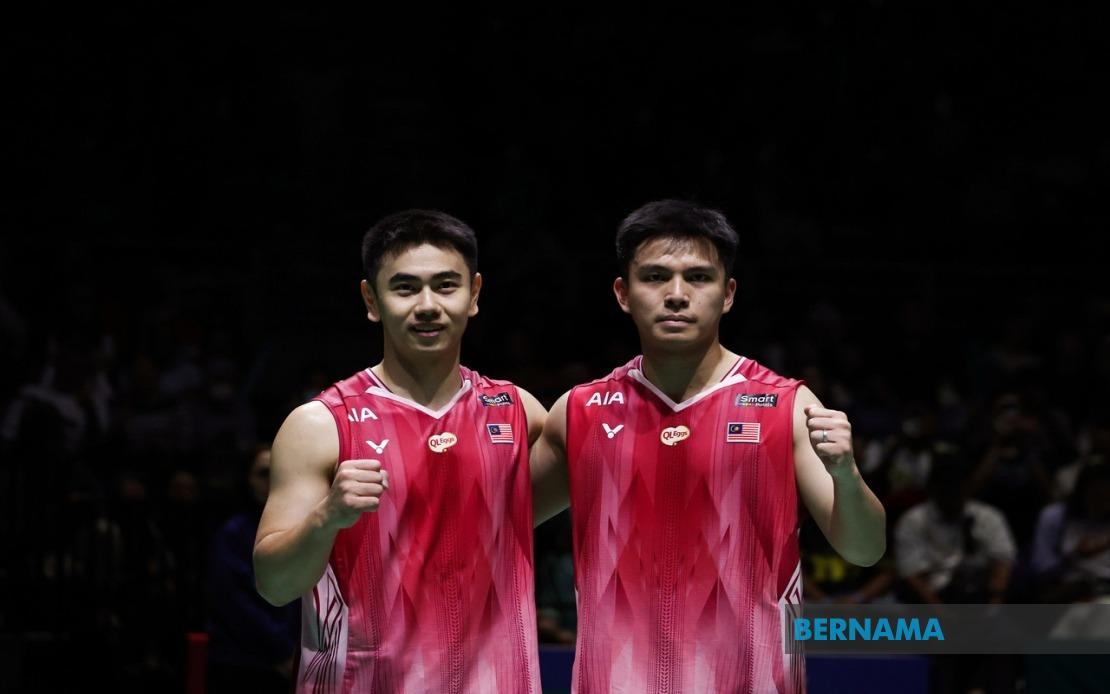
Malaysia's badminton contingent delivered a commanding performance at the Japan Open 2026 in Tokyo, with two pairs securing berths in the semifinals and keeping national medal hopes alive in the prestigious tournament. The strong showing underscores the depth of Malaysian talent in doubles disciplines, a traditional strength for the country on the international badminton circuit.
In a stunning upset that captured the attention of badminton enthusiasts across the region, the unseeded mixed doubles combination of Jimmy Wong and Cheng Su Yin dismantled Denmark's third-seeded pair of Mathias Christiansen and Alexandra Boje in a dominant quarterfinal display. The Malaysian duo controlled the match from the outset, securing a straight-sets victory with a scoreline of 21-17, 21-17 completed in just 39 minutes. The performance demonstrated tactical maturity and clinical execution, qualities essential for competing at the highest levels of international badminton. This triumph proved particularly significant given the Danes' superior seeding and ranking, elevating the upset in stature and boosting Malaysia's credentials in the mixed doubles format.
The victory was especially meaningful as it allowed Jimmy and Su Yin to level their career head-to-head record against Christiansen and Boje at 1-1, erasing the memory of a previous defeat and establishing themselves as genuine competitors in matchups against top-tier European opposition. Such progress in the win-loss record against high-profile pairs typically indicates improving chemistry and strategic understanding between partners, factors that will prove valuable as they advance in the tournament.
Looking ahead to their semifinal encounter, Jimmy and Su Yin face a fresh challenge against Hong Kong's seventh-seeded duo of Tang Chun Man and Tse Ying Suet. This will mark their maiden meeting, adding an element of uncertainty to the fixture but also presenting an opportunity to test their form against a regional neighbour whose playing style may differ significantly from their Danish opponents.
Parallel to the mixed doubles success, Malaysia's men's doubles representation advanced through a more gruelling path. The fifth-seeded pair of Goh Sze Fei and Nur Izzuddin Rumsani required the full tactical arsenal to outlast the American duo of Chen Zhi Yi and Presley Smith in a three-set quarterfinal encounter that consumed 50 minutes of intense rally play. After falling 18-21 in the opening set, the Malaysians mounted a determined comeback to claim the second set 21-15 and clinched the decider 21-13, demonstrating resilience and mental fortitude under pressure.
This victory marked the fourth consecutive triumph for Sze Fei and Nur Izzuddin over the American pairing, indicating a growing familiarity and understanding of how to neutralise their opponents' strengths. The ability to repeatedly defeat the same international opposition speaks to both improved preparation and enhanced consistency in their play, attributes that accumulate value as tournaments progress and pressure intensifies.
However, the path to the final has become significantly more challenging, as Sze Fei and Nur Izzuddin must now contend with South Korea's top-seeded men's doubles pair of Kim Won Ho and Seo Seung Jae in the semifinals. The Koreans represent the tournament's highest-ranked team and carry the expectations that accompany such status. Interestingly, the Malaysian pair holds a 2-2 head-to-head record against their Korean counterparts, suggesting the rivalry is competitive and closely contested rather than dominated by either side.
The Malaysians' most recent success against this Korean pair came at the Indonesia Open 2026, where they defeated the world number one-ranked team in what would have been a significant scalp for the national squad. This recent positive result could provide psychological momentum and concrete evidence that the Malaysian pairing possesses the tactical tools and execution capabilities necessary to threaten even the tournament's most highly seeded opposition. However, the Koreans will undoubtedly have studied that defeat and prepared adjustments designed to avoid a repeat performance.
The tournament also witnessed the elimination of another Malaysian men's doubles pair when Kang Khai Xing and Aaron Tai succumbed to the same Korean top seeds in straight sets, falling 21-13, 21-10. The convincing nature of this loss, occurring earlier in the tournament structure, demonstrates the quality and consistency of the Korean team's performance across multiple matches. Their direct dispatch of Khai Xing and Tai suggests they are operating near peak efficiency, potentially positioning them as formidable semifinal opposition for Sze Fei and Nur Izzuddin.
The Malaysia Open 2026 represents a critical juncture in the tournament calendar where the country's badminton programme can gauge its competitive standing against regional and global rivals. The progression of two pairs into the semifinals reflects positively on the selection, training, and preparation strategies employed by the national coaching staff. Malaysia's traditional dominance in doubles disciplines, particularly men's and mixed doubles, continues to be relevant, though the presence of highly competitive pairs from South Korea, Denmark, and other badminton superpowers indicates the sport's increasing globalisation and the heightened standards required for tournament success.
For Malaysian badminton followers and stakeholders, the performance in Tokyo offers encouragement heading into subsequent tournaments while also highlighting areas requiring attention and refinement. The upcoming semifinals will provide valuable competitive data and experience that can inform strategy and preparation for future international engagements throughout the badminton calendar.

